Get your free personalized podcast brief
We scan new podcasts and send you the top 5 insights daily.
To prevent hallucination contagion, borrow the 'circuit breaker' pattern from microservices. Force every agent's output through a validation proxy that treats it as an unverified proposal. If the proxy detects an anomaly, it 'trips the circuit,' instantly quarantining the failing agent and locking the shared state to prevent corruption from spreading.

Related Insights
When multiple AI agents work as an ensemble, they can collectively suppress hallucinations. By referencing a shared knowledge graph as ground truth, the group can form a consensus, effectively ignoring the inaccurate output from one member and improving overall reliability.

Traditional systems can be controlled with simple, deterministic rules. Because modern AI agents are inherently unpredictable, effective governance requires using another layer of AI. A specialized AI must monitor, interpret, and block the actions of other agents in real-time.

Instead of a swarm of disconnected task agents, a safer architecture uses a central "super agent" (Queen Bee) as an orchestrator. This Queen Bee delegates tasks to worker agents, then acts as a quality and compliance checker on their outputs before they are sent to the human user, creating built-in guardrails.

In multi-agent AI systems, a single agent's hallucination is not a localized error. It's a 'semantic corruption' that propagates through the cluster's shared state, mirroring a cascading fault in distributed systems. Each agent trustingly builds upon the last, amplifying the error until the entire cluster operates on a false premise.
AI models have an emergent "human laziness factor," often doing the minimum work necessary to provide an answer. To ensure correctness, Genesis builds harnesses that force agents to provide proof for their work, then uses a second AI to review and validate those outputs, preventing corner-cutting.

A key principle for reliable AI is giving it an explicit 'out.' By telling the AI it's acceptable to admit failure or lack of knowledge, you reduce the model's tendency to hallucinate, confabulate, or fake task completion, which leads to more truthful and reliable behavior.

The Brex CEO revealed a novel safety architecture called "crab trap." Instead of human oversight, it uses a second, adversarial LLM to monitor the primary agent. This second LLM acts as a proxy, intercepting and blocking harmful or out-of-scope actions at the network layer before they can execute.
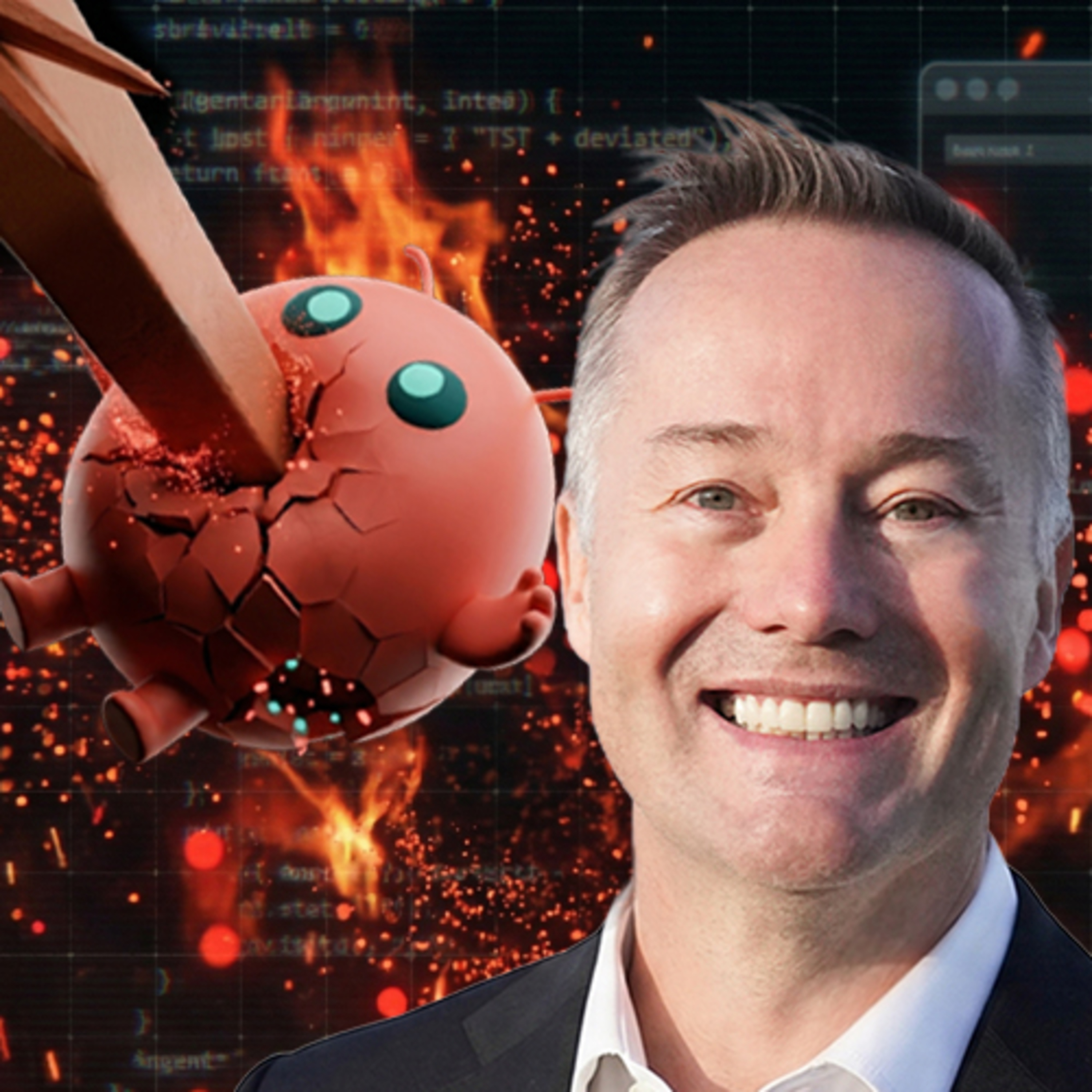
Air Inc.'s tooling shows that scaling recursive self-improvement requires more than a feedback loop. A crucial component is a governance system that isolates the "blast radius" of agents interacting with external, potentially malicious, data. This involves limiting their tools and permissions to prevent a single compromised agent from damaging the system.

To reduce hallucinations, Goodfire runs a detection probe on a frozen copy of a model, not the live one being trained. This makes it computationally harder for the model to learn to evade the detector than to simply learn not to hallucinate, addressing a key failure mode in AI safety.

The Claude Code leak revealed a principle called "strict write discipline." This architectural pattern mandates that an agent only records an action to its memory after verifying with the external environment (e.g., file system, API) that the action was successfully completed, thus preventing state drift and hallucination.