Get your free personalized podcast brief
We scan new podcasts and send you the top 5 insights daily.
Instead of a swarm of disconnected task agents, a safer architecture uses a central "super agent" (Queen Bee) as an orchestrator. This Queen Bee delegates tasks to worker agents, then acts as a quality and compliance checker on their outputs before they are sent to the human user, creating built-in guardrails.

Related Insights
Contrary to the vision of free-wheeling autonomous agents, most business automation relies on strict Standard Operating Procedures (SOPs). Products like OpenAI's Agent Builder succeed by providing deterministic, node-based workflows that enforce business logic, which is more valuable than pure autonomy.

As companies deploy numerous task-specific AI agents (e.g., payroll, payments), the user experience risks fragmentation. Xero's solution is a 'super agent' that manages all sub-agents, orchestrating actions, transferring information, and applying user preferences globally to create a cohesive system.

After successfully deploying three or four AI agents, companies will encounter a new challenge: the agents have data conflicts and provide inconsistent answers. The solution, which is still nascent, is a "meta-agent" or orchestration layer to manage them.

By programming one AI agent with a skeptical persona to question strategy and check details, the overall quality and rigor of the entire multi-agent system increases, mirroring the effect of a critical thinker in a human team.

True Agentic AI isn't a single, all-powerful bot. It's an orchestrated system of multiple, specialized agents, each performing a single task (e.g., qualifying, booking, analyzing). This 'division of labor,' mirroring software engineering principles, creates a more robust, scalable, and manageable automation pipeline.

Getting high-quality results from AI doesn't come from a single complex command. The key is "harness engineering"—designing structured interaction patterns between specialized agents, such as creating a workflow where an engineer agent hands off work to a separate QA agent for verification.

The popular concept of multiple specialized agents collaborating in a "gossip protocol" is a misunderstanding of what currently works. A more practical and successful pattern for multi-agent systems is a hierarchical structure where a single supervisor agent breaks down a task and orchestrates multiple sub-agents to complete it.
To ensure AI agents are trustworthy and can work together safely, Dreamer's architecture includes a central "Sidekick" that acts as a kernel. It manages permissions and communication between agents, preventing uncontrolled data access and ensuring actions align with user intent, much like a computer's operating system.
The Brex CEO revealed a novel safety architecture called "crab trap." Instead of human oversight, it uses a second, adversarial LLM to monitor the primary agent. This second LLM acts as a proxy, intercepting and blocking harmful or out-of-scope actions at the network layer before they can execute.
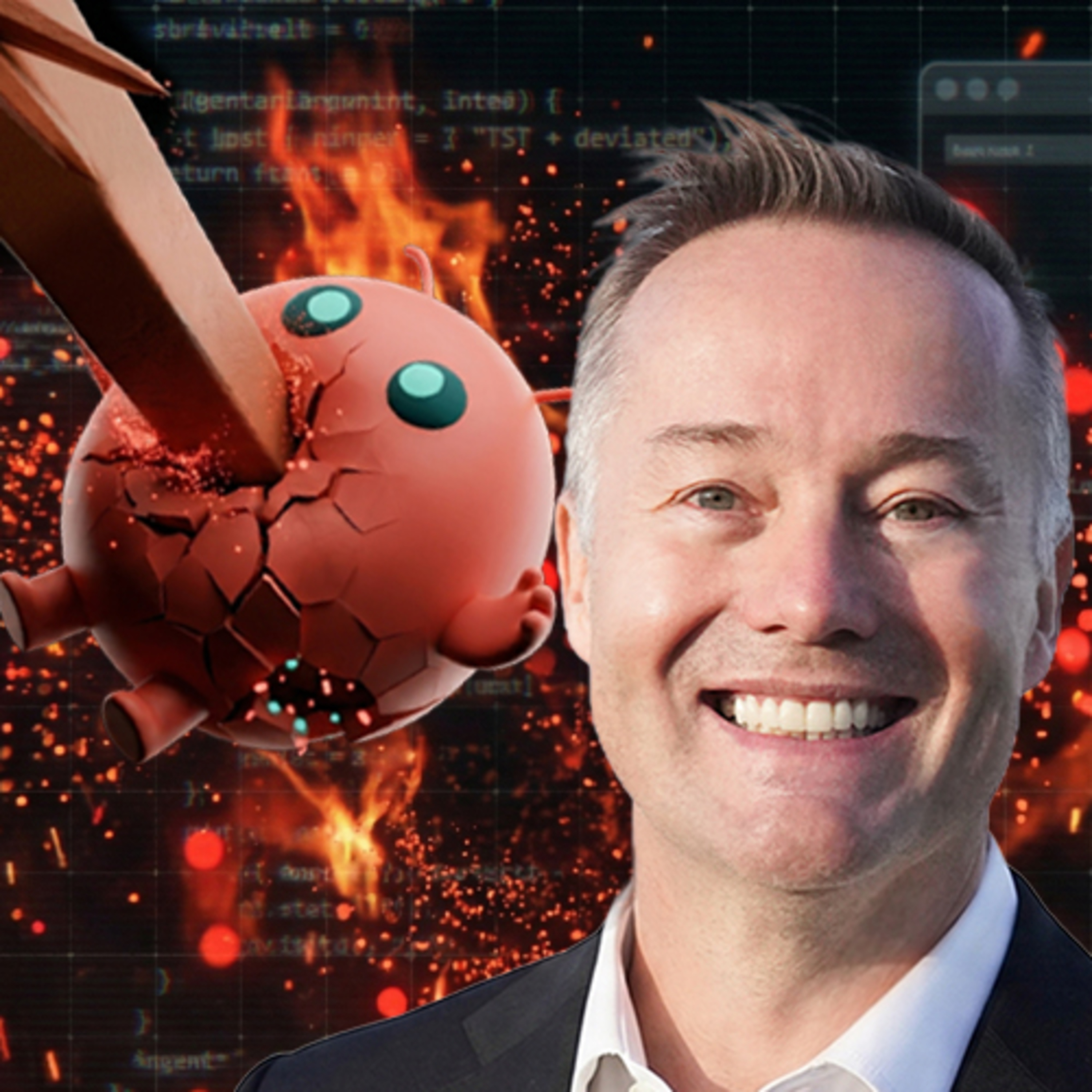
Create a clear chain of command for AI agents. Allow a primary "builder" agent to spawn sub-agents for specific tasks, but hold it directly responsible for their output. The "reviewer" or quality agent, however, should be a singleton with no subordinates, acting as a final, singular gatekeeper like a principal engineer.