Get your free personalized podcast brief
We scan new podcasts and send you the top 5 insights daily.
Rejecting the static waterfall model of large hardware projects, Helion practices continuous iteration. Their seventh-generation fusion machine contains several different generations of its own semiconductors because the team integrated improved versions throughout the single, multi-year build cycle, accelerating progress.

Related Insights
Next-generation hardware companies like SpaceX now operate like software firms, with designs and requirements changing daily. This departure from the rigid, top-down 'waterfall' process creates a new market for agile collaboration tools, analogous to how GitHub emerged to serve agile software teams.

To accelerate development, Saronic built the entire internal propulsion and electronics stack in a room eight months before the actual ship was constructed. This allowed extensive software testing and iteration, solving problems long before the vessel ever hit the water.

Impulse Space accelerates development by being 'extremely vertically integrated.' Co-locating the machine shop, assembly areas, and a test area enables a tight 'build, assemble, test' loop, allowing the team to iterate on hardware designs with maximum speed.
A common failure mode in hardware is defaulting to "the way we've always done it." Helion's leadership actively combats this by instilling a culture of re-evaluating every component and subsystem for each new generation. The core belief is that continuous, incremental optimization is essential for breakthroughs.
To avoid obsolescence costs from long component lead times, hardware companies can use a dual-track approach. One track focuses on small, quick iterations rolled into the current product 'block' based on immediate user feedback. The other track works on a long-term, ground-up redesign for major technological leaps.
Boom Supersonic accelerates development by manufacturing its own parts. This shrinks the iteration cycle for a component like a turbine blade from 6-9 months (via an external supplier) to just 24 hours. This rapid feedback loop liberates engineers from "analysis paralysis" and allows them to move faster.

Returning founder Jamie Siminoff cut an 18-month hardware development cycle to under 7 months. He did this by challenging the "why" behind every process step and eliminating generous time buffers, arguing that excess time guarantees that delays will fill it.

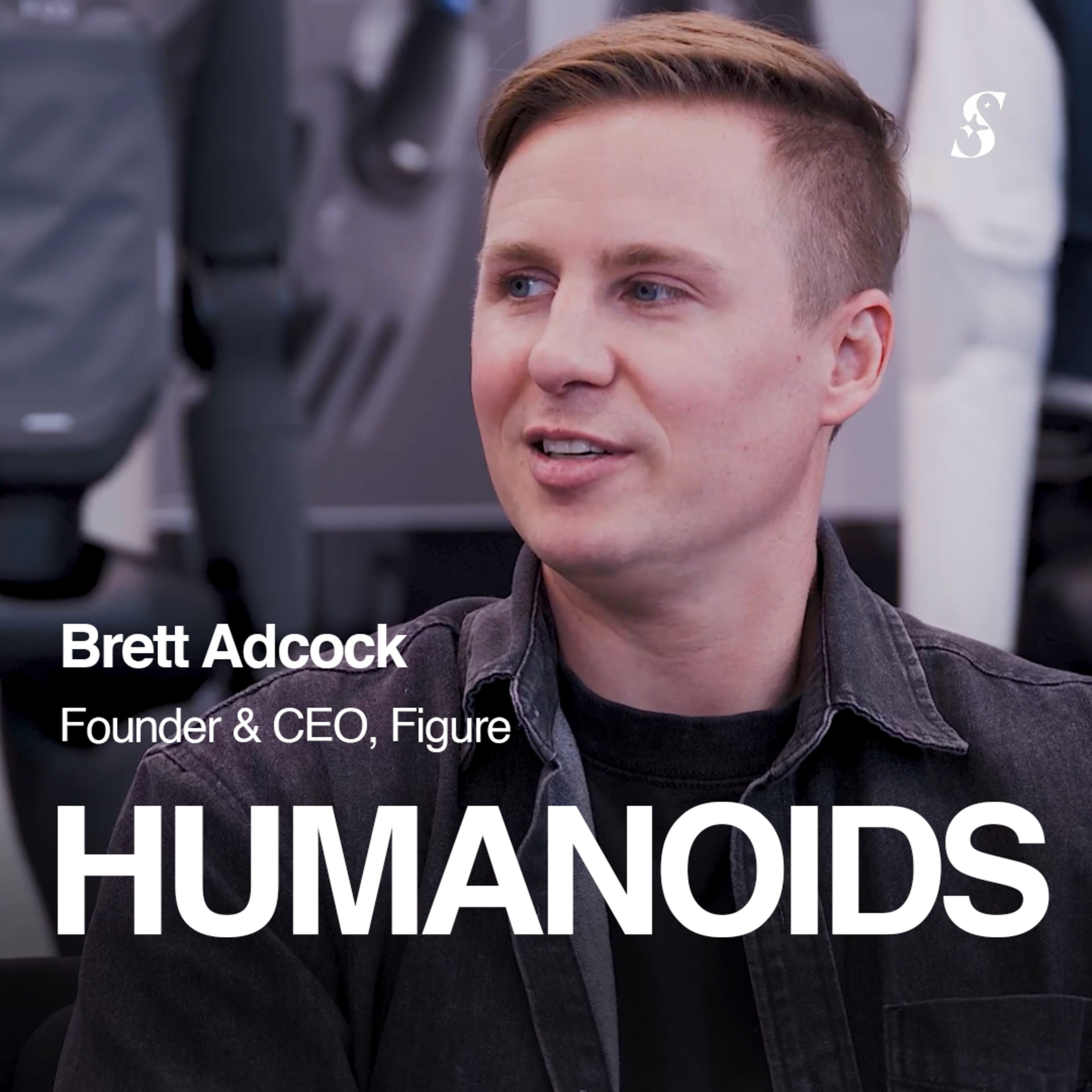
Figure designs nearly every component of its robots in-house, from motors to batteries. This extreme vertical integration, though costly upfront, prevents being at the mercy of third-party vendor timelines, code problems, or supply chain issues, enabling faster iteration and deeper system control.
Spacium's co-founders built their first space payload in just 5 months by owning 98% of their testing process. This approach allows them to "test it until it breaks" and improve it immediately, creating a rapid iteration cycle that mimics software development and bypasses traditional hardware bottlenecks.

Etched builds its own chips, boards, cold plates, interconnects, and even its own racks. This full-stack ownership allows for extreme parallelization and iteration speed, a key advantage over startups that rely on a fragmented supply chain and multiple vendors.
![Etched - Building AI Hardware to Make Inference Faster and Cheaper - [Invest Like the Best, EP.480] thumbnail](https://megaphone.imgix.net/podcasts/532910c4-743d-11f1-b7dc-b31915c88b79/image/810c9e3a23b5c4ea0a56e5e4cc8d7e47.jpg?ixlib=rails-4.3.1&max-w=3000&max-h=3000&fit=crop&auto=format,compress)