Get your free personalized podcast brief
We scan new podcasts and send you the top 5 insights daily.
Max Blank says most of Triple Whale's engineering is now fully agentic, but leaders and engineers remain essential. Vibe-coded production systems need someone who understands the details to review them, so AI multiplies output rather than replacing the role. He says orchestration is the new skill.

Related Insights
Beyond traditional engineers using AI and non-technical "vibe coders," a third archetype is emerging: the "agentic engineer." This professional operates at a higher level of abstraction, managing AI agents to perform programming, rather than writing or even reading the code themselves, reinventing the engineering skill set.
The role of the mid-level engineer is shifting from writing code to managing dozens of AI coding agents using natural language. The primary skills are becoming code review, evaluation, and system-level orchestration. This fundamentally changes the engineering career path, de-emphasizing coding proficiency for entry-level talent and elevating architectural oversight.

AI isn't eliminating software engineering but fundamentally changing it. Demand for traditional programming is declining, while demand for "AI native" engineers—who manage entire systems from prompt to deployment using agentic tools—has grown 143%. The role is shifting from writing code to orchestrating AI systems at a higher abstraction level.
As AI agents handle raw implementation, human developers increasingly operate like engineering managers rather than manual typists. Their critical responsibilities shift toward delegating tasks, reviewing code outputs, asking models for architectural explanations, poking holes, and enforcing rigorous verification standards.

With AI agents handling routine coding, the engineer's role evolves. Their most valuable contributions become testing the AI's output, identifying edge cases, and making roughly ten critical product and architectural decisions daily, rather than simply writing code from scratch.

With AI agents and non-technical staff now generating code, the primary bottleneck has moved from code creation to code review. The human's job is becoming less about writing lines of code and more about applying taste, judgment, and architectural oversight to AI-generated outputs.

Top-performing engineering teams are evolving from hands-on coding to a managerial role. Their primary job is to define tasks, kick off multiple AI agents in parallel, review plans, and approve the final output, rather than implementing the details themselves.
AI doesn't just make engineers faster code writers; it shifts their accountability. Instead of being responsible for the code line-by-line, the engineer becomes responsible for the system of agents that generates the code. This requires new skills like defining agent boundaries and reviewing large AI-generated diffs to catch drift from intent.
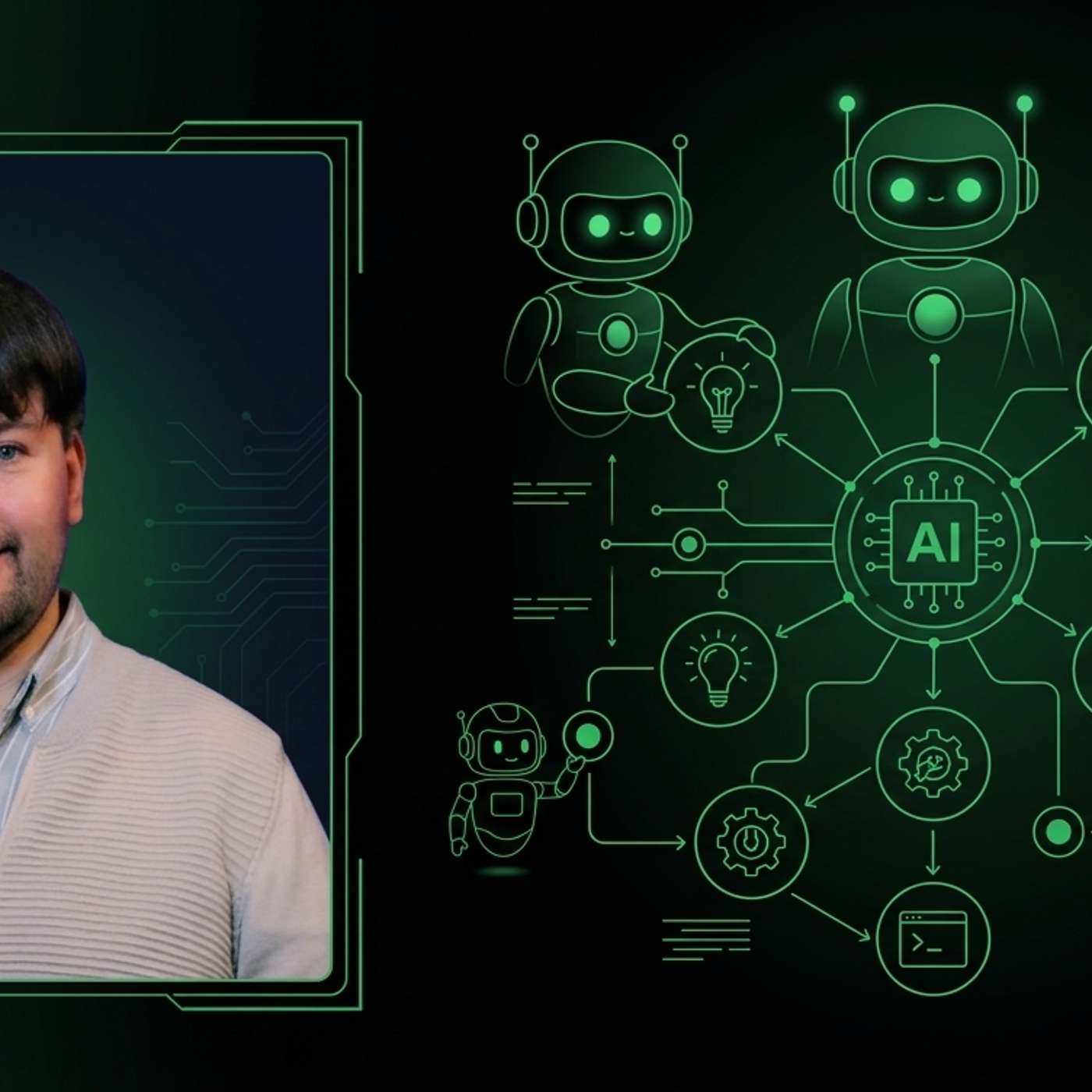
'Vibe coding' is hands-off prototyping where you don't review the code. 'Agentic engineering' is a deep discipline where professionals use coding agents to build production-ready software. This requires significant expertise to guide the agents and ensure quality, a crucial distinction for serious development.

The role of a software engineer is evolving. Instead of manually writing all code, they are increasingly becoming managers of specialized AI agents that write, test, refactor, and deploy code. This moves their focus to a higher level of system design and orchestration.
