Get your free personalized podcast brief
We scan new podcasts and send you the top 5 insights daily.
With AI agents handling routine coding, the engineer's role evolves. Their most valuable contributions become testing the AI's output, identifying edge cases, and making roughly ten critical product and architectural decisions daily, rather than simply writing code from scratch.

Related Insights
AI tools commoditize initial code generation, the 'easy 80%'. The true value of an engineer is now their ability to determine when AI-generated code is correct, safe, and trustworthy—the crucial final 20% of the work where human judgment is irreplaceable.
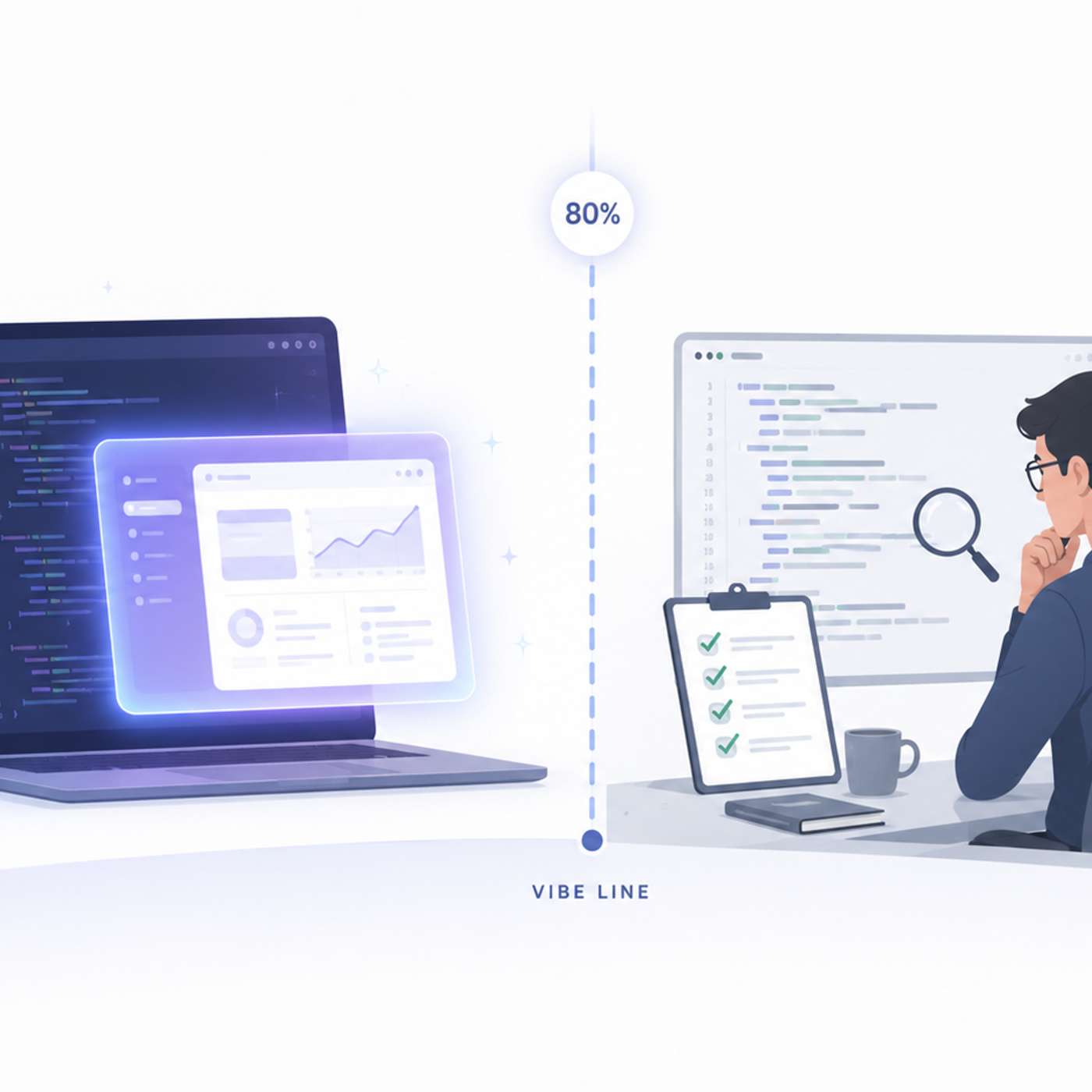
The role of the mid-level engineer is shifting from writing code to managing dozens of AI coding agents using natural language. The primary skills are becoming code review, evaluation, and system-level orchestration. This fundamentally changes the engineering career path, de-emphasizing coding proficiency for entry-level talent and elevating architectural oversight.

As AI becomes proficient at generating code, the critical human skill is no longer writing the code itself. Instead, the focus shifts to deciding *what* to build and maintaining a high standard of quality for the AI-generated output. The key contribution becomes strategic direction and taste.

With AI handling a large percentage of code generation, the core work of an engineer is evolving. The job now involves spending more time planning what code to generate and carefully reviewing the AI's output, a significant shift from the traditional focus on manually writing code.

As AI agents handle the mechanics of code generation, the primary role of a developer is elevated. The new bottlenecks are not typing speed or syntax, but higher-level cognitive tasks: deciding what to build, designing system architecture, and curating the AI's work.

In an AI-first world, an engineer's role shifts from writing feature code to building leverage. They become akin to staff engineers for AI agents, creating the systems, documentation, and automated tests (the "harness") that empower AI to produce high-quality work autonomously.

With AI agents and non-technical staff now generating code, the primary bottleneck has moved from code creation to code review. The human's job is becoming less about writing lines of code and more about applying taste, judgment, and architectural oversight to AI-generated outputs.

AI excels at generating code, making that task a commodity. The new high-value work for engineers is "verification”—ensuring the AI's output is not just bug-free, but also valuable to customers, aligned with business goals, and strategically sound.

As AI automates the 'write code' step, the primary role for human engineers shifts downstream. They will be increasingly responsible for testing and manual verification—tasks historically disliked by developers and previously handled by dedicated QA teams.

As AI generates more code, the core engineering task evolves from writing to reviewing. Developers will spend significantly more time evaluating AI-generated code for correctness, style, and reliability, fundamentally changing daily workflows and skill requirements.