Get your free personalized podcast brief
We scan new podcasts and send you the top 5 insights daily.
The ability to rapidly build custom software with AI is tempting. However, the ongoing maintenance and data quality assurance are the core business of SaaS companies. Buying a dedicated tool like a CRM often provides more value and less overhead than a custom-built solution, even with AI assistance.

Related Insights
Even tech-savvy users who build their own AI agents are increasingly turning to paid software. The ongoing cost and hassle of maintaining personal, "vibe-coded" tools makes polished SaaS solutions more attractive, demonstrating the enduring value of professional software development and support.
As AI makes the software itself easier to build and replicate, the durable value of a SaaS company is no longer the code. Instead, the moat lies in the customer relationship, the proprietary data, the system of record it represents, and the deep understanding of user workflows.

Companies will adopt a hybrid "build vs. buy" approach. They will use AI agents to build bespoke, simple software "screwdrivers" for specific workflows on the fly, eliminating many niche SaaS tools. However, they will continue to "rent" large, foundational platforms like ERPs and CRMs, which serve as heavy-duty "trucks."

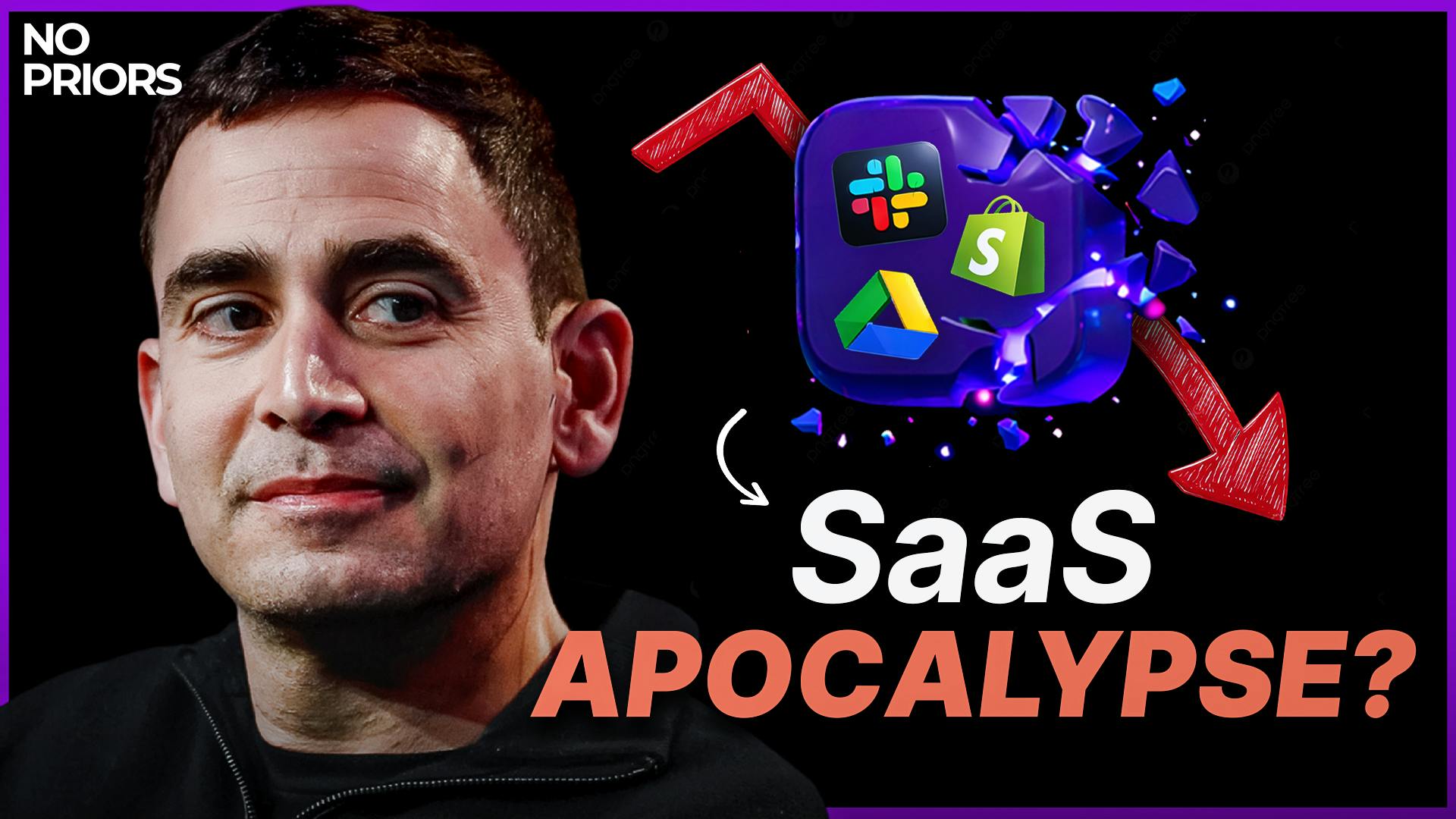
Companies are now rejecting expensive SaaS contracts because their internal teams can build equivalent custom solutions in days using AI coding tools. This trend signals a fundamental threat to the traditional SaaS business model, as the 'build vs. buy' calculation has dramatically shifted.

For decades, buying generalized SaaS was more efficient than building custom software. AI coding agents reverse this. Now, companies can build hyper-specific, more effective tools internally for less cost than a bloated SaaS subscription, because they only need to solve their unique problem.

Building a custom tool with AI to replace a SaaS subscription seems cost-effective, but building is only 10% of the work. The other 90% is the often-forgotten overhead of maintenance, on-call support, security, and bug fixes that SaaS vendors typically handle.

AI tooling accelerates the implementation phase of software development but doesn't shortcut foundational business tasks like understanding customer needs or iterating on feedback. The fundamentals of identifying a problem, finding customers, and retaining them remain the most time-consuming part of building a SaaS.

The fantasy of replacing a major SaaS platform like Salesforce with a custom-built tool ignores the total cost of ownership. Beyond initial development, the internal team becomes responsible for documentation, feature upgrades, security, support tickets, and user enablement—functions that are bundled with a commercial product.
With AI commoditizing code creation, the sustainable value for software companies shifts. Customers pay for reliability, support, compliance, and security patches—the 'never ending maintenance commitment'—which becomes the key differentiator when anyone can build an initial app quickly.

The idea that AI will eliminate SaaS is overblown because it incorrectly projects small startup behavior onto large enterprises. Fortune 100s face immense change management, security, and maintenance challenges, making replacing established vendors with internal AI-coded tools impractical.