Get your free personalized podcast brief
We scan new podcasts and send you the top 5 insights daily.
Building a custom tool with AI to replace a SaaS subscription seems cost-effective, but building is only 10% of the work. The other 90% is the often-forgotten overhead of maintenance, on-call support, security, and bug fixes that SaaS vendors typically handle.

Related Insights
While AI can easily replicate simple SaaS features (e.g., a server alert), it poses little threat to deeply embedded enterprise systems. The complexity, integrations, and "dark matter" of these platforms create a "hostage" dynamic where ripping them out is impractical, regardless of cloning capabilities.
A new trend sees AI-native companies leveraging their own AI-assisted developers ('vibe coders') to create internal software that replaces their subscriptions to commercial SaaS products. This represents a significant threat to the traditional SaaS business model, as companies opt to build rather than buy simple tools.

An established customer base is both an asset and a liability. The endless demands for features and support for the core product can consume over 98% of engineering resources. This "trap" leaves little capacity for the focused work needed to create a competitive AI product, causing companies to fall behind.

Companies are now rejecting expensive SaaS contracts because their internal teams can build equivalent custom solutions in days using AI coding tools. This trend signals a fundamental threat to the traditional SaaS business model, as the 'build vs. buy' calculation has dramatically shifted.

For decades, buying generalized SaaS was more efficient than building custom software. AI coding agents reverse this. Now, companies can build hyper-specific, more effective tools internally for less cost than a bloated SaaS subscription, because they only need to solve their unique problem.

ServiceNow CEO Bill McDermott calculates that when accounting for human capital, GPU costs, and tokens, rebuilding a simple platform application with an LLM is ten times costlier than using the existing SaaS solution. This challenges the narrative that AI will replace enterprise platforms.
With AI commoditizing code creation, the sustainable value for software companies shifts. Customers pay for reliability, support, compliance, and security patches—the 'never ending maintenance commitment'—which becomes the key differentiator when anyone can build an initial app quickly.

The current focus in the AI-assisted coding space is on building apps. However, as more companies create custom tools, the critical, unsolved problem becomes who will maintain, update, and secure these apps over the next five years, creating a significant operational burden.
The idea that AI will eliminate SaaS is overblown because it incorrectly projects small startup behavior onto large enterprises. Fortune 100s face immense change management, security, and maintenance challenges, making replacing established vendors with internal AI-coded tools impractical.
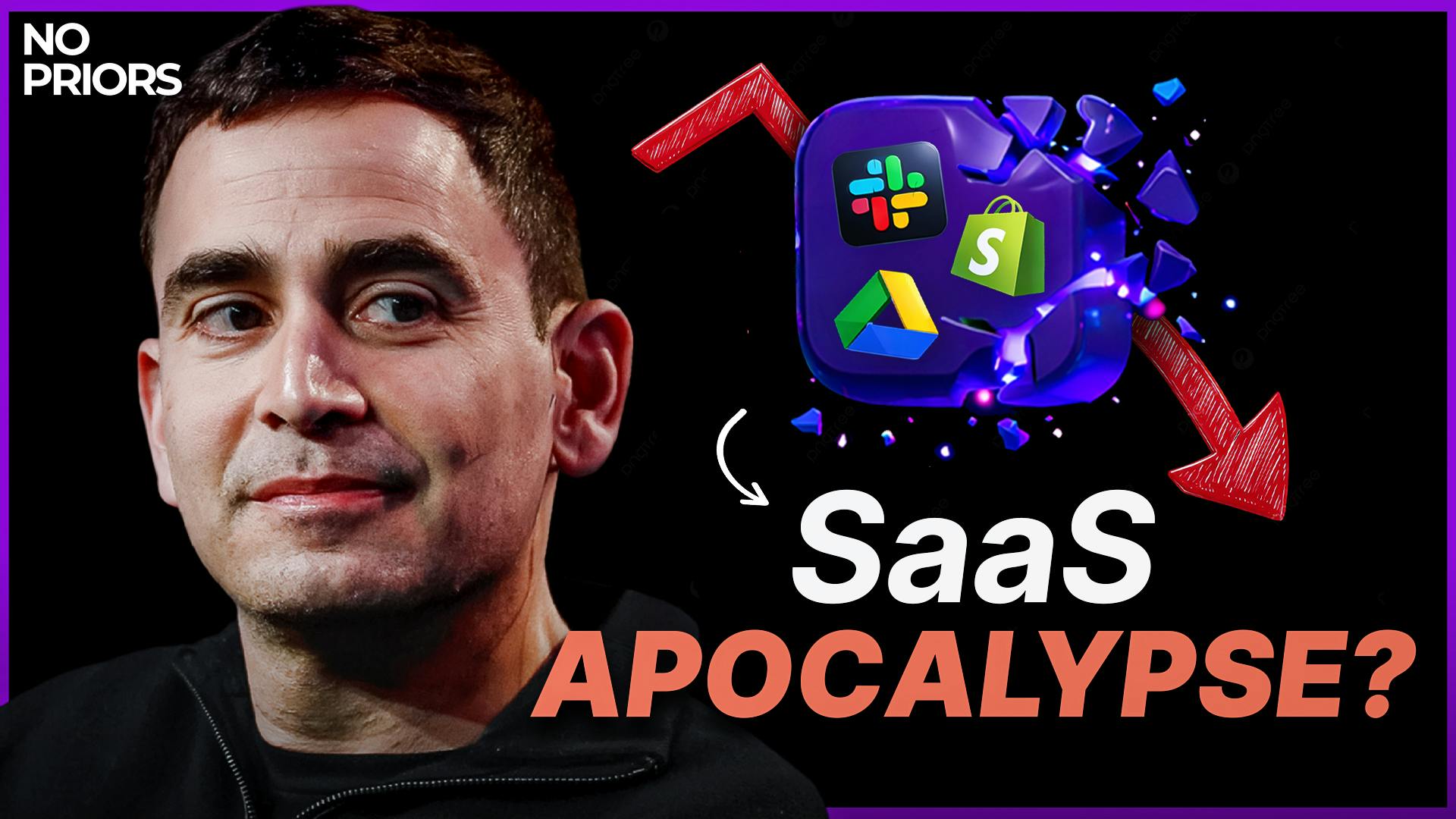
Forgo building custom AI tools for common problems. Instead, purchase 90% of your AI stack from specialized vendors. Reserve your in-house engineering resources for the critical 10% of tasks that are unique to your business and for which no adequate third-party solution exists.
