Get your free personalized podcast brief
We scan new podcasts and send you the top 5 insights daily.
Companies will adopt a hybrid "build vs. buy" approach. They will use AI agents to build bespoke, simple software "screwdrivers" for specific workflows on the fly, eliminating many niche SaaS tools. However, they will continue to "rent" large, foundational platforms like ERPs and CRMs, which serve as heavy-duty "trucks."
Related Insights
The one-size-fits-all SaaS model is becoming obsolete in the enterprise. The future lies in creating "hyper-personalized systems of agility" that are custom-configured for each client. This involves unifying a company's fragmented data and building bespoke intelligence and workflows on top of their legacy systems.
The value in software is shifting from SaaS platforms (like CRMs) to the AI agent layer that automates work on top of them. This will turn established SaaS companies into simple data repositories, or "hooks," diminishing their stickiness and pricing power as agents can easily migrate data.
The barrier to creating software is collapsing. Non-coders can now build sophisticated, personalized applications for specific workflows in under an hour. This points to a future where individuals and teams create their own disposable, custom tools, replacing subscriptions to numerous niche SaaS products.

For decades, buying generalized SaaS was more efficient than building custom software. AI coding agents reverse this. Now, companies can build hyper-specific, more effective tools internally for less cost than a bloated SaaS subscription, because they only need to solve their unique problem.

Turing's CEO claims SaaS is dead for two reasons. First, powerful foundation models drastically lower the cost of building custom software internally. Second, existing SaaS products are built for human interaction via GUIs, not for AI agents that will increasingly use APIs and tool-calling functions directly.

The cloud era created a fragmented landscape of single-purpose SaaS tools, leading to enterprise fatigue. AI enables unified platforms to perform these specialized tasks, creating a massive consolidation wave and disrupting the niche application market.
Instead of integrating with existing SaaS tools, AI agents can be instructed on a high-level goal (e.g., 'track my relationships'). The agent can then determine the need for a CRM, write the code for it, and deploy it itself.
Nimble small and medium-sized businesses will increasingly use AI to build custom internal tools, especially for CRM. They will opt to create the 20% of features they actually need, rather than pay for complex, expensive enterprise software where they ignore 80% of the functionality.

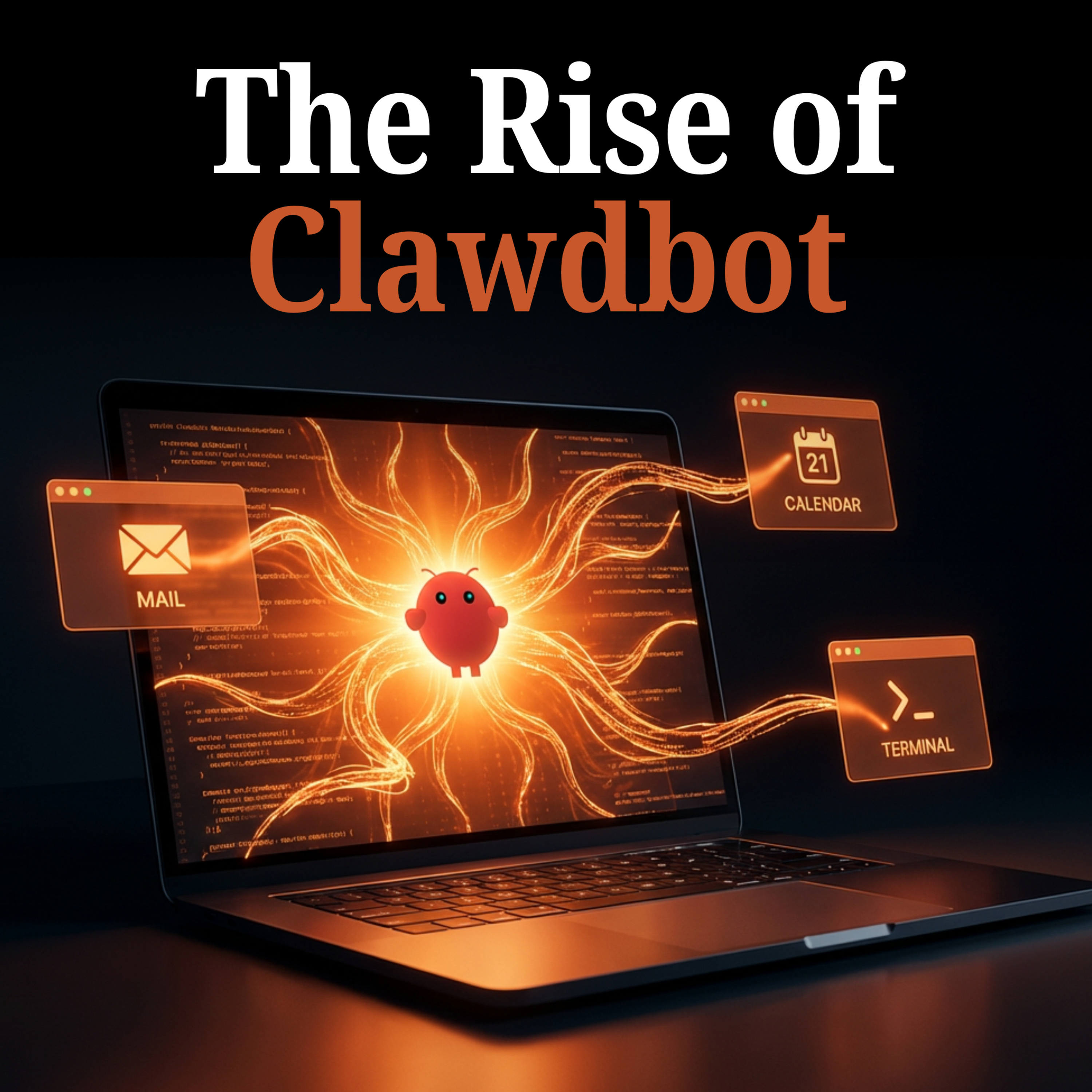
Non-technical users are leveraging agents like Moltbot to build their own hyper-personalized software. By simply describing a problem in natural language, they can create internal tools that perfectly solve their needs, eliminating the need to subscribe to many single-purpose SaaS applications.

Forgo building custom AI tools for common problems. Instead, purchase 90% of your AI stack from specialized vendors. Reserve your in-house engineering resources for the critical 10% of tasks that are unique to your business and for which no adequate third-party solution exists.
