Get your free personalized podcast brief
We scan new podcasts and send you the top 5 insights daily.
Artists excel at pivoting and working with the 'unknowable.' Hans Ulrich Obrist suggests reviving the 1960s concept of an 'artist placement group,' embedding artists within corporations and on boards to bring unique problem-solving skills to business challenges.

Related Insights
Creative solutions often emerge from those not deeply entrenched in a problem. Using the analogy of medical 'grand rounds'—where doctors from unrelated fields consult on a difficult case—Chopra suggests that non-experts can 'think outside the box' precisely because they aren't confined by conventional knowledge.

A16z's decision to add Hollywood agent Michael Ovitz to their board was controversial but genius. It directly led to modeling the firm after Creative Artists Agency (CAA), a novel approach in venture capital. This shows the power of seeking board-level expertise from outside your industry to challenge core assumptions and unlock game-changing strategies.

Top art curator Hans Ulrich Obrist adopts writer J.G. Ballard's term "junction maker" to describe his role. This framing shifts focus from merely managing a domain to actively creating novel intersections between ideas, people, and projects, which is the core of his practice.

Contrary to stereotypes, the best creative leaders possess a strong understanding of business mechanics. They use this knowledge not just for operational success, but as a crucial tool to protect their creative vision and build a robust, defensible enterprise.

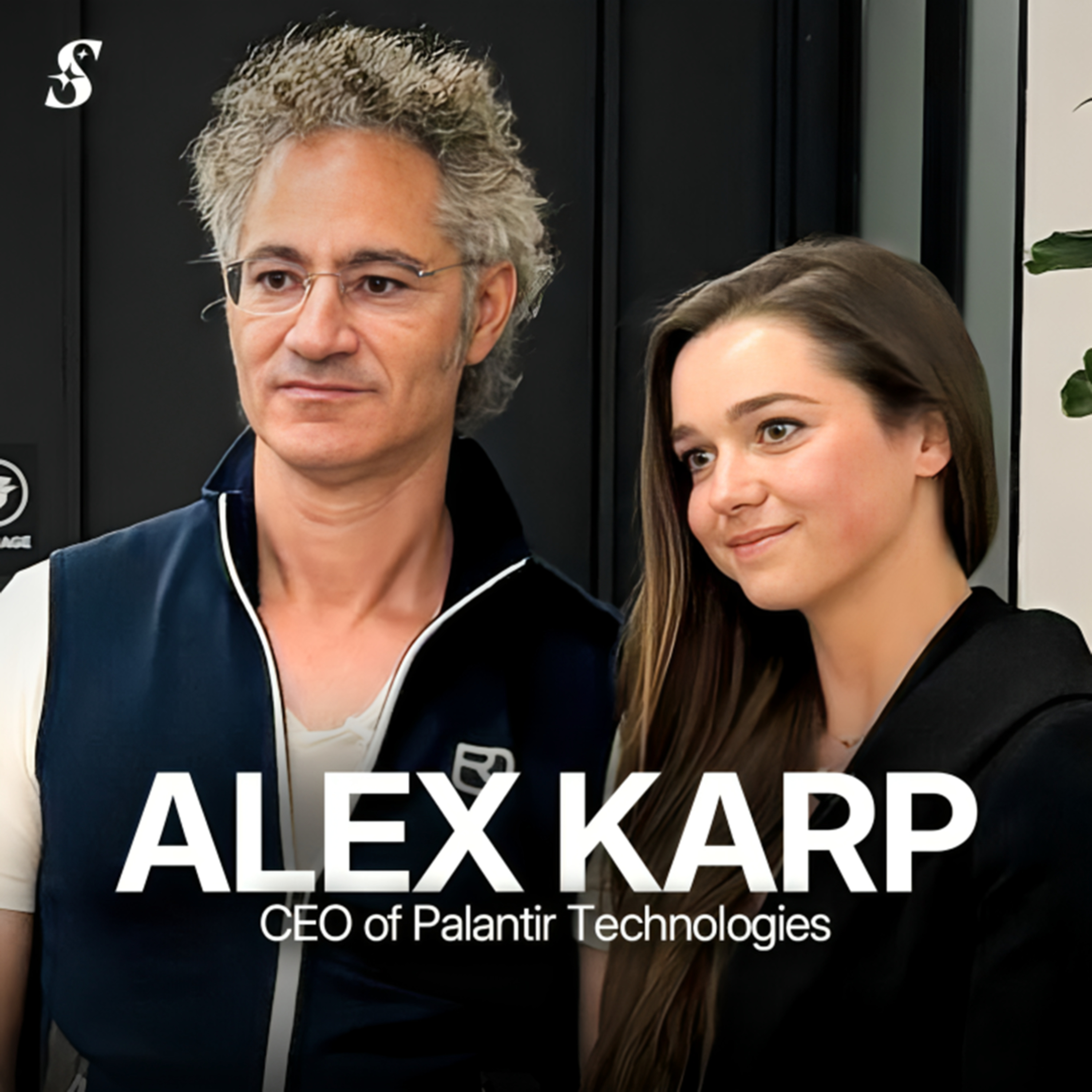
Palantir's product strategy is "more artistic than science." Instead of reacting to current market demands, the company builds solutions that tap into deep, misunderstood societal trends, much like an artist captures the future zeitgeist. This approach means creating products years before their relevance becomes obvious.
Instead of forcing artists into existing frameworks, curator Hans Ulrich Obrist listens for their unfulfilled dreams. He then works to change the 'art world' system itself to make their vision a reality, acting as an enabler rather than a director.
Artists are experts at pivoting and working with questions rather than answers. Obrist suggests businesses should embed artists on their boards or as residents. Their comfort with ambiguity can provide a unique perspective for navigating an unpredictable future, a skill traditional business often lacks.
There's a fundamental irony in creative careers: to succeed professionally, artists must often master the very business skills they initially disdained. The passion for the art form—be it drumming or painting—is not enough. A sustainable career is built upon learning marketing, finance, and management, effectively turning the artist into an entrepreneur to support their own creative output.

Obrist argues that true organizational reinvention comes from challenging the static org chart. At Serpentine, he added entirely new departments for technology and ecology. This structural change allows the institution to produce new kinds of work, rather than just iterating on existing formats.
Transform a creative department from a production house into a strategic partner by changing how you brief them. Instead of giving prescriptive directives, present the business problem that needs to be solved. This empowers creative minds to contribute to strategy and deliver more impactful solutions, not just executions.
