Get your free personalized podcast brief
We scan new podcasts and send you the top 5 insights daily.
Instead of forcing artists into existing frameworks, curator Hans Ulrich Obrist listens for their unfulfilled dreams. He then works to change the 'art world' system itself to make their vision a reality, acting as an enabler rather than a director.

Related Insights
Hans Ulrich Obrist consistently asks creators about their unrealized projects. This question bypasses the limitations of their daily work to reveal their deepest ambitions, utopias, and self-censored ideas. It's a powerful tool for understanding true potential in any field.
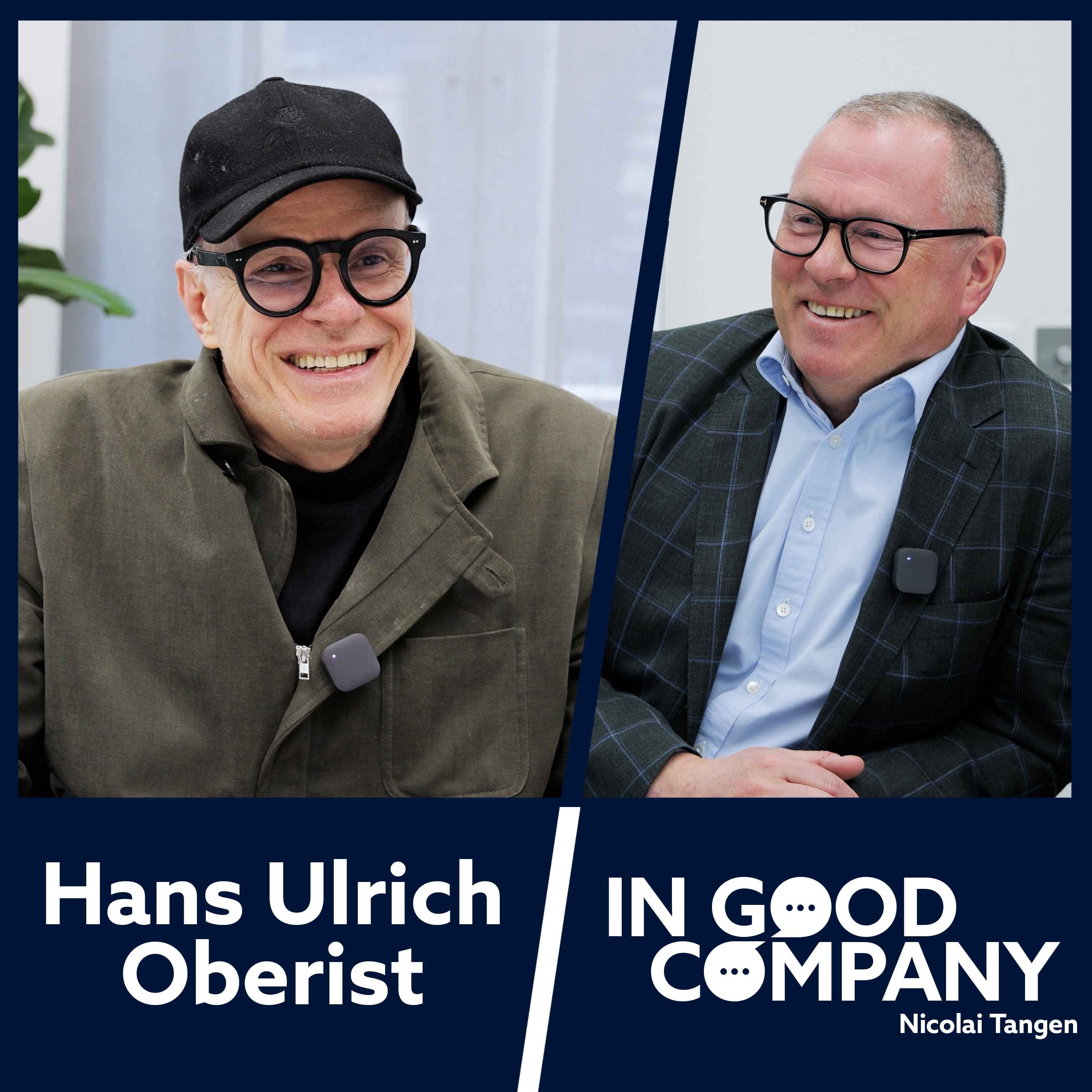
Instead of forcing conformity, create an environment where diverse specialists—the "wildflowers"—can thrive. The leader's job is not to standardize but to cultivate a space where each person's unique genius can flourish and interact, leading to more interesting outcomes.
Instead of forcing new offerings into existing frameworks, agencies should reverse-engineer their entire structure—talent and processes—from the new creative outputs the market demands. This requires anchoring in core principles while remaining flexible in practices.

Top art curator Hans Ulrich Obrist adopts writer J.G. Ballard's term "junction maker" to describe his role. This framing shifts focus from merely managing a domain to actively creating novel intersections between ideas, people, and projects, which is the core of his practice.
The Serpentine Pavilion program strategically shifted its focus from featuring famous architects to providing a platform for younger, emerging practitioners. This turned the program into a powerful launchpad, diversifying the field and accelerating the careers of future industry leaders.
Artists are experts at pivoting and working with questions rather than answers. Obrist suggests businesses should embed artists on their boards or as residents. Their comfort with ambiguity can provide a unique perspective for navigating an unpredictable future, a skill traditional business often lacks.
Obrist argues that true organizational reinvention comes from challenging the static org chart. At Serpentine, he added entirely new departments for technology and ecology. This structural change allows the institution to produce new kinds of work, rather than just iterating on existing formats.
At his first company, Hastings learned that treating software development like a manufacturing process with rules to reduce errors led to declining talent density. High-performers thrive in an environment of inspiration and creativity, not rigid processes that drive them out.
![Reed Hastings - Building Netflix - [Invest Like the Best, EP.453] thumbnail](https://megaphone.imgix.net/podcasts/2f1ecac4-e4ba-11f0-a8e8-777eb8de0c5a/image/28fb3c25b09448a35f17657a5e614900.jpg?ixlib=rails-4.3.1&max-w=3000&max-h=3000&fit=crop&auto=format,compress)
Resisting short-termism, Hans Ulrich Obrist designs projects that can evolve for decades. His "Do It" exhibition, running for 33 years, constantly learns and adapts. This model treats a project not as a static outcome but as a dynamic system designed for longevity and continuous learning.
Artists excel at pivoting and working with the 'unknowable.' Hans Ulrich Obrist suggests reviving the 1960s concept of an 'artist placement group,' embedding artists within corporations and on boards to bring unique problem-solving skills to business challenges.