Get your free personalized podcast brief
We scan new podcasts and send you the top 5 insights daily.
AI development is entering a recursive phase. OpenAI's latest Codex model was used to debug its own training, while Anthropic is approaching 100% AI-generated code for its own products. This accelerates development cycles and points towards more autonomous systems.

Related Insights
The development of Claude Cowork demonstrates a massive acceleration in product velocity. The entire application was written by its underlying AI agent, Claude Code, in just a week and a half. This showcases how AI-driven coding is collapsing development cycles for new software products.

AI coding has advanced so rapidly that tools like Claude Code are now responsible for their own development. This signals a fundamental shift in the software engineering profession, requiring programmers to master a new, higher level of abstraction to remain effective.

The latest models from Anthropic (Opus 4.6) and OpenAI (Codex 5.3) represent two distinct engineering methodologies. Opus is an autonomous agent you delegate to, while Codex is an interactive collaborator you pair-program with. Choosing a model is now a workflow decision, not just a performance one.

Unlike previous models that frequently failed, Opus 4.5 allows for a fluid, uninterrupted coding process. The AI can build complex applications from a simple prompt and autonomously fix its own errors, representing a significant leap in capability and reliability for developers.

In an extreme example of recursive development, Block's team uses their open-source AI agent, Goose, to write most of the new code for the Goose project itself. The ultimate goal is for the agent to become completely autonomous, rewriting itself from scratch for each release.

Inspired by fully automated manufacturing, this approach mandates that no human ever writes or reviews code. AI agents handle the entire development lifecycle from spec to deployment, driven by the declining cost of tokens and increasingly capable models.
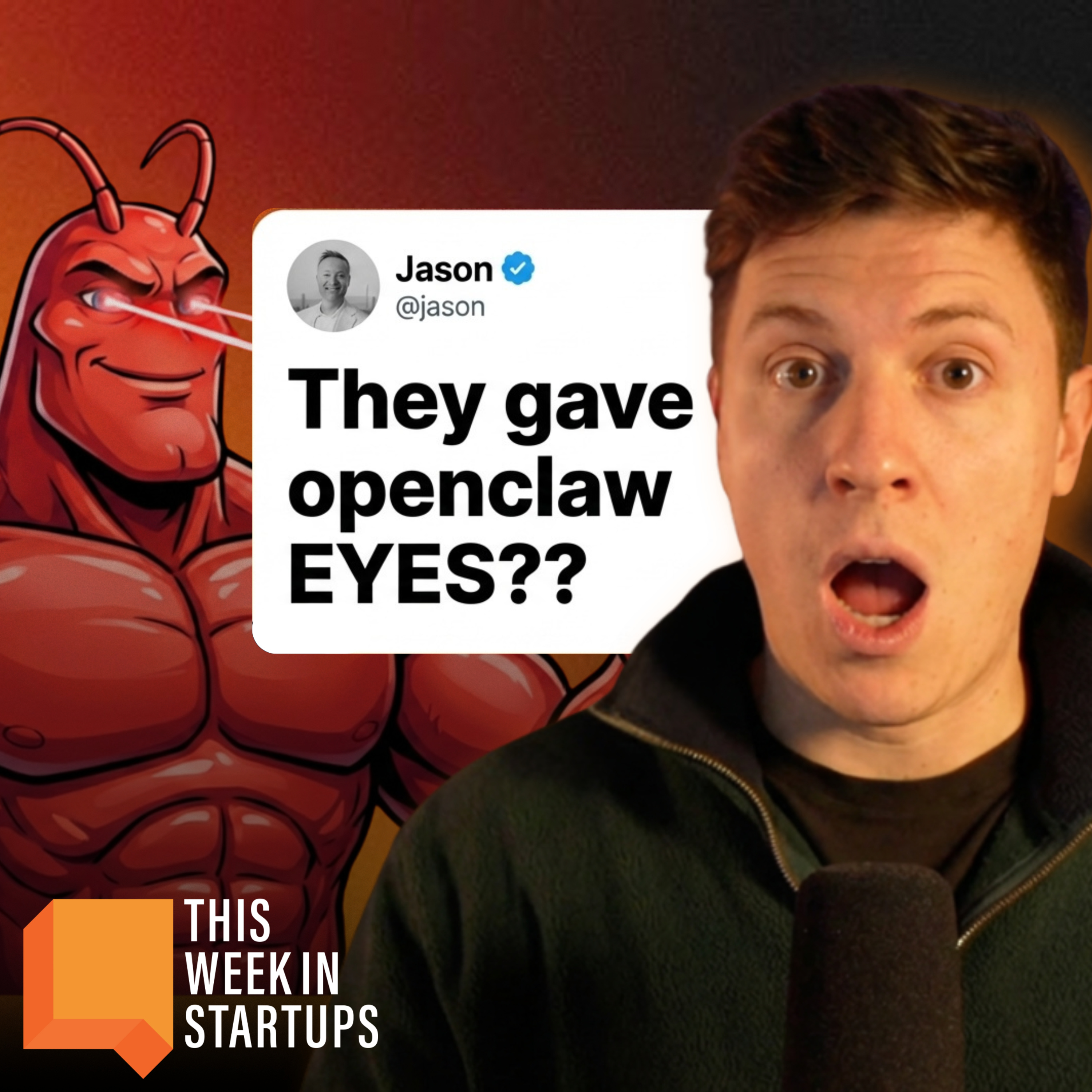
Claude Code can take a high-level goal, ask clarifying questions, and then independently work for over an hour to generate code and deploy a working website. This signals a shift from AI as a simple tool to AI as an autonomous agent capable of complex, multi-step projects.

Anthropic CEO Dario Amadei's two-year AGI timeline, far shorter than DeepMind's five-year estimate, is rooted in his prediction that AI will automate most software engineering within 12 months. This "code AGI" is seen as the inflection point for a recursive feedback loop where AI rapidly improves itself.
Companies like OpenAI and Anthropic are not just building better models; their strategic goal is an "automated AI researcher." The ability for an AI to accelerate its own development is viewed as the key to getting so far ahead that no competitor can catch up.
A key strategy for labs like Anthropic is automating AI research itself. By building models that can perform the tasks of AI researchers, they aim to create a feedback loop that dramatically accelerates the pace of innovation.