Get your free personalized podcast brief
We scan new podcasts and send you the top 5 insights daily.
Despite popular perception, often shaped by film adaptations, Emily Bronte's novel is not a traditional love story. At its core, it is a shockingly violent and complex narrative about cycles of vengeance, abuse, and obsession, more akin to a Greek tragedy than a romance.

Related Insights
Emily Bronte's confusing use of repeated names (e.g., Catherine and Cathy) is a deliberate literary device, not lazy writing. This "compulsive repetition" functions like a Greek tragedy, trapping characters in dark cycles of hatred and obligation that are passed down through generations.
The art of great storytelling lies not just in the conclusion but in the skill of prolonging the journey. The creator knows the ending but strategically uses red herrings and tension to keep the audience engaged and away from the truth for as long as possible.

Famous opening lines like 'It is a truth universally acknowledged...' are not the author's voice but an ironic representation of a small community's foolish consensus. These authoritative statements are almost always questionable or wrong, a device Austen uses to critique social gossip and groupthink.
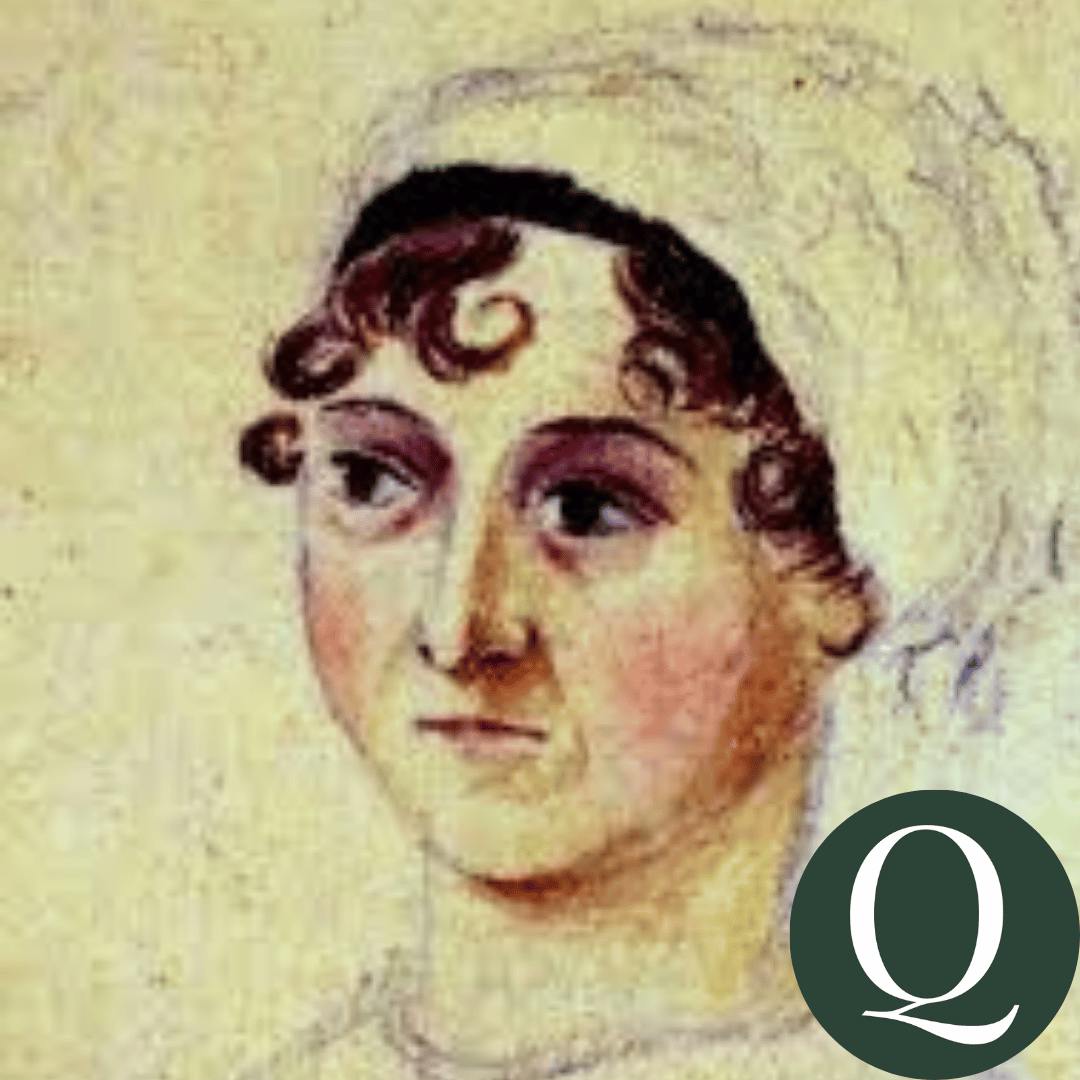
Austen pioneered the 'free indirect style,' where the third-person narrative adopts a character's thoughts, feelings, and—crucially—their delusions. This forces the reader to actively distinguish a character's biased perspective from reality, a technique used powerfully to show internal conflict in novels like 'Persuasion' and 'Emma.'
The dramatic tension in 19th-century novels hinges on the near-impossibility of divorce. Marriage was an irreversible, high-stakes decision, making courtship the central drama. The speaker jokes that while liberal divorce laws benefited society, they were "very bad for the English novel" because they removed this fundamental, life-altering conflict.
Contrary to being escapist, the best fantasy literature, from Tolkien to L'Engle, uses imaginary worlds to explore complex real-world issues like war, environmentalism, and social conformity. This fictional distance allows authors to make profound statements and challenge readers' assumptions without being preachy.

Contrary to her modern image, Emily Bronte was described as difficult, antisocial, and held conservative "high Tory" political views. She was reportedly snobbish, unfashionable, and even violent, a complex personality that resists easy categorization as a proto-feminist hero.
Austen's work possesses a unique duality: it is accessible enough for a 13-year-old to enjoy, yet so layered with technical and psychological complexity that scholars can reread it for a lifetime and continually discover new nuances. This blend of superficial simplicity and deep sophistication is her singular achievement.
Unlike watching a movie as an observer, reading makes you embody the character, lighting up the brain as if you're living their experiences. This unique power to generate deep empathy is why books face such intense banning efforts from those who want to control who children empathize with.

The romantic image of the Brontes as isolated figures on the moors is misleading. Their household subscribed to literary journals, and their childhood fantasy worlds were set in locations like the Pacific and featured contemporary figures like the Duke of Wellington, revealing their engagement with global affairs.