Get your free personalized podcast brief
We scan new podcasts and send you the top 5 insights daily.
The ability for Muse, a personal productivity agent, to generate a six-minute podcast on demand was a complete surprise to the user. Including such unexpected, powerful multimedia capabilities creates moments of delight that significantly elevate the user's perception of the product's value.

Related Insights
Convincing users to adopt AI agents hinges on building trust through flawless execution. The key is creating a "lightbulb moment" where the agent works so perfectly it feels life-changing. This is more effective than any incentive, and advances in coding agents are now making such moments possible for general knowledge work.

The key product innovation of Agent Skills is changing the user's perception of AI. Instead of just a tool that answers questions, AI becomes a practical executor of defined workflows, making it feel less like a chat interface and more like powerful, responsive software.

Muse's ability to create a printable PDF newsletter for family discussion is a standout feature. It shows the value of a personal agent lies in facilitating real-world, offline connections rather than keeping users glued to a screen, a key insight for consumer AI design.
A key feature driving positive sentiment for Meta's Muse agent is its transparent user interface. Unlike competitors where tasks happen invisibly, Muse lets users watch a virtual browser perform actions in real-time. This "show your work" approach builds confidence and provides a more satisfying and trustworthy user experience.
Muse uses on-demand image generation to create and animate its avatar, which even gets a tiny laptop when working. This delightful, dynamic interaction transforms the agent from a tool into a character, fostering a stronger emotional connection and user engagement than a static UI.
Early developers report that Fable 5 demonstrates product intuition. When asked to build a podcast app, it independently added features like variable playback speeds and word highlighting, showing a new level of agentic capability.
Early users using Simple AI for prank calls was a powerful, unexpected signal. This behavior vividly demonstrated the voice AI's stunning realism, which became the core value proposition that attracted their first B2B customers.

The creator realized his project's true potential only when the AI agent, unprompted, figured out how to transcribe an unsupported voice file by converting it and using an OpenAI API. This shows how a product's core value can derive from emergent, unexpected AI capabilities, not just planned features.
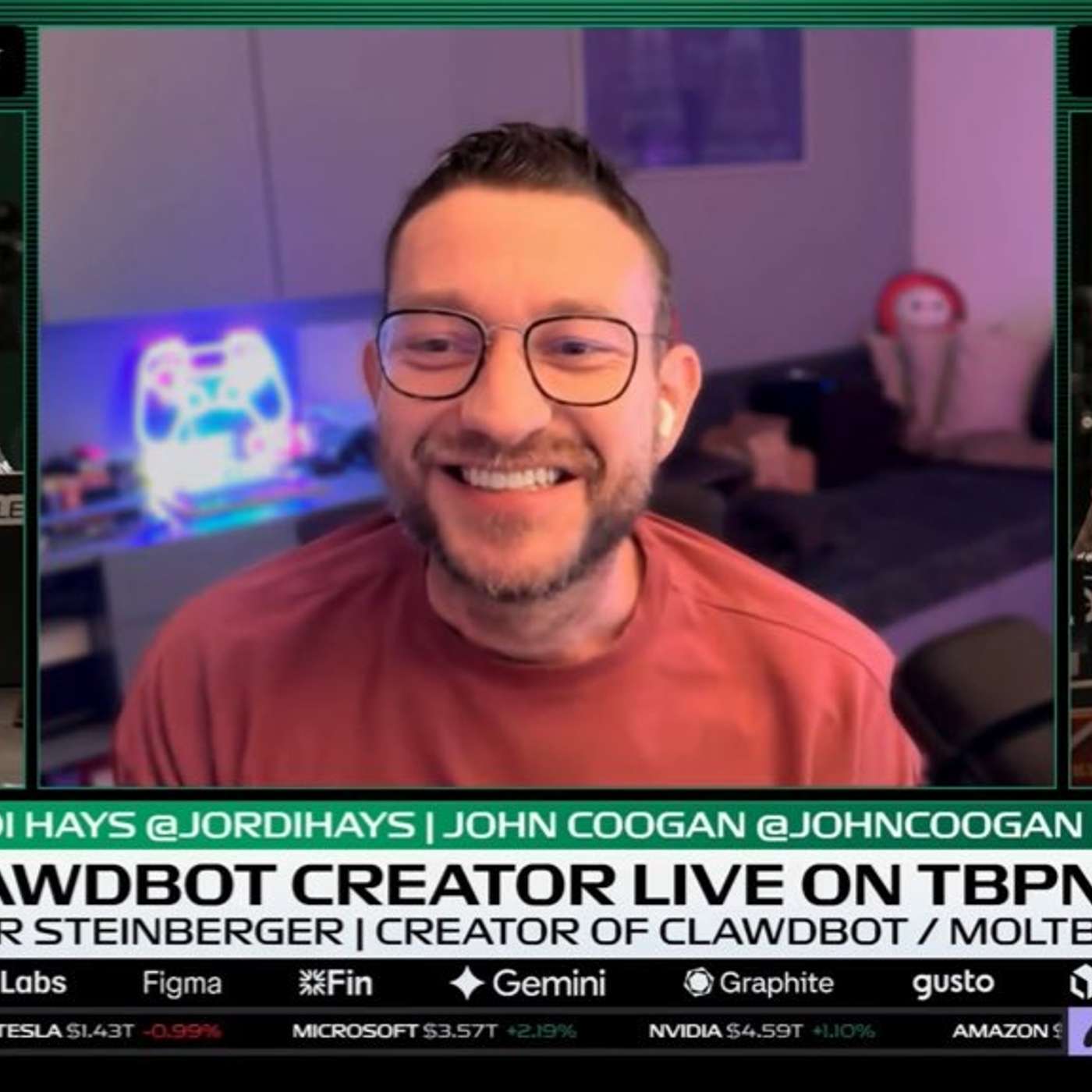
Users are converted when AI demonstrates "unreasonable hospitality" by proactively offering to build software, or when it shows recursive self-improvement. These moments of unexpected agency and intelligence are more powerful than simply executing commands.

Success in AI product development is not about marketing 'AI features.' It's using technology behind the scenes to solve user problems so seamlessly that it feels like magic. The user shouldn't notice the AI, only that their problem is solved effortlessly.
