Get your free personalized podcast brief
We scan new podcasts and send you the top 5 insights daily.
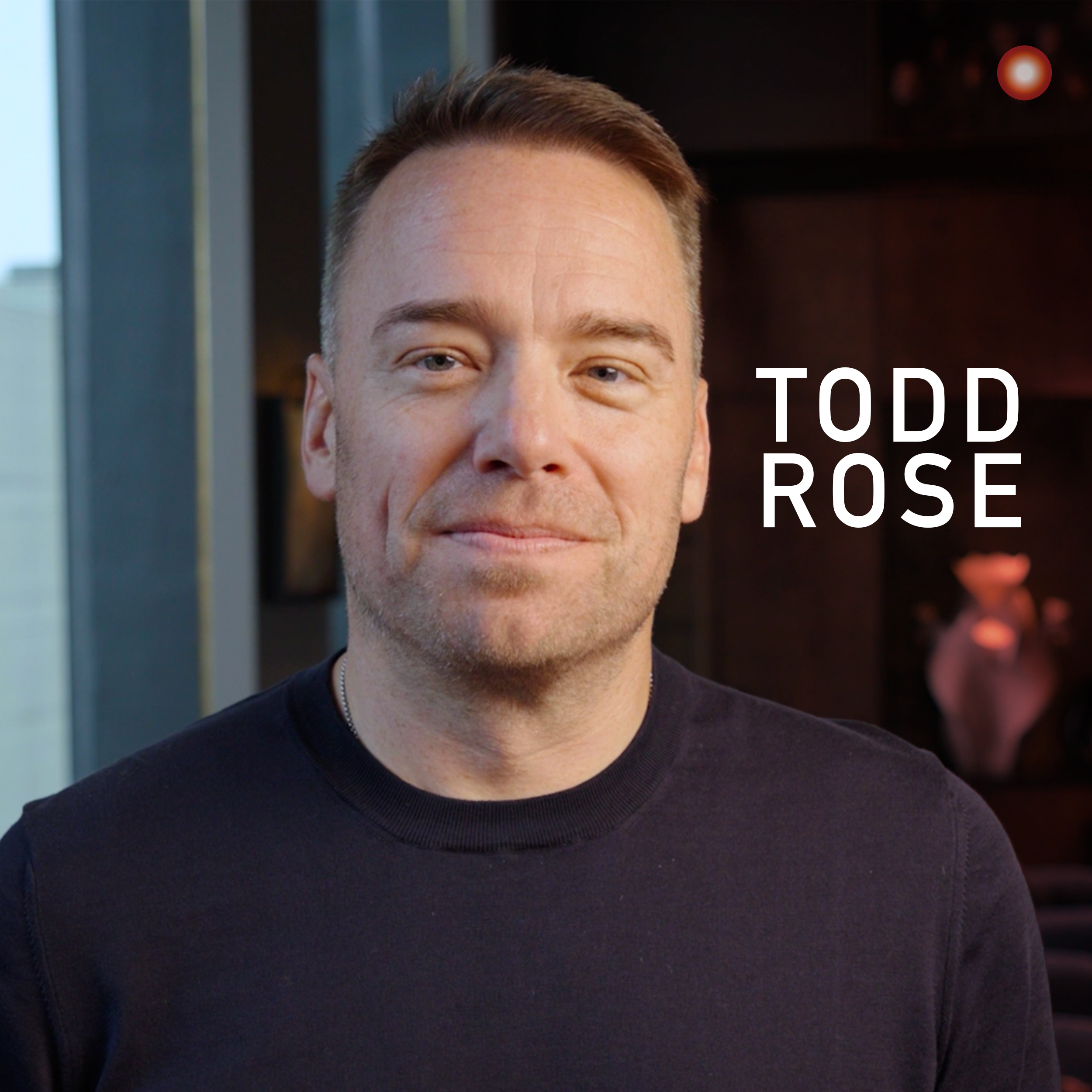
High school dropout Todd Rose thrived in an unconventional honors program that prioritized debate over tests. This shows that performance is a function of 'fit' between an individual's unique learning style and their environment, rather than a fixed measure of talent.
Related Insights
Harris credits her success not to innate talent, but to key figures like teachers and parents who told her she was special when she was young. She emphasizes that the crucial element was not whether it was true, but that she believed them, which shaped her self-perception and ambition.

A study of graduates from Sudbury Valley School, where students direct their own learning without grades, found they succeed in college. Lacking a traditional academic background was less important than the self-reliance, problem-solving skills, and personal responsibility they had developed.

Professor Jeffrey Pfeffer reframes productivity as 'ability times motivation times your environment.' This model posits that an individual's output is significantly multiplied by being surrounded by high-caliber talent. The quality of the people in an organization elevates everyone's work, a factor more critical than individual drive alone.

The conventional path demands you follow a standardized track and just be 'better.' Unconventionally successful people ('dark horses') invert this. They prioritize personal fulfillment, and professional excellence becomes the natural byproduct of that authentic pursuit.
Instead of standard assignments, a teacher challenged a failing Elon Lee to find and fix errors in a new physics textbook. This reframing of education as a real-world research project ignited his passion, proving that unconventional, problem-solving-based tasks can engage students who struggle with traditional learning.

Child prodigies excel at mastering existing knowledge, like playing a perfect Mozart sonata. To succeed as adults, they must transition to creation—writing their own sonata. This fundamental shift from rote skill to original thinking is where many prodigies falter because the standards for success change completely.

The speaker views his lack of natural academic talent as a "superpower." This self-awareness forced him to abandon competing on raw intelligence and instead develop a more robust system of consistency and accountability, which ultimately proved more effective for long-term success.

Housel bypassed traditional high school for competitive skiing, gaining autonomy and real-world skills. He argues this prepared him better for college and life than a standard academic path, as he was more mature and intrinsically motivated when he finally chose to learn.
![[REPLAY] Morgan Housel – The Psychology of Money (Capital Allocators, EP.155) thumbnail](https://static.libsyn.com/p/assets/f/b/7/6/fb76e1c8bfb69e8dd959afa2a1bf1c87/CA_Square_logo_light_background_6.26.24.jpg)
Struggling with the GRE's analytical section, Todd Rose failed with the standard 'in-your-head' method but excelled after his engineer father suggested a visual strategy that fit his poor working memory. The optimal strategy is not universal; it's the one that aligns with your unique cognitive profile.
The growing number of neurodivergent candidates is not just a trend driven by new diagnoses. It is a positive outcome of an educational system that successfully mainstreamed students, teaching them skills to manage their differences and thrive, creating a valuable new talent pipeline for employers.
