Get your free personalized podcast brief
We scan new podcasts and send you the top 5 insights daily.
In capital-intensive sectors like defense tech, renders and presentations have limited impact. Hop Aero gains credibility with the DoD and investors by conducting live engine "hot fire" tests, making its ambitious plans tangible.

Related Insights
Emil Michael warns defense tech founders that a prototype is not enough. The Department of War requires a credible plan for mass production. Startups must prove they have mastered the "skilled manufacturing piece" to win large contracts.

Unlike software, where customer acquisition is the main risk, the primary diligence question for transformative hardware is technical feasibility. If a team can prove they can build the product (e.g., a cheaper missile system), the market demand is often a given, simplifying the investment thesis.

Instead of building its final passenger jet, Boom first developed a smaller, sub-scale prototype to prove its Mach 2.2 technology. This startup-like, sequential approach proves the core concept at a much lower cost, making the capital-intensive project more manageable and fundable.

By developing unmanned high-Mach aircraft, defense tech startup Hermes can take extreme technical risks impossible with human pilots. This includes pushing vehicles to their absolute limits and even intentionally crashing them ('lawn-darting') to gather crucial data, dramatically accelerating the R&D cycle.

While using advanced digital modeling, Jet Zero gets crucial, rapid feedback by mounting scale models on a truck and driving down a runway. This "cheapest wind tunnel on the planet" demonstrates the irreplaceable value of physical, iterative testing for complex hardware development.

According to Terra Industries' founder, defense contracting in Africa is network-based and solution-first, not bureaucratic. This gives startups an edge over incumbents. Success comes from building a working product and conducting live field demos, bypassing the lengthy proposal processes common in the West.

The venture capital mantra that "hardware is hard" is outdated for the American Dynamism category. Startups in this space mitigate risk by integrating off-the-shelf commodity hardware with sophisticated software. This avoids the high capital costs and unpredictable sales cycles of consumer electronics.

To build credibility for a new safety device without industry access, the founder hired a senior NASA engineer as a consultant. Leveraging expertise and simulation tools from an industry with even higher safety standards, like aerospace, provides powerful third-party validation that can overcome skepticism from incumbents.

While startups excel at invention, Undersecretary Michael points out their primary disadvantage against established primes is the ability to manufacture and scale production reliably. He urges new entrants to build this 'muscle' early, borrowing from the 'old world' to cross the chasm from concept to deployed product.

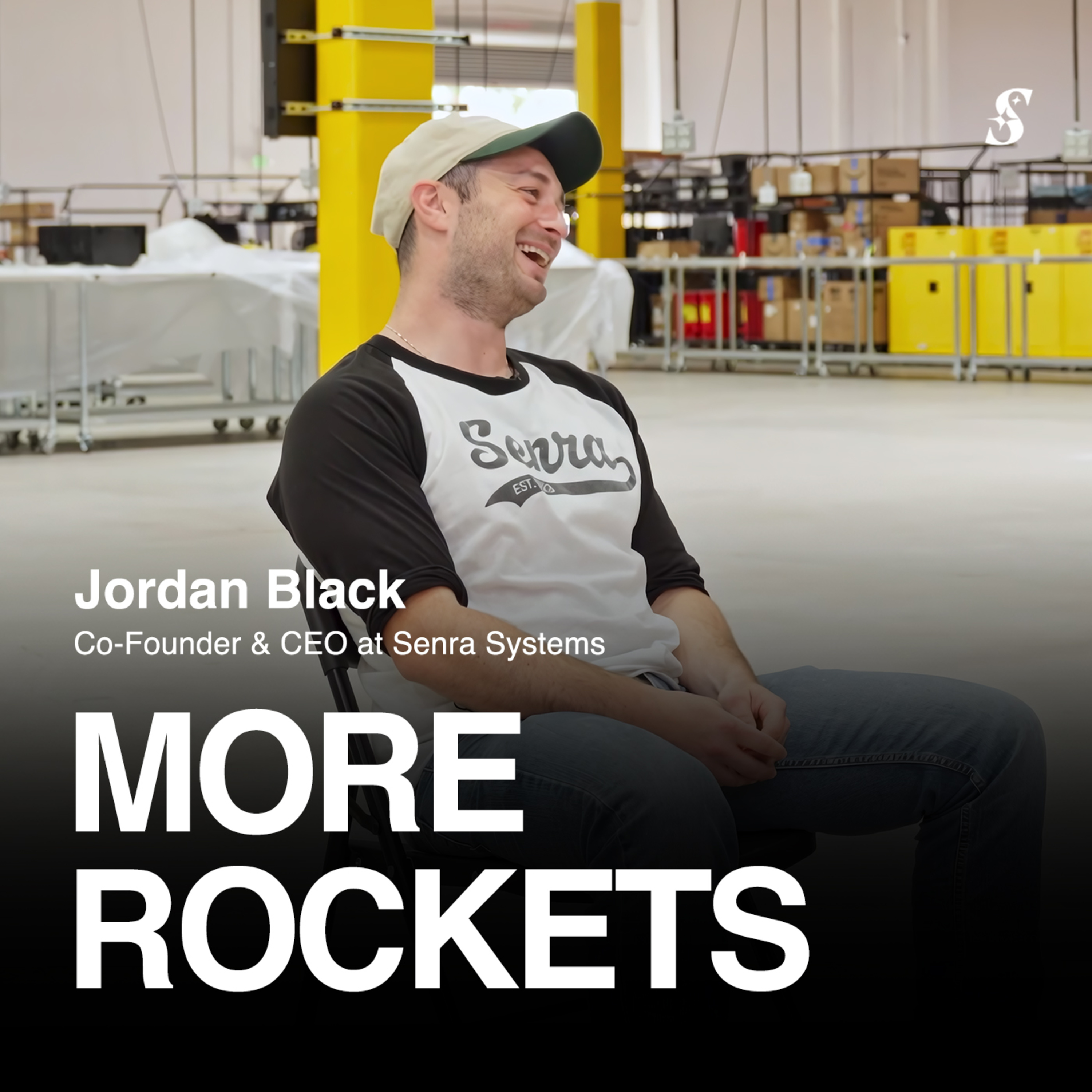
Senra Systems' founder secured early funding not by pitching slides, but by physically demonstrating the contrast between the old, manual process (a 600-page book) and the new, streamlined one (a single machine). This tangible approach makes the value proposition undeniable for investors unfamiliar with the industry's pain points.