Get your free personalized podcast brief
We scan new podcasts and send you the top 5 insights daily.
On's leadership operates as a partnership, allowing some founders to focus on core operations and supply chain (the "humming machine"). This frees up other partners to dedicate their bandwidth to creating future growth engines like apparel, retail, and new sports categories.

Related Insights
Kalshi's co-founders succeed with a semi-co-CEO model where one handles high-level strategy and low-level details (like marketing copy), while the other runs the company's core operations. This division creates a productive, balancing tension.

Founder effectiveness requires a two-phase approach. First, build the operational "machine" of the company—hiring, processes, and product. Only then can the focus shift to identifying and resolving the single biggest bottleneck. Fixing bottlenecks before a system exists is ineffective.

Who Gives A Crap's founders credit their success to a natural division of labor based on skills in product, strategy, and operations. Crucially, they have just enough shared understanding to collaborate effectively without overstepping into each other's domains.

One founder (the Visionary) drives creative vision and product DNA, while the other (the Integrator) translates it into scalable systems and operations. This separation of duties, inspired by the book 'Traction', prevents conflict and enables focused execution, especially in family-run businesses.

Instead of a traditional president or COO, Todd Graves hired a Co-CEO to find someone demonstrably better than him at his weakest areas (finance, IT, supply chain). The shared title gives them the authority and pride to own these functions, freeing the founder to focus on his strengths like marketing and culture.
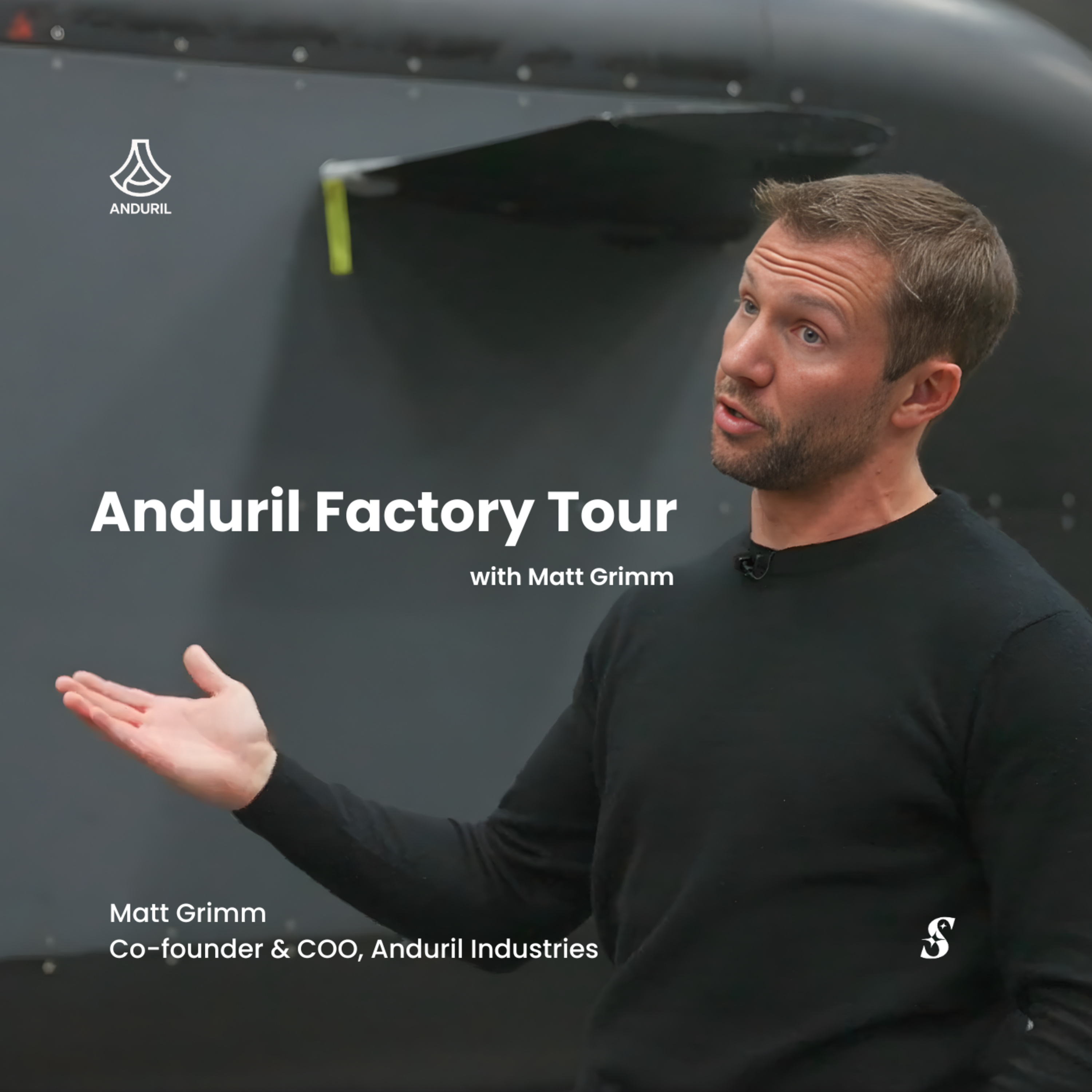
As Anduril scaled, its founders specialized. Palmer Luckey drives product innovation. CEO Brian Schimpf is the strategic 'genius' who sees the global chessboard. Trey Stephens handles investor relations and brand marketing. Matt Grimm acts as COO, the 'chief janitor' managing the complex operational guts of the company.
A common dynamic observed in two-person founding teams is a natural division of labor. One founder focuses externally on customer interviews and deal-making, while the other focuses internally on building the product and technology. This specialization allows the tiny team to cover critical ground efficiently.

To scale his company Exit Five, the founder (the "Visionary") promoted his COO to CEO (the "Integrator"). This structure, from the book *Traction*, allows the creator to focus on ideas and content while the operator runs the business, manages the team, and implements processes.

The co-founders structured their partnership around complementary functions. Lauren acts as the 'visionary,' generating creative ideas, while Laurence serves as the 'filter,' translating those ideas into a profitable and operationally sound business, ensuring both innovation and execution.
The business grew quickly because its three co-founders each brought a distinct, essential skill: creative design, business management, and deep product knowledge (fandom). This division of labor allowed them to scale the company while still working their other full-time jobs, with each founder's expertise complementing the others.