Get your free personalized podcast brief
We scan new podcasts and send you the top 5 insights daily.
The debate over whether "normal people" will use AI agents is misleading. Widespread adoption won't come from standalone agent apps but from agents being seamlessly integrated into the background of existing platforms, making their use completely invisible to the end-user.

Related Insights
Users rarely seek out separate AI functionality. Adoption becomes natural when AI assistance appears contextually within existing workflows, addressing friction points directly where the user is already working. This embedded approach is far more effective than adding AI as a separate, layered-on tool.
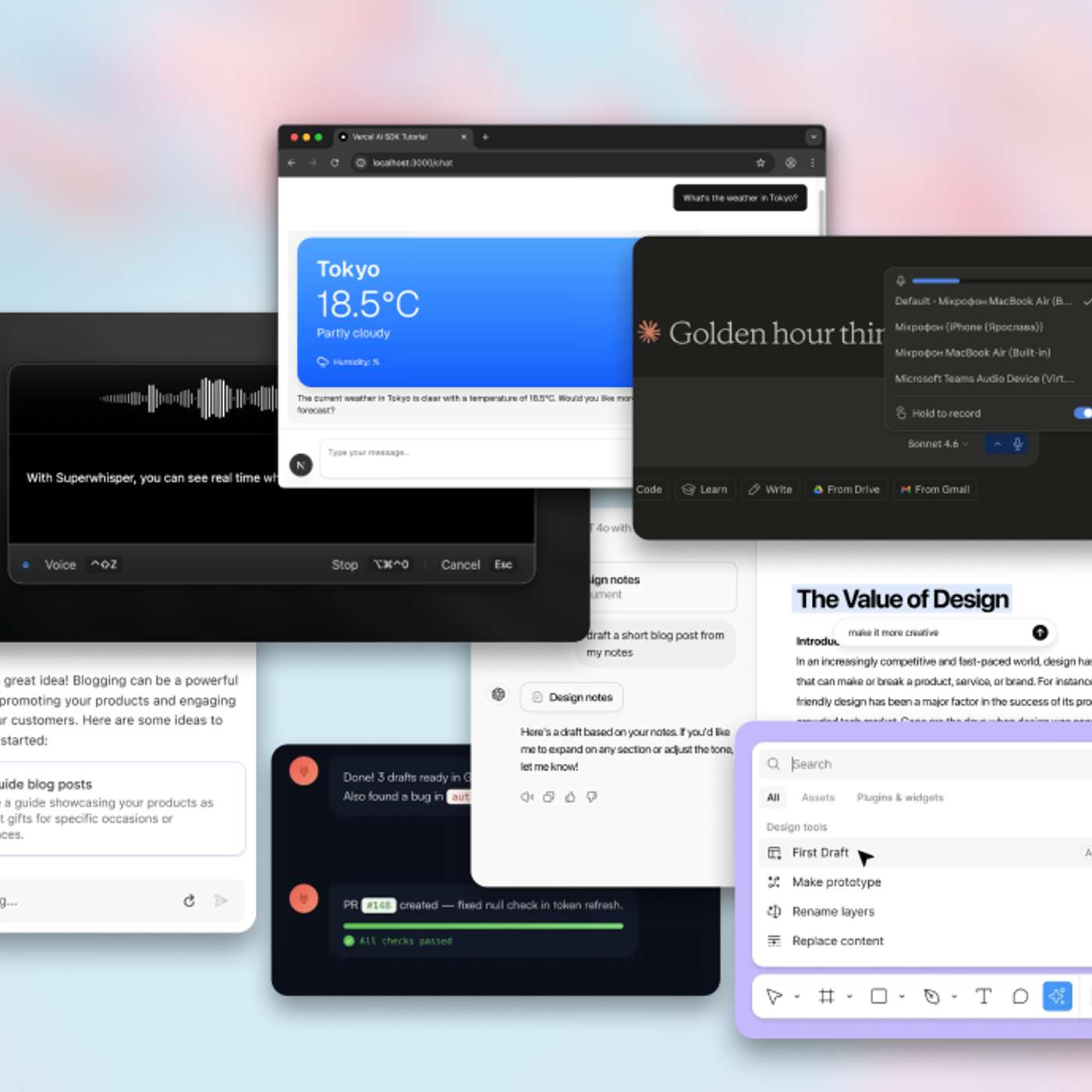
Unlike standalone apps requiring users to seek them out, Google's integration puts AI in the workflow of billions. This removes adoption friction, potentially making AI an invisible, default layer of the internet for the masses rather than a niche product for early adopters.

The next billion AI agent users will not interact via developer-centric interfaces like Telegram. The winning platforms will be opinionated, provide guardrails, and hide technical complexities like tool calls, offering a user experience closer to a polished SaaS product.

Public perception of AI is skewed by headline-grabbing chatbots. However, the most widespread and impactful AI applications are the invisible predictive algorithms powering daily tools like Google Maps and TikTok feeds. These systems have a greater cumulative effect on daily life than their conversational counterparts.
Judging consumer AI's success by chatbot user growth is misleading. The real adoption is happening 'invisibly' as generative AI enhances existing popular experiences, like Instagram's recommendation engine and Amazon's product search, rather than in standalone chat apps.

The 'agents vs. applications' debate is a false dichotomy. Future applications will be sophisticated, orchestrated systems that embed agentic capabilities. They will feature multiple LLMs, deterministic logic, and robust permission models, representing an evolution of software, not a replacement of it.

The most effective application of AI isn't a visible chatbot feature. It's an invisible layer that intelligently removes friction from existing user workflows. Instead of creating new work for users (like prompt engineering), AI should simplify experiences, like automatically surfacing a 'pay bill' link without the user ever consciously 'using AI.'

To get mainstream users to adopt AI, you can't ask them to learn a new workflow. The key is to integrate AI capabilities directly into the tools and processes they already use. AI should augment their current job, not feel like a separate, new task they have to perform.

Unlike new consumer technologies that follow a slow S-curve adoption, AI's impact will be faster because it's being integrated as a feature into already ubiquitous platforms, similar to spellcheck. People will use advanced AI without a conscious adoption decision, accelerating its economic and social effects beyond traditional models.

To drive adoption of AI agents, don't force users into a new application. Instead, integrate the agent directly into their existing collaboration tools like Slack. This approach reduces friction and makes the agent feel like a natural part of the team, leading to higher engagement and user satisfaction.
