Get your free personalized podcast brief
We scan new podcasts and send you the top 5 insights daily.
When Adobe Acrobat made his document software obsolete, Jim McKelvey pivoted. He started charging his competitors to include their marketing materials on a trade show CD-ROM, turning a failing software company into a profitable publishing service.

Related Insights
Instead of fighting incumbents for their entrenched "hostage" customers, startups should focus on "Greenfield Bingo." This strategy involves building a better product and selling it to the steady stream of new companies that are not yet locked into a solution. This approach thrives in markets with high rates of new business formation.

Contrary to fears of a "circular economy," YC founder Paul Graham advises that selling to other startups is optimal. They are smarter, less bureaucratic, and more representative of future trends. A product that succeeds with this discerning group is well-positioned for broader market success.

Pivoting isn't just for failing startups; it's a requirement for massive success. Ambitious companies often face 're-founding moments' when their initial product, even if successful, proves insufficient for market-defining scale. This may require risky moves, like competing against your own customers.

To get rule changes from giants like Visa and MasterCard, Square didn't fight them. Instead, they showed how their technology would bring millions of new, smaller merchants onto the credit card network—a market the incumbents' existing system was too expensive and complex to reach.
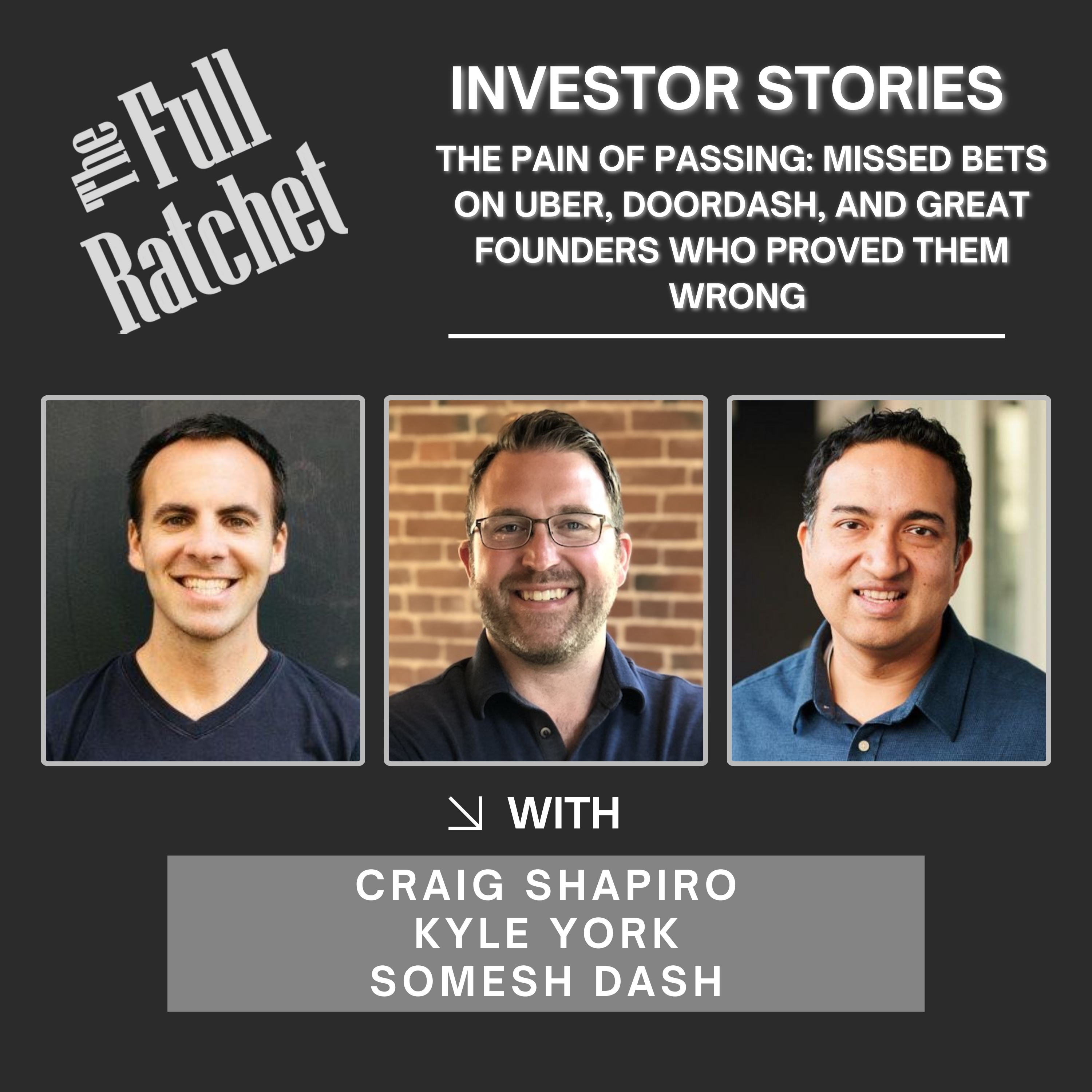
Kyle York of York IE passed on Adhawk despite loving the founder because of a recent bad experience in the ad tech industry. The founder later pivoted the company into a SaaS platform for the flooring industry (Broadloom) and achieved a great exit, demonstrating that strong founders can escape challenging markets.
Success isn't linear. Mobile gaming giant Supercell didn't start with mobile games, and drone delivery firm ZipLine began with a robotic toy. This shows that foundational failures in one area can be the necessary learning experiences that lead to market-defining success in another.
After early failures, Orlando Bravo pioneered software buyouts. This was a contrarian move, as the prevailing view was that these companies were either too old or too risky. This niche focus on making unprofitable software businesses viable became the foundation of his firm's success.

When selling software to an industry with ineffective or slow-moving customers, it's a strong signal to pivot. Instead of serving them, it may be more lucrative to build a vertically integrated solution and compete with them directly.
When the pandemic decimated their hardware business, SkillVari's founders bought out their investors for 50 cents on the dollar. This move gave them freedom to pivot to a software-led model and capture all subsequent upside, turning near-zero revenue into a $1.5M run rate.

Two founders rejected a $20M acquisition offer they felt was too low. After successfully pivoting their business during the pandemic, they returned to the same buyer and received a doubled offer of $40M with better terms. This shows how patience and focusing on business performance can dramatically improve an exit outcome.
