Get your free personalized podcast brief
We scan new podcasts and send you the top 5 insights daily.
Nobel laureate Eric Betzig claims most biological research is stuck in a reductionist approach, grinding cells down to their component parts. He compares this to reverse-engineering a car from a pile of parts and argues for a new paradigm of holistic observation, admitting that science has not yet sufficiently observed life as a complete, functioning system.

Related Insights
IGI Director Brad Ringeisen's training in surface chemistry allowed him to view biology not as a separate field but as a series of molecular reactions. This first-principles approach helps demystify the immense complexity of biological systems, seeing them as orchestrated, not random, chaos.

A convergence of DNA sequencing, CRISPR, and AI allows scientists to move beyond just understanding biology to actively intervening. Medicine is now programming cellular behavior by rewriting DNA, representing a "step function" leap in what's achievable for treating disease at its root cause.

Dr. Levin argues that neuroscience's true subject is the architectural principles of "cognitive glue"—how simple components combine to form larger-scale minds. He believes this process is not unique to neurons and that the field's current focus is too narrow, missing applications in cellular biology, AI, and beyond.

The creation of synthetic cells represents a form of "pure engineering" within biology. Unlike traditional analysis of existing life, this bottom-up approach forces scientists to understand the function of every component. By building a cell from scratch, they gain unparalleled insight into how life actually works.
While physics provides strong quantitative skills, its reductionist mindset is ill-suited for biology. Successful physicist-turned-biologists are those who unlearn their original discipline's approach and adopt a new way of thinking centered on complexity, control experiments, and evolutionary context.
Frances Arnold, an engineer by training, reframed biological evolution as a powerful optimization algorithm. Instead of a purely biological concept, she saw it as a process for iterative design that could be harnessed in the lab to build new enzymes far more effectively than traditional methods.

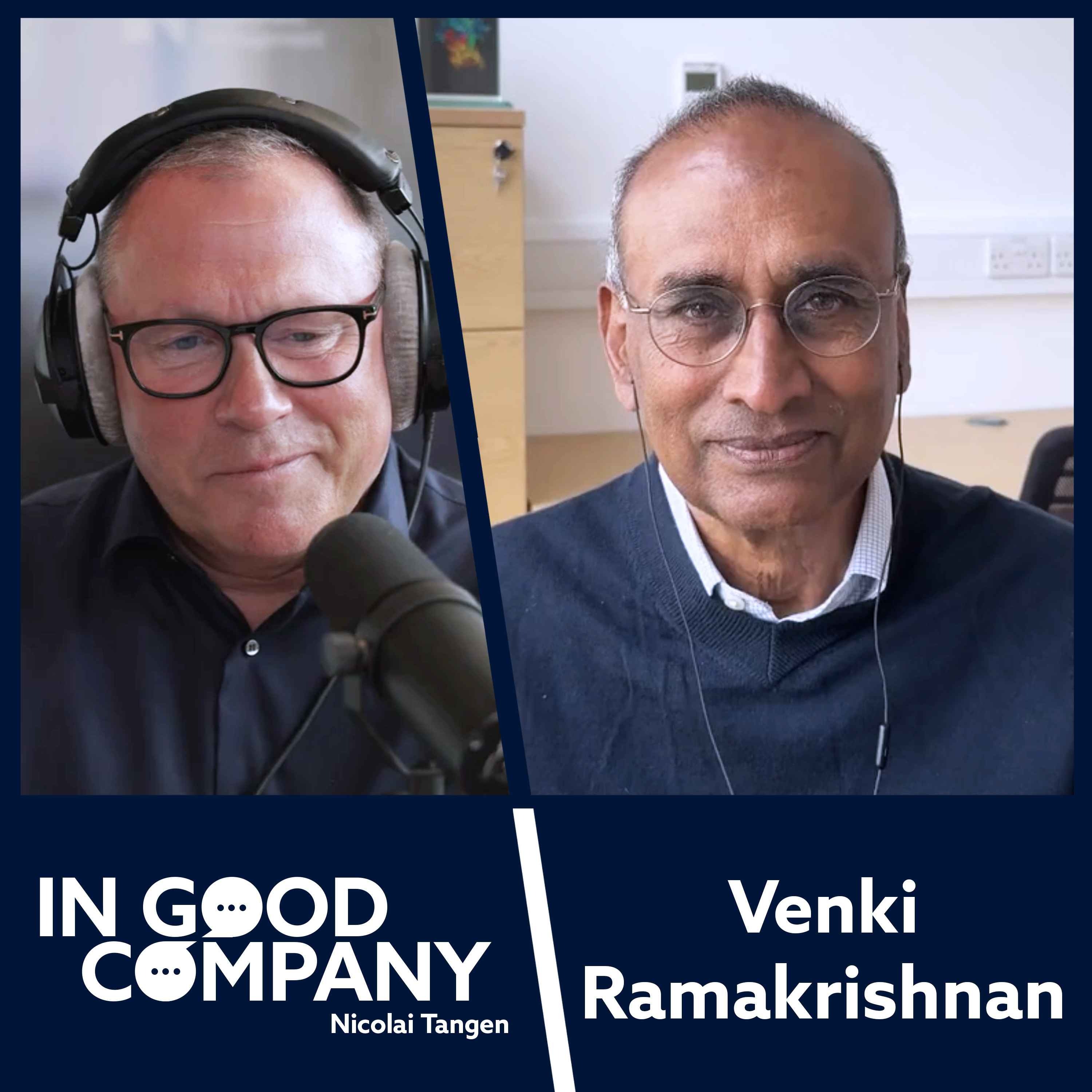
Nobel laureate Venki Ramakrishnan argues that tech leaders, biased by their digital success, wrongly view life as a software problem that can be "hacked." He counters that biology is an analog system, making the translation of AI-driven discoveries into real-world medical treatments a far more complex and lengthy process than they assume.

Genomic data (DNA) provides a static blueprint of potential, not a view of the actual biological activity. True understanding requires measuring the dynamic interactions of molecules and cells within tissues "downstream." Current methods capture only fragmentary slices, missing the full picture.

Afeyan proposes that AI's emergence forces us to broaden our definition of intelligence beyond humans. By viewing nature—from cells to ecosystems—as intelligent systems capable of adaptation and anticipation, we can move beyond reductionist biology to unlock profound new understandings of disease.
Biohub is tackling biological complexity with a bottom-up, hierarchical approach. The strategy posits that you can't effectively model a complex system like a cell without first understanding its building blocks, the proteins. This layered approach ensures each level of simulation is grounded in a robust understanding of the level below it.
