Get your free personalized podcast brief
We scan new podcasts and send you the top 5 insights daily.
The creation of synthetic cells represents a form of "pure engineering" within biology. Unlike traditional analysis of existing life, this bottom-up approach forces scientists to understand the function of every component. By building a cell from scratch, they gain unparalleled insight into how life actually works.

Related Insights
A convergence of DNA sequencing, CRISPR, and AI allows scientists to move beyond just understanding biology to actively intervening. Medicine is now programming cellular behavior by rewriting DNA, representing a "step function" leap in what's achievable for treating disease at its root cause.

AI isn't just for designing RNA sequences. Its real value is in creating predictive models of complex cellular functions. This allows scientists to determine the precise set of instructions (RNAs) needed to make a cell perform a complex series of tasks, like targeting a brain tumor.
Dr. Venter describes synthetic biology's core breakthrough not just as writing DNA, but as "booting up" that DNA like software in a recipient cell. He details an experiment where transplanting a chromosome from one bacterium to another caused a "complete identity theft," converting the host into the donor species, proving chromosomes can function as bootable operating systems.
To build truly dynamic "virtual cells," two key technological hurdles must be overcome. First, developing high-throughput methods for measuring proteins, the cell's functional units. Second, inventing a sequencing technology that can measure the state of the *same cell* at multiple time points without destroying it.
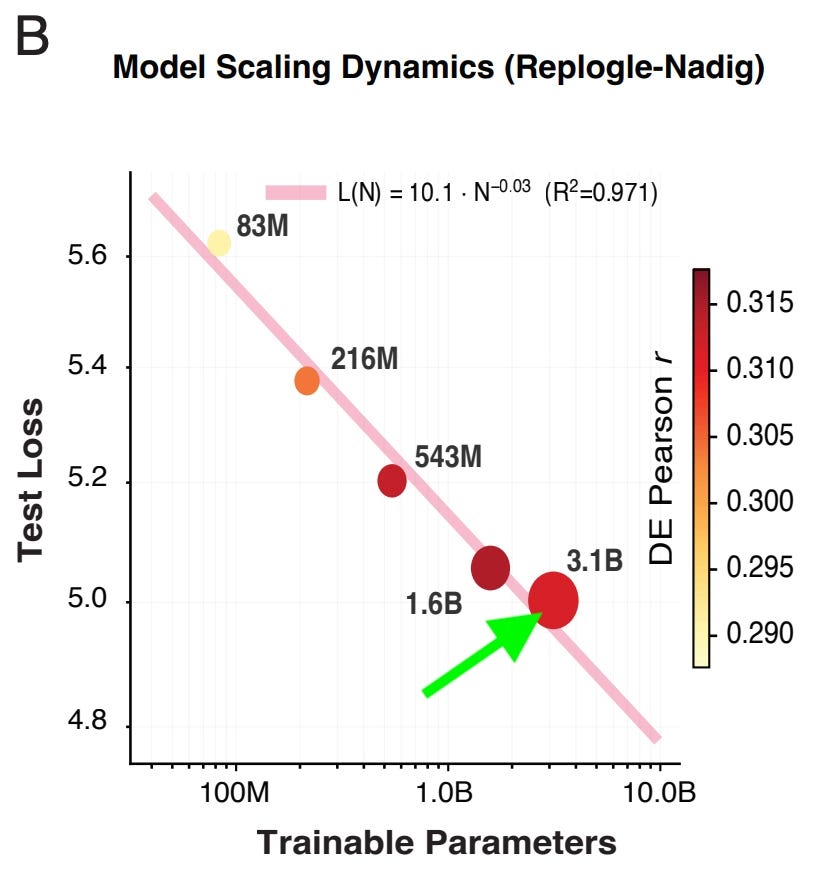
Scientists have created the first synthetic cells that can reproduce without biological ancestors. These "spud cells" aren't fully "alive" as they lack key functions like metabolism, suggesting that life is not a binary on/off switch but a complex spectrum. This discovery challenges fundamental biological definitions.
While many synthetic biology firms manipulate single genes or circuits, Constructive Bio's core differentiation is its ability to engineer and harmonize entire genomes. This allows them to create new organisms with industry-relevant functions, representing a step-change from iterative genetic improvements.

Ginkgo split the challenge of programming biology into design (a "science problem") and testing (an "engineering problem"). They are focusing on the engineering side because it's a more predictable problem that can be systematically solved, unlike the unpredictability of scientific breakthroughs.
Biohub is tackling biological complexity with a bottom-up, hierarchical approach. The strategy posits that you can't effectively model a complex system like a cell without first understanding its building blocks, the proteins. This layered approach ensures each level of simulation is grounded in a robust understanding of the level below it.

Beyond optimizing existing biological functions, Frances Arnold's lab uses directed evolution to create enzymes for entirely new chemical reactions, like forming carbon-silicon bonds. This demonstrates that life's chemical toolkit is a small subset of what's possible, opening up a vast "non-natural" chemical universe.

While AI can design countless new proteins, it is fundamentally limited by the 20 standard amino acids. The durable advantage for synthetic biology companies is the ability to build proteins with new-to-nature blocks, enabling chemical reactions and features that AI-designed proteins simply cannot achieve.