Get your free personalized podcast brief
We scan new podcasts and send you the top 5 insights daily.
The aggressive, go-it-alone tactics of the 'America First' doctrine alienate both allies and adversaries. This pushes them to build alternative payment systems and trade alliances, speeding up the very de-dollarization and decline in U.S. influence that the strategy aims to prevent.

Related Insights
Typically, a weaker US dollar helps developing countries by reducing their debt burden. However, the trade war that weakened the dollar also increased the risk premium on these nations, causing their actual borrowing costs to rise—an unusual and detrimental economic outcome.
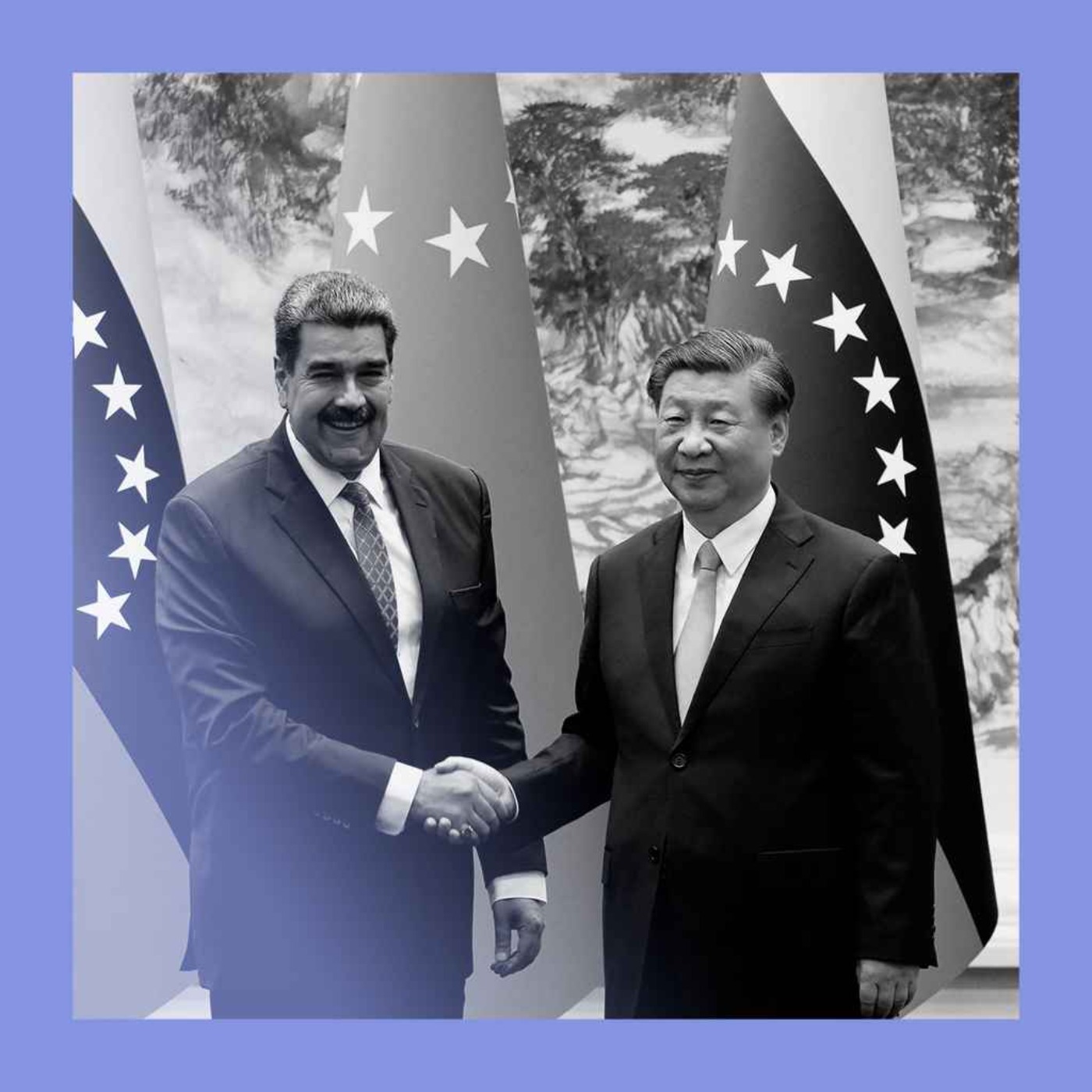
Contrary to its goals, the U.S. trade war has resulted in self-isolation. Data shows the U.S. is the only country buying less from China, while U.S. allies and developing nations have increased their trade, leading to a record $1 trillion surplus for China. This highlights a strategic miscalculation in U.S. foreign trade policy.

Beyond strategic ports, China's maneuvering includes creating financial infrastructure, like a South American gold corridor, as part of a larger strategy to establish a gold-backed currency that could rival and undermine the US dollar's status as the world's reserve currency.

The primary risk for the U.S. is not the inevitable decline of the dollar's dominance, which could rebalance the economy. The danger lies in trying to fight this trend, leading to a disorderly and painful collapse rather than a graceful, managed transition from a position of strength.

The US dollar reached its peak global dominance in the early 2000s. The world is now gradually shifting to a system where multiple currencies (like the euro and yuan) and neutral assets (like gold) share the role of reserve currency, marking a return to a more historically normal state.
Each time the U.S. uses financial sanctions, it demonstrates the risks of relying on the dollar system. This incentivizes adversaries like Russia and China to accelerate the development of parallel financial infrastructure, weakening the dollar's long-term network effect and dominance.
The US's global power is eroding due to debt and inflation. Trump's aggressive foreign policy is not random; it's a high-risk strategy to press America's current advantage and re-establish dominance before rivals like China can take over. The only alternative is accepting a managed decline.
The administration's aggressive, unilateral actions are pushing European nations toward strategic autonomy rather than cooperation. This alienates key partners and fundamentally undermines the 'Allied Scale' strategy of building a collective economic bloc to counter adversaries like China.

The decline of the US dollar won't result in a simple replacement by the Chinese Yuan. Instead, its core functions are fracturing: 'store of value' is shifting to gold and Bitcoin, while 'medium of exchange' is moving to a multi-polar system of local currencies like the rupee and yuan.

Far from being a precise tool against China, recent US tariffs act as a blunt instrument that harms America's own interests. They tax raw materials and machine tools needed for domestic production and hit allies harder than adversaries. This alienates partners, disrupts supply chains, and pushes the world towards a 'World Minus One' economic coalition excluding the US.
