Get your free personalized podcast brief
We scan new podcasts and send you the top 5 insights daily.
In the fast-moving AI landscape, investors are concluding that only founder-led companies have the vision and drive to succeed. Any portfolio company, regardless of its revenue, that is not run by its founder is now considered highly likely to fail, making founder retention and motivation paramount.

Related Insights
A16z's foundational belief is that founders, not hired "professional CEOs," should lead their companies long-term. The firm is structured as a network of specialists to provide founders with the knowledge and connections they lack, enabling them to grow into the CEO role and succeed.

Redpoint Ventures' Erica Brescia describes a shift in their investment thesis for the AI era. They are now more likely to back young, "high-velocity" founders who "run through walls to win" over those with traditional domain expertise. Sheer speed, storytelling, and determination are becoming more critical selection criteria.

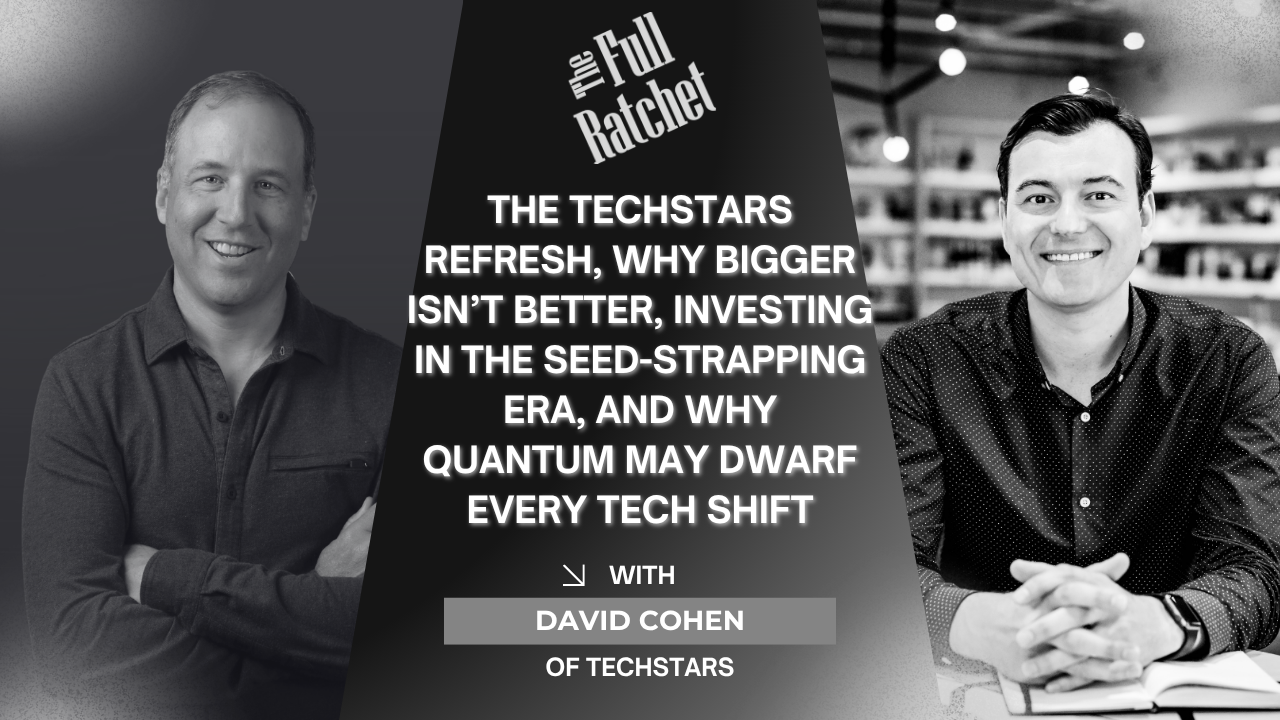
According to Techstars' CEO David Cohen, standout AI companies are defined by their leadership. The CEO must personally embody an "AI-first" mindset, constantly thinking about leverage and efficiency from day one. It's not enough to simply lead a team of engineers who understand AI; the strategic vision must originate from the top.
The implosion of AI startup Thinking Machines highlights a critical risk: deep-tech companies require CEOs with profound technical expertise. Top researchers are motivated by working on hard problems with visionary technical leaders, and a non-technical CEO struggles to attract and retain this S-tier talent.
YC has always prioritized founders over ideas. The new focus on AI coding proficiency deepens this philosophy. A founder's ability to rapidly iterate with modern tools is the key evaluation metric, as the original idea is increasingly seen as temporary and less important than execution velocity.

In an era where AI makes building products easier for everyone, technical execution is no longer a defensible moat. The new determinant of startup success is founder resiliency and a deep passion for their vertical. Victory belongs to those who will relentlessly refine their product for a decade, not just build the first version.
The ideal founder profile for AI startups is shifting. Previously, deep domain expertise was paramount. Now, the winning archetype is a scrappy, fast-moving team that can keep pace with rapid model development and quickly productize the latest advancements, outpacing slower, more established experts in their respective fields.

In early-stage investing, the quality of the founder can be more important than the initial business concept. A strong founder is seen as someone who will eventually find success, even if the first idea requires a pivot.
There's a growing belief in venture that experienced, second-time founders may be at a disadvantage in the AI era. Younger founders who grew up natively with new tools can move faster because they don't have to unlearn established, but now obsolete, ways of working.

Hired managers optimize existing models, but founders are willing to reinvent the business entirely. During disruptive eras, like the current AI shift, founders are more likely to make the bold, necessary pivots to survive and thrive, while professional CEOs will be too conservative.
