Get your free personalized podcast brief
We scan new podcasts and send you the top 5 insights daily.
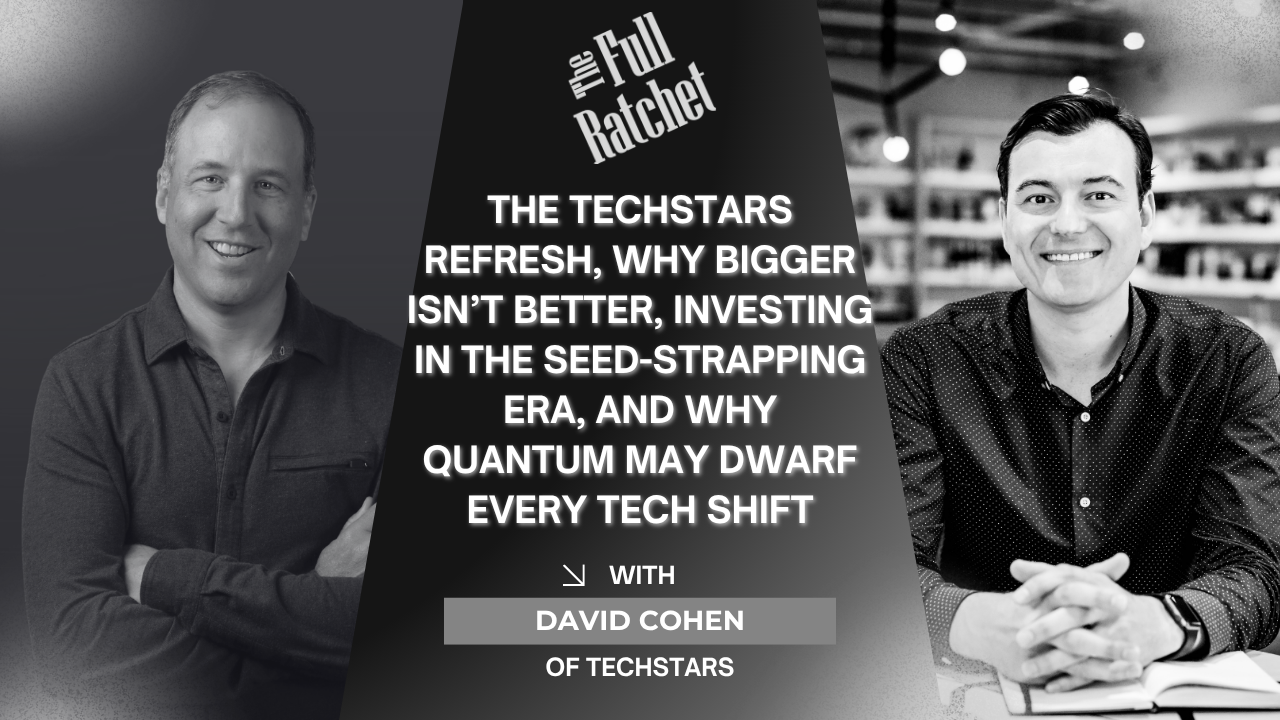
According to Techstars' CEO David Cohen, standout AI companies are defined by their leadership. The CEO must personally embody an "AI-first" mindset, constantly thinking about leverage and efficiency from day one. It's not enough to simply lead a team of engineers who understand AI; the strategic vision must originate from the top.
Related Insights
AI is a 'hands-on revolution,' not a technological shift like the cloud that can be delegated to an IT department. To lead effectively, executives (including non-technical ones) must personally use AI tools. This direct experience is essential for understanding AI's potential and guiding teams through transformation.

Simply instructing engineers to "build AI" is ineffective. Leaders must develop hands-on proficiency with no-code tools to understand AI's capabilities and limitations. This direct experience provides the necessary context to guide technical teams, make bolder decisions, and avoid being misled.
It's nearly impossible to hire senior product or engineering leaders who are also fluent in AI. The advice for experienced managers is to step back into an Individual Contributor (IC) role. This allows them to build hands-on AI skills, demonstrating the humility and beginner's mindset necessary to lead in this new era.
Techstars founder David Cohen attributes the success of their most exceptional programs, some producing multiple unicorns from a single cohort, directly to the quality and dedication of the individual Managing Director. This highlights that in venture, the person on the ground leading the program is far more critical than the overarching brand or process.
Pega's CTO warns leaders not to confuse managing AI with managing people. AI is software that is configured, coded, and tested. People require inspiration, development, and leadership. Treating AI like a human team member is a fundamental error that leads to poor management of both technology and people.
Companies mistakenly try to hire one person for both applying AI in products and building the underlying AI infrastructure. These are two distinct roles requiring different skill sets. A VP of Engineering leverages existing AI for efficiency, while a Head of AI builds the core platforms for the company.

In a fast-moving category like AI coding, platform features are fleeting. The more durable factor is the founding team's vision and ability to execute. Users should follow the founders of these companies, as choosing a tool is ultimately a long-term bet on a person's leadership and trajectory.

The key differentiator for companies succeeding with AI isn't technical prowess but mastery of core behaviors: flexibility, targeted incremental delivery, being data-led, and cross-functional teams. Strong fundamentals are the prerequisite for benefiting from advanced technology.

Powerful AI assistants are shifting hiring calculus. Rather than building large, specialized departments, some leaders are considering hiring small teams of experienced, curious generalists. These individuals can leverage AI to solve problems across functions like sales, HR, and operations, creating a leaner, more agile organization.