Get your free personalized podcast brief
We scan new podcasts and send you the top 5 insights daily.
Salesforce is developing a new AI platform, codenamed Agent Albert, designed to automatically study users and take actions on their behalf. This moves beyond simple AI assistance towards an autonomous agentic system, representing the next evolution of enterprise software.

Related Insights
Salesforce is navigating the AI transition by championing a hybrid model of "apps and agents." This strategy positions its traditional software ("apps" for humans) as the foundation, which is now extended and made more powerful by AI ("agents"). This narrative preserves the value of their core offerings while embracing AI's productivity gains.

The primary interface for AI is shifting from a prompt box to a proactive system. Future applications will observe user behavior, anticipate needs, and suggest actions for approval, mirroring the initiative of a high-agency employee rather than waiting for commands.

Unlike generative AI (like ChatGPT) which only provides text output, agentic AI can perform actions on your behalf. It can log into accounts, click buttons, and complete multi-step tasks, shifting AI from a smart consultant to an autonomous digital assistant.

Becoming an "agentic enterprise" requires a foundational shift to an AI-first, conversational way of working. It involves augmenting every employee's workflow with AI assistance for faster decisions, all built upon a foundation of trusted, accessible data that powers the entire system.

Simply adding a generative AI co-pilot is now table stakes for SaaS companies. The founder argues the next evolution is 'agentic AI' — systems that don't just provide insights but autonomously perform tasks and make decisions for the user, like qualifying and actioning a sales lead.

The future of software isn't just AI-powered features. It's a fundamental shift from tools that assist humans to autonomous agents that perform tasks. Human roles will evolve from *doing* the work to *orchestrating* thousands of these agents.
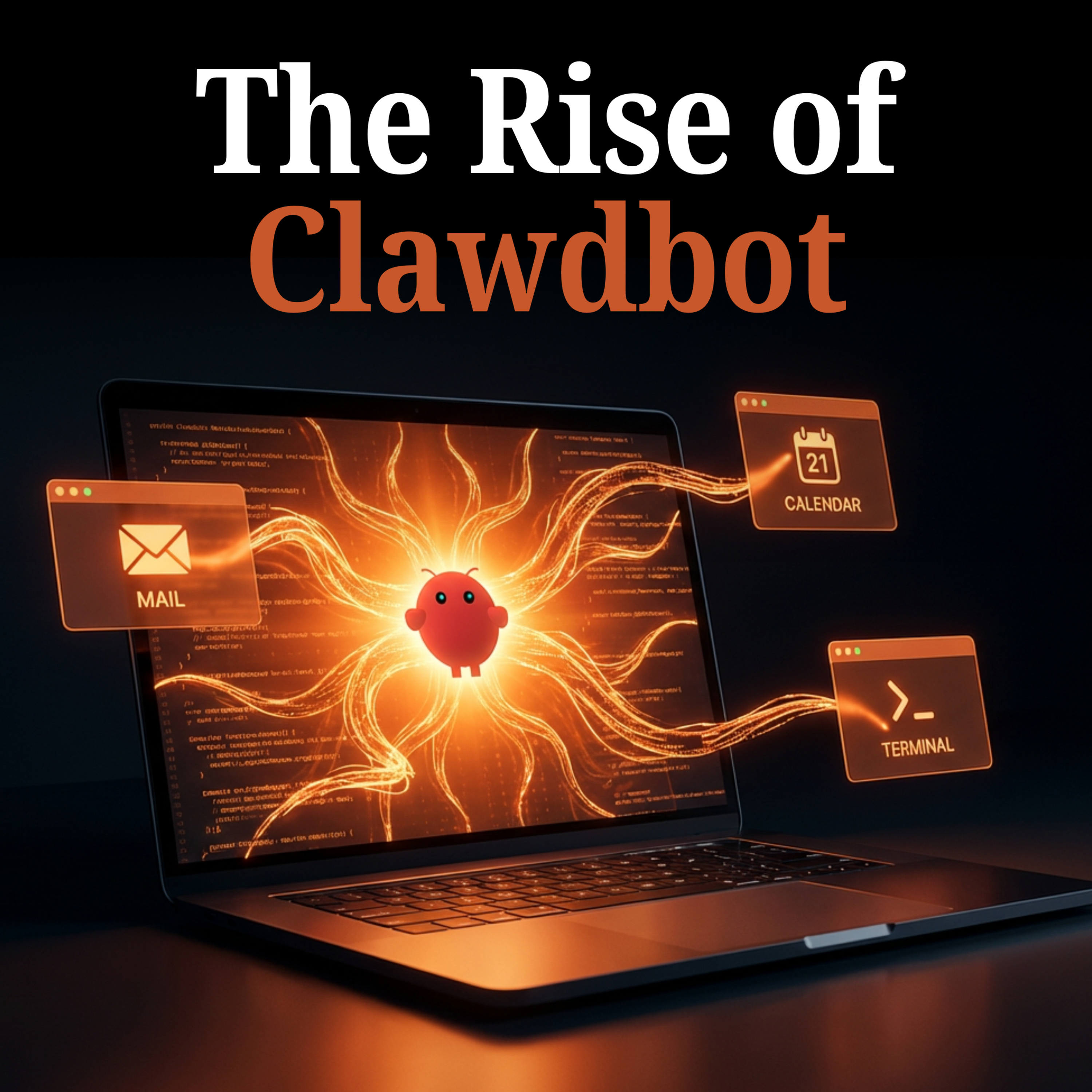
Clawdbot can autonomously identify market trends (like X's new article feature), propose new product features, and even write the code for them, acting more like a chief of staff than a simple task-doer.
The next evolution of enterprise AI isn't conversational chatbots but "agentic" systems that act as augmented digital labor. These agents perform complex, multi-step tasks from natural language commands, such as creating a training quiz from a 700-page technical document.

The paradigm shift with AI agents is from "tools to click buttons in" (like CRMs) to autonomous systems that work for you in the background. This is a new form of productivity, akin to delegating tasks to a team member rather than just using a better tool yourself.
Salesforce's Chief AI Scientist explains that a true enterprise agent comprises four key parts: Memory (RAG), a Brain (reasoning engine), Actuators (API calls), and an Interface. A simple LLM is insufficient for enterprise tasks; the surrounding infrastructure provides the real functionality.
