Get your free personalized podcast brief
We scan new podcasts and send you the top 5 insights daily.
Despite industry hype, humanoid robots are not imminent. They lack the massive datasets of real-world, unpredictable interactions needed to operate safely and usefully in a home environment, which is far more complex than a structured factory floor.

Related Insights
According to Figure's CEO, the company's biggest challenge is no longer hardware reliability but acquiring enormous amounts of diverse, high-quality data. This data is essential for pre-training their Helix AI model to generalize and handle countless real-world scenarios in homes and commercial settings.
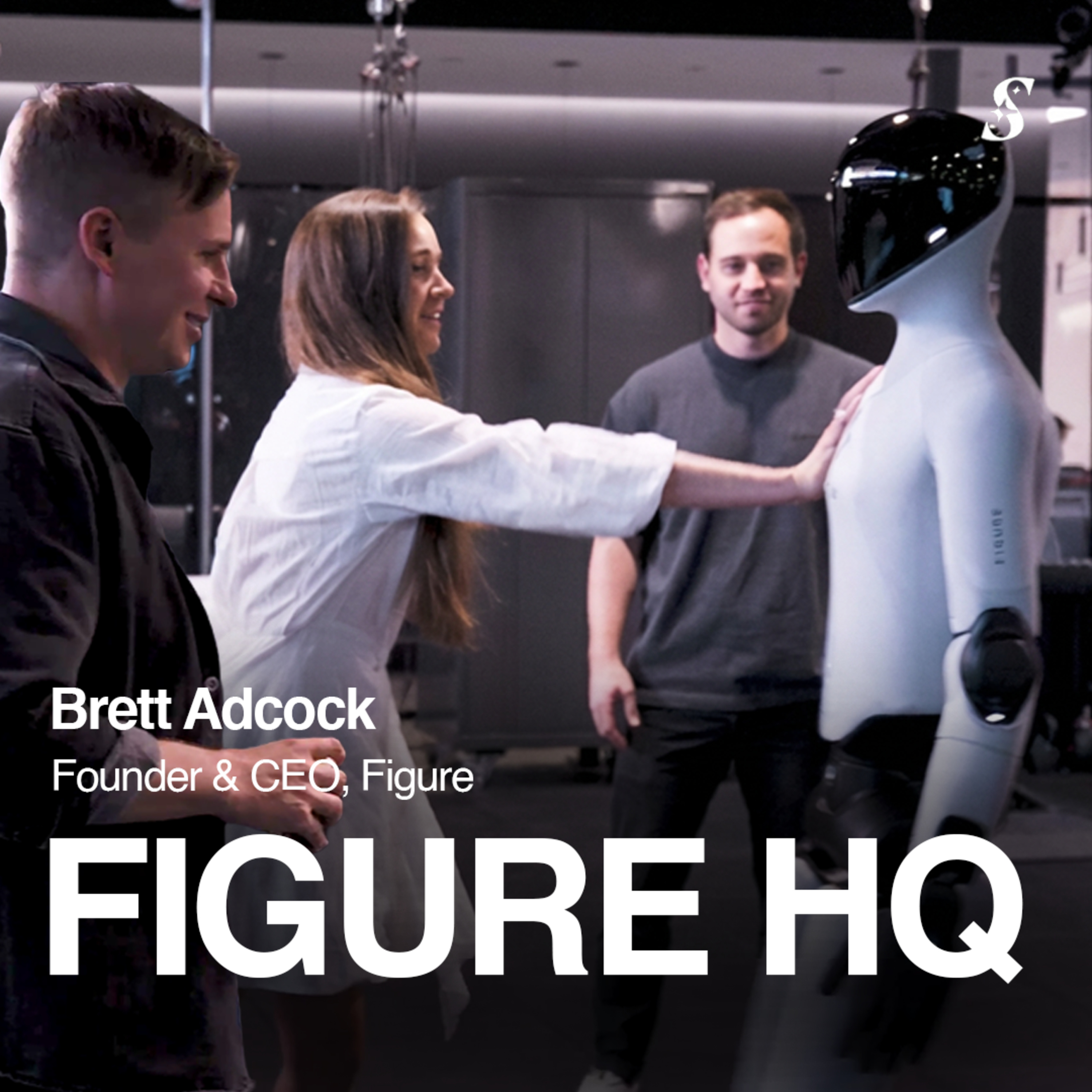
The future of humanoid robotics is not in our homes. While they will revolutionize structured B2B environments like 'dark' factories and data centers, consumer adoption will lag significantly due to a fundamental lack of desire for robots in personal, nuanced spaces.

The rapid progress of many LLMs was possible because they could leverage the same massive public dataset: the internet. In robotics, no such public corpus of robot interaction data exists. This “data void” means progress is tied to a company's ability to generate its own proprietary data.

A flashy robot demo typically uses a highly controlled, pristine environment tailored to one task. True progress lies in a robot performing a mundane task reliably in any novel situation—a feat of generalization that is much harder to showcase visually and less exciting to a layperson.
![Sergey Levine - Building LLMs for the Physical World - [Invest Like the Best, EP.465] thumbnail](https://megaphone.imgix.net/podcasts/fdcd4328-2c77-11f1-a72b-977309fd08f1/image/b1bb4368d6e13a4a804924681ffe3ab1.jpg?ixlib=rails-4.3.1&max-w=3000&max-h=3000&fit=crop&auto=format,compress)
Progress in robotics for household tasks is limited by a scarcity of real-world training data, not mechanical engineering. Companies are now deploying capital-intensive "in-field" teams to collect multi-modal data from inside homes, capturing the complexity of mundane human activities to train more capable robots.

Ken Goldberg quantifies the challenge: the text data used to train LLMs would take a human 100,000 years to read. Equivalent data for robot manipulation (vision-to-control signals) doesn't exist online and must be generated from scratch, explaining the slower progress in physical AI.

AI can generate art because it was trained on the internet's vast trove of images. It struggles with physical tasks like washing dishes because there is virtually no first-person video data for such actions. Solving this data-gathering problem is key to advancing robotics.

Initially, factories seemed like the easier first market for humanoids due to structured environments. However, Figure's founder now believes the home is a more near-term opportunity. The challenge of environmental variability is now seen as a data-bound problem that can be solved with large-scale data collection programs.

The humanoid robot industry is stalled by a data paradox: robots need vast amounts of real-world data from factory tasks to become useful, but they cannot be deployed in factories until they are already useful. This catch-22 forces companies to rely on simulated data, slowing the transition from entertainment props to industrial tools.

The "bitter lesson" (scale and simple models win) works for language because training data (text) aligns with the output (text). Robotics faces a critical misalignment: it's trained on passive web videos but needs to output physical actions in a 3D world. This data gap is a fundamental hurdle that pure scaling cannot solve.