Get your free personalized podcast brief
We scan new podcasts and send you the top 5 insights daily.
Asset management giant Brookfield is moving beyond just financing AI infrastructure. It is building its own cloud company, Radiant, to be the primary tenant in its global data centers. This strategy cuts out middlemen like CoreWeave and leverages Brookfield's government connections to target the lucrative "sovereign AI" market.

Related Insights
OpenAI's strategy involves getting partners like Oracle and Microsoft to bear the immense balance sheet risk of building data centers and securing chips. OpenAI provides the demand catalyst but avoids the fixed asset downside, positioning itself to capture the majority of the upside while its partners become commodity compute providers.

Instead of selling software to traditional industries, a more defensible approach is to build vertically integrated companies. This involves acquiring or starting a business in a non-sexy industry (e.g., a law firm, hospital) and rebuilding its entire operational stack with AI at its core, something a pure software vendor cannot do.

Current M&A activity related to AI isn't targeting AI model creators. Instead, capital is flowing into consolidating the 'picks and shovels' of the AI ecosystem. This includes derivative plays like data centers, semiconductors, software, and even power suppliers, which are seen as more tangible long-term assets.

Instead of bearing the full cost and risk of building new AI data centers, large cloud providers like Microsoft use CoreWeave for 'overflow' compute. This allows them to meet surges in customer demand without committing capital to assets that depreciate quickly and may become competitors' infrastructure in the long run.

Large tech companies are creating SPVs—separate legal entities—to build data centers. This strategy allows them to take on significant debt for AI infrastructure projects without that debt appearing on the parent company's balance sheet. This protects their pristine credit ratings, enabling them to borrow money more cheaply for other ventures.
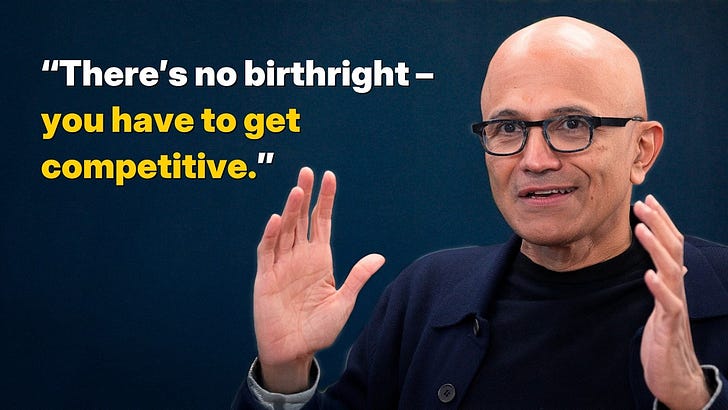
As countries from Europe to India demand sovereign control over AI, Microsoft leverages its decades of experience with local regulation and data centers. It builds sovereign clouds and offers services that give nations control, turning a potential geopolitical challenge into a competitive advantage.
Instead of betting on which AI models or applications will win, Karmel Capital focuses on the infrastructure layer (neocloud companies). This "pick and shovel" strategy provides exposure to the entire ecosystem's growth with lower valuations and less risk, as infrastructure is essential regardless of who wins at the top layers.

With partners like Microsoft and Nvidia reaching multi-trillion-dollar valuations from AI infrastructure, OpenAI is signaling a move up the stack. By aiming to build its own "AI Cloud," OpenAI plans to transition from an API provider to a full-fledged platform, directly capturing value it currently creates for others.

Silver Lake cofounder Glenn Hutchins contrasts today's AI build-out with the speculative telecom boom. Unlike fiber optic networks built on hope, today's massive data centers are financed against long-term, pre-sold contracts with creditworthy counterparties like Microsoft. This "built-to-suit" model provides a stable commercial foundation.

Companies like Meta are partnering with firms like Blue Owl to create highly leveraged (e.g., 90% debt) special purpose vehicles (SPVs) to build AI data centers. This structure keeps billions in debt off the tech giant's balance sheet while financing an immature, high-demand asset, creating a complex and potentially fragile arrangement.
