Get your free personalized podcast brief
We scan new podcasts and send you the top 5 insights daily.
Drones like the Hornet (sub-$5k) use AI to automatically identify targets. This allows Ukraine to send swarms of cheap drones for operational-level strikes, achieving results that previously required expensive missiles. This fundamentally changes the cost-benefit analysis of deep attacks and attritional warfare.

Related Insights
The conflict in Ukraine exposed the vulnerability of expensive, "exquisite" military platforms (like tanks) to inexpensive technologies (like drones). This has shifted defense priorities toward cheap, mass-producible, "attritable" systems. This fundamental change in product and economics creates a massive opportunity for startups to innovate outside the traditional defense prime model.

To counter the high cost of traditional interceptors, Ukraine has developed a strategy of using cheap, fast FPV (first-person view) drones to destroy incoming Shaheed drones. The newest versions use AI for autonomous final-stage guidance, creating a new paradigm in air defense.

Ukraine has scaled production of new, powerful kamikaze drones capable of striking targets deep behind Russian lines. This closes a critical capability gap, allowing Ukraine to hit command posts, air defense, and logistics hubs that were previously only vulnerable to scarce, high-end munitions.
Ukraine's use of cheap drones to destroy a significant portion of Russia's bomber fleet exemplifies modern, asymmetric conflict. The new paradigm favors low-cost, high-volume assets that inflict disproportionate damage on expensive, traditional military hardware, a domain where the U.S. lags.

Modern conflicts demonstrate that low-cost drones can effectively neutralize multi-million dollar missiles. This economic imbalance creates a massive market opportunity for tech companies that can produce cheaper, high-volume, and effective weapons systems.
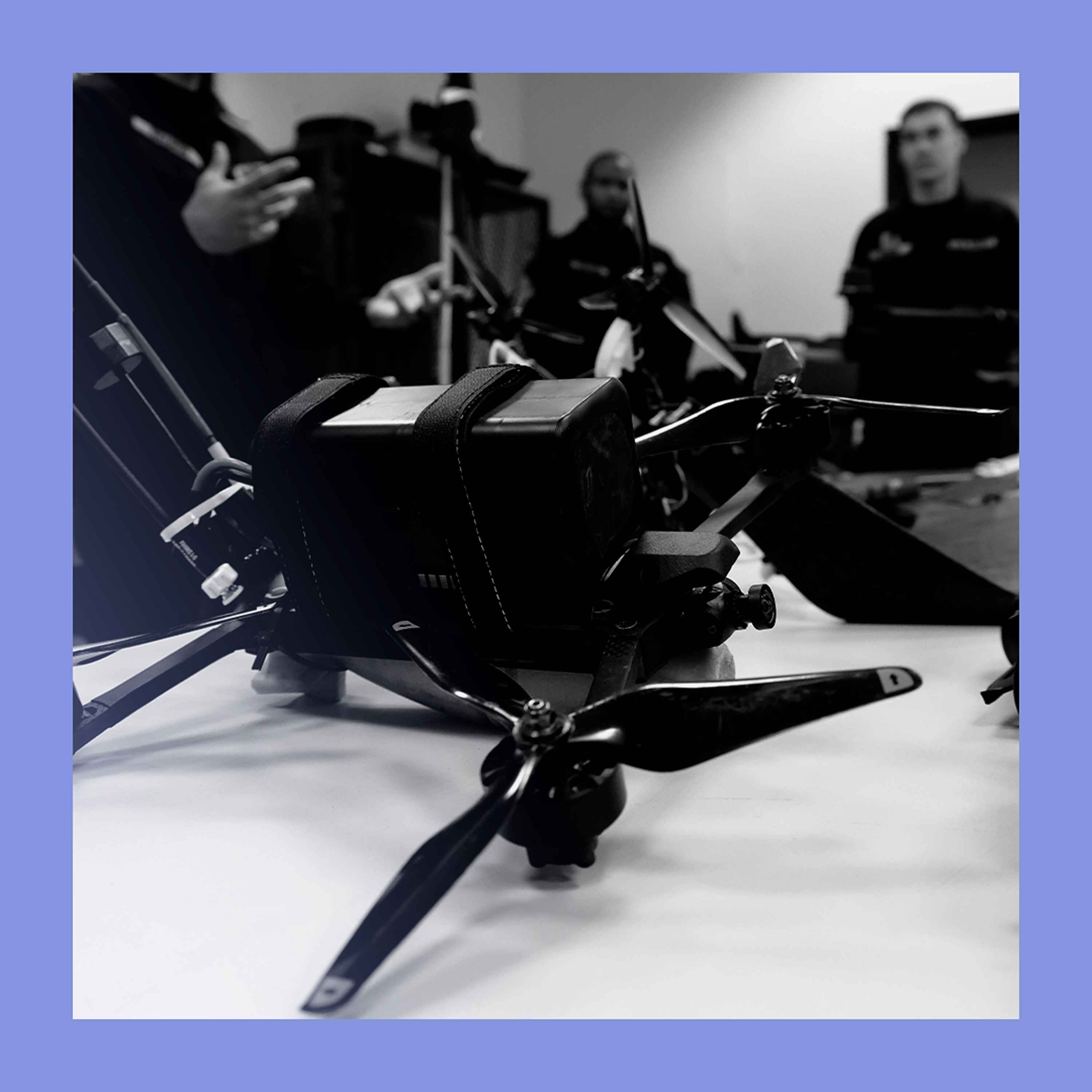
The conflict in Ukraine demonstrates that modern warfare is rapidly changing due to AI, which enables fast, iterative development of low-cost drones. Investing in swarms of intelligent drones is now more strategically important than traditional, expensive military assets like aircraft carriers.

The key takeaway from conflicts in Ukraine and Iran is the severe cost imbalance created by drones. Cheap, disposable drones can threaten multi-million dollar assets, forcing a strategic shift toward developing low-cost, mass-produced "attributable weapons" to level the economic playing field.

Modern warfare has shifted. A $25,000 drone can neutralize a multi-million dollar missile system or threaten a billion-dollar warship. This asymmetry allows less powerful nations or groups to create massive disruption against sophisticated militaries, changing the calculus of global power.

The effectiveness of Ukrainian defense technology comes from its ability to dramatically lower the 'cost per shot' by orders of magnitude compared to legacy systems. This demonstrates that financial efficiency and adaptability, not just advanced features, are decisive on the modern battlefield.

The war in Ukraine has evolved from a traditional territorial conflict into a "robot war," with drones dominating the front lines. This real-world battlefield is accelerating innovation at an "unbelievable" pace, driving new solutions for secure communications and autonomous targeting, providing critical lessons for US drone strategy.