Get your free personalized podcast brief
We scan new podcasts and send you the top 5 insights daily.
When evaluating external software, autonomous agents often advise against purchasing specialized tools in favor of building internal solutions. Because internal agents connect to sub-agents and execute real workflows, they view pure-play benchmarking tools as redundant and under-actionable.

Related Insights
Previously, building bespoke software for niche internal problems was too expensive. AI agents dramatically lower this cost, allowing companies to create custom-fit solutions for 99% of their problems, ending the era of contorting workflows to fit generic, off-the-shelf tools.

Kun Chen doesn't just use off-the-shelf agents; he builds his own tools like Lavish (visual planning) and 'no mistakes' (validation). This highlights a key trait of power users: identifying and solving personal workflow frictions with custom software instead of waiting for public solutions.

A new trend sees AI-native companies leveraging their own AI-assisted developers ('vibe coders') to create internal software that replaces their subscriptions to commercial SaaS products. This represents a significant threat to the traditional SaaS business model, as companies opt to build rather than buy simple tools.

An internal agent, deeply integrated with proprietary company data and systems, can become superior to expensive, market-leading SaaS products. Replit cancelled a seven-figure contract because their custom, integrated solution was better and more adopted by employees, fundamentally changing the 'build vs. buy' calculation.

Users are leveraging AI agents to build their own bespoke software, stripping away unused features from SaaS giants like Notion. This trend toward hyper-personalization threatens the one-size-fits-all SaaS model as users create cheaper, more effective personal tools.

For decades, buying generalized SaaS was more efficient than building custom software. AI coding agents reverse this. Now, companies can build hyper-specific, more effective tools internally for less cost than a bloated SaaS subscription, because they only need to solve their unique problem.

While building a custom support agent might be cheaper than using a service like Intercom's Fin, the primary advantage is customizability. Building your own allows for creating highly specific skills and integrating a wider range of tools to make the agent more powerful.

When tasked with integrating a $10k/year event platform (HeySummit), a Replit agent proactively questioned the need for the third-party tool. Unprompted, it then designed and built a superior, fully integrated replacement in just one hour, demonstrating that agents will actively seek to consolidate tool stacks.

Instead of integrating with existing SaaS tools, AI agents can be instructed on a high-level goal (e.g., 'track my relationships'). The agent can then determine the need for a CRM, write the code for it, and deploy it itself.
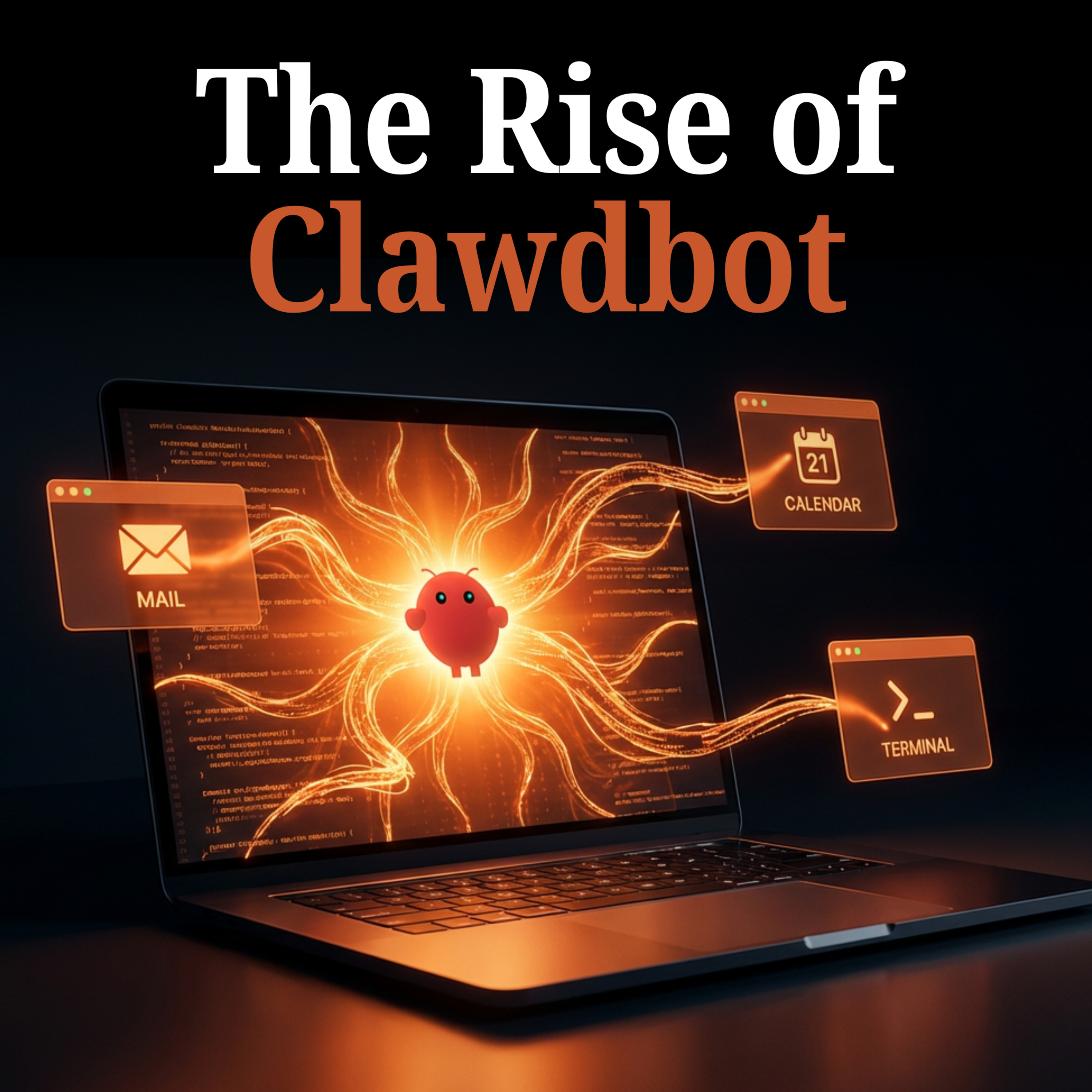
Non-technical users are leveraging agents like Moltbot to build their own hyper-personalized software. By simply describing a problem in natural language, they can create internal tools that perfectly solve their needs, eliminating the need to subscribe to many single-purpose SaaS applications.