Get your free personalized podcast brief
We scan new podcasts and send you the top 5 insights daily.
While building a custom support agent might be cheaper than using a service like Intercom's Fin, the primary advantage is customizability. Building your own allows for creating highly specific skills and integrating a wider range of tools to make the agent more powerful.

Related Insights
A custom AI tool offers more value than a generic one like ChatGPT because it can be trained on a brand's unique, paywalled intellectual property. This creates a curated experience that aligns perfectly with your teachings and provides answers that cannot be found for free on the web, solidifying your expertise.

While SaaS tools like Intercom offer immediate convenience, building a custom AI chatbot provides complete control over the workflow, data, and user experience. For companies with some technical capability, this initial investment leads to significant long-term cost savings and a deeply integrated, proprietary solution.

Building effective agents requires intensive, custom work for each client—data cleansing, training, and deployment by skilled engineers. Large incumbents lack the agility and cost structure to provide this bespoke service, creating an opening for focused startups who can afford the human capital.

The rise of AI agents introduces a new strategic layer for marketers. They must now decide when to buy out-of-the-box agents, use workflow tools for assembly, or custom-build agents for niche, proprietary tasks. This "build vs. buy" competency is becoming a key marketing differentiator.

Off-the-shelf AI support tools lack the deepest context for accurate answers, which is often found only in a company's proprietary source code (e.g., how interest is calculated). Klarna built its own system so its AI could directly access this 'source of truth,' making support a core part of its tech stack.

Users are leveraging AI agents to build their own bespoke software, stripping away unused features from SaaS giants like Notion. This trend toward hyper-personalization threatens the one-size-fits-all SaaS model as users create cheaper, more effective personal tools.
For decades, buying generalized SaaS was more efficient than building custom software. AI coding agents reverse this. Now, companies can build hyper-specific, more effective tools internally for less cost than a bloated SaaS subscription, because they only need to solve their unique problem.

Instead of integrating with existing SaaS tools, AI agents can be instructed on a high-level goal (e.g., 'track my relationships'). The agent can then determine the need for a CRM, write the code for it, and deploy it itself.
Generic AI tools provide generic results. To make an AI agent truly useful, actively customize it by feeding it your personal information, customer data, and writing style. This training transforms it from a simple tool into a powerful, personalized assistant that understands your specific context and needs.

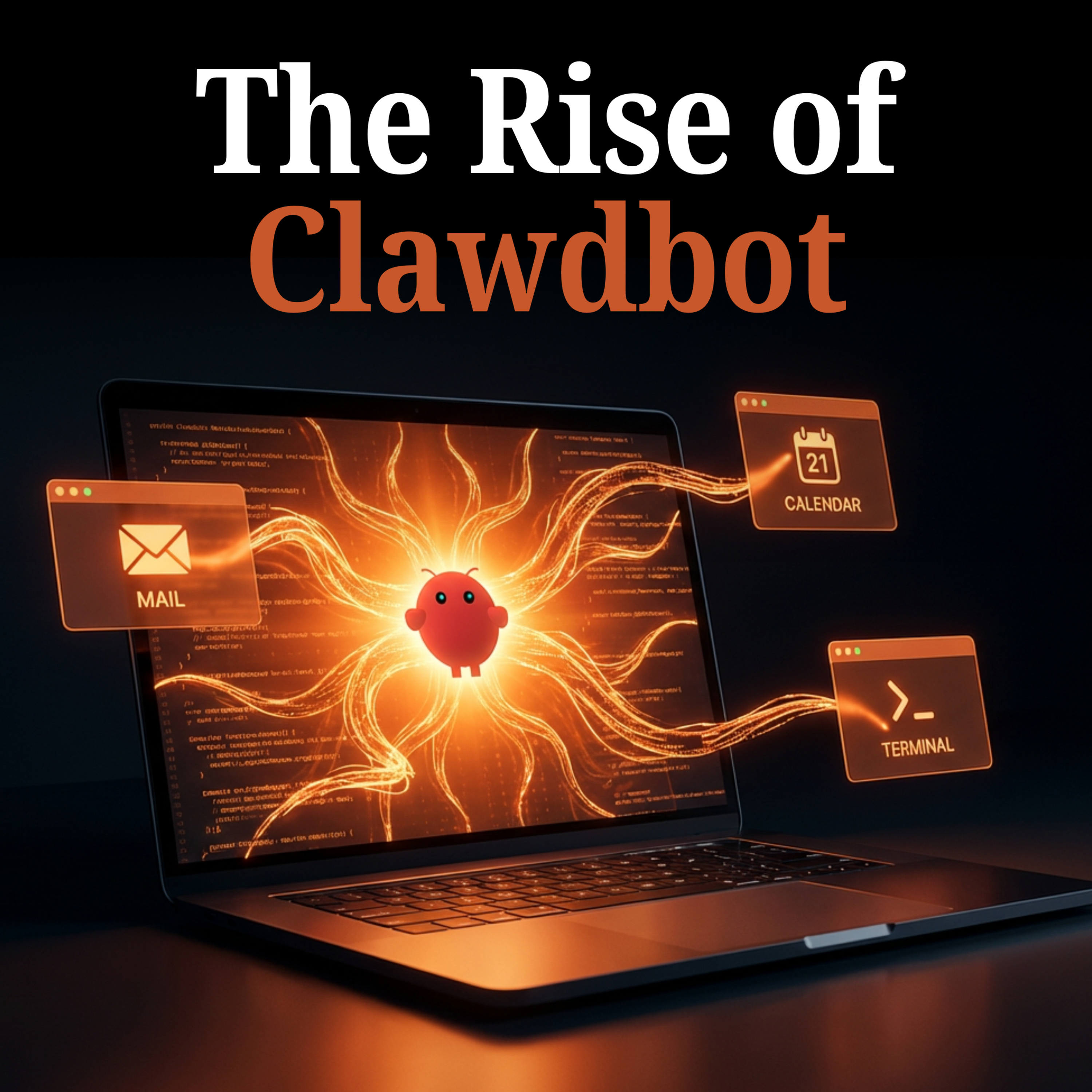
Non-technical users are leveraging agents like Moltbot to build their own hyper-personalized software. By simply describing a problem in natural language, they can create internal tools that perfectly solve their needs, eliminating the need to subscribe to many single-purpose SaaS applications.
