Get your free personalized podcast brief
We scan new podcasts and send you the top 5 insights daily.
To rewrite its core database engine, Databricks first built a simulation "factory." This system uses machine learning on a decade of query traces (quadrillions of data points) to model and predict the performance of new algorithms and data structures, de-risking the project and avoiding "second system syndrome."

Related Insights
IA2's preprocessing creates a rich workload model for its deep reinforcement learning task. This model doesn't just analyze queries; it integrates query plans, current indexes, database metadata, and tokenized queries. This holistic state representation is key to its ability to generalize across diverse database workloads, providing a more accurate view of the system's state.
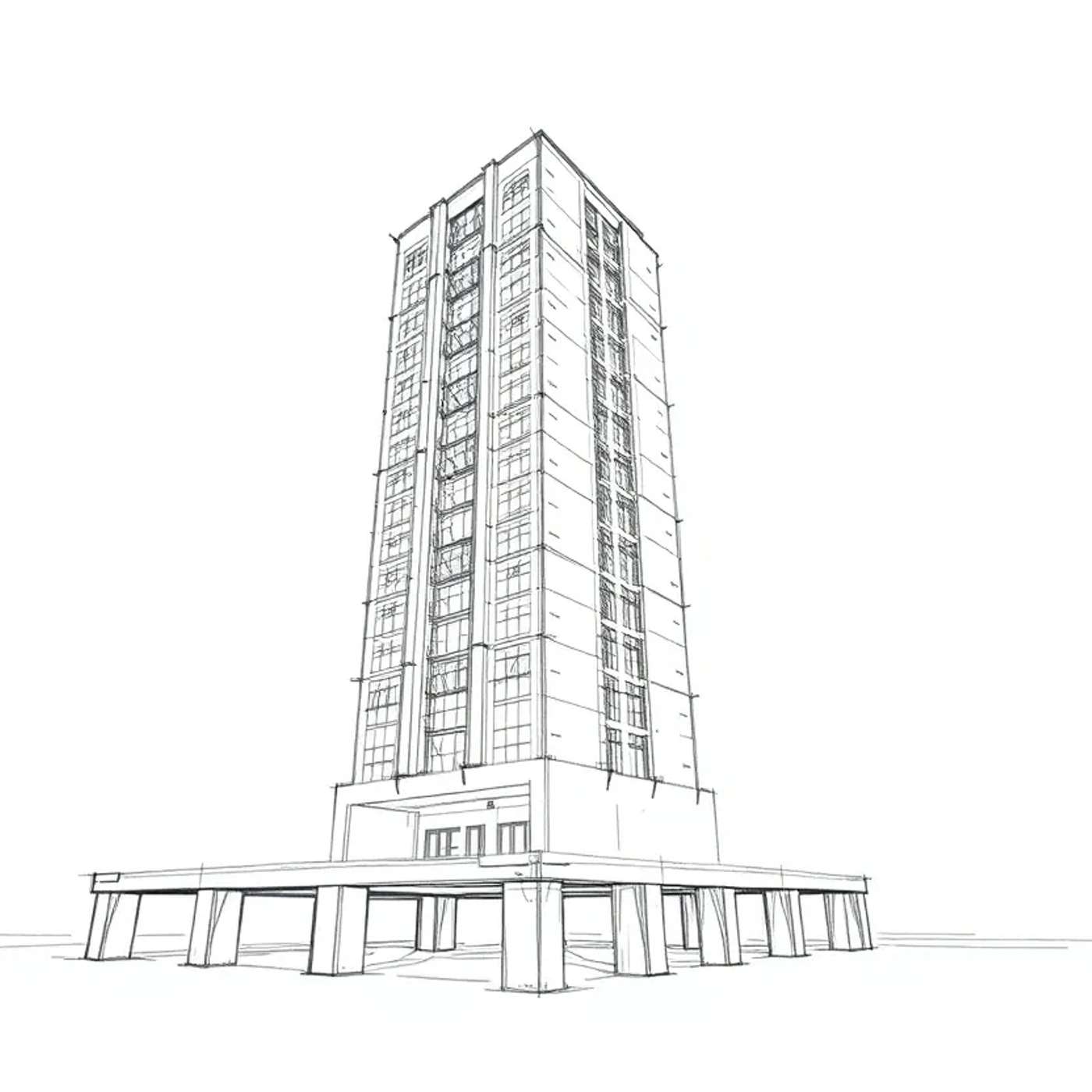
To build a multi-billion dollar database company, you need two things: a new, widespread workload (like AI needing data) and a fundamentally new storage architecture that incumbents can't easily adopt. This framework helps identify truly disruptive infrastructure opportunities.

Classic software engineering warns against full rewrites due to risk and time ("second-system syndrome"). However, AI's ability to rebuild an entire product in days, not years, makes rewriting a powerful and low-cost tool for correcting over-complicated early versions or flawed core assumptions.

The initial step in modernizing is not to rebuild, but to understand. AI can ingest source code, user manuals, and even screen recordings to map existing processes and identify optimization opportunities, ensuring the new system improves upon the old rather than just replicating it.

An 'AI SRE' will inevitably destroy a production database without the right primitives. The crucial missing piece isn't better AI, but infrastructure that can safely and cheaply clone production environments for the AI to test its changes before applying them.

Databricks and Snowflake took opposite approaches. Snowflake optimized for fast queries on curated, proprietary "downstream" data. Databricks focused on large-scale, messy "upstream" data ingestion using open formats. Databricks found it easier to add speed than it was for Snowflake to move upstream and abandon its proprietary lock-in.
Truly massive database companies only emerge every ~15 years when three conditions are met: a new ubiquitous workload (like AI), a new underlying storage architecture that predecessors can't adopt (like NVMe SSDs and S3), and a long-term roadmap to handle all possible data queries.
Instead of running hundreds of brute-force experiments, machine learning models analyze historical data to predict which parameter combinations will succeed. This allows teams to focus on a few dozen targeted experiments to achieve the same process confidence, compressing months of work into weeks.

Despite acquiring Mosaic and releasing the DBRX general model, Databricks' core AI strategy isn't to compete with frontier models. They are now focused on building specialized models and agents for specific, high-volume tasks like document parsing or data analysis, which can be 100x cheaper and more accurate than general-purpose LLMs.
The viability of Databricks' core LTAP architecture was heavily debated. While leadership discussed it from first principles, a single engineer built a prototype. He proved that transcoding data from row to columnar format could be done using idle storage-fleet CPUs, ending the debate and unlocking the strategy.