Get your free personalized podcast brief
We scan new podcasts and send you the top 5 insights daily.
Instead of immediately building, engage AI in a Socratic dialogue. Set rules like "ask one question at a time" and "probe assumptions." This structured conversation clarifies the problem and user scenarios, essentially replacing initial team brainstorming sessions and creating a better final prompt for prototyping tools.

Related Insights
After testing a prototype, don't just manually synthesize feedback. Feed recorded user interview transcripts back into the original ChatGPT project. Ask it to summarize problems, validate solutions, and identify gaps. This transforms the AI from a generic tool into an educated partner with deep project context for the next iteration.
AI prototyping doesn't replace the PRD; it transforms its purpose. Instead of being a static document, the PRD's rich context and user stories become the ideal 'master prompt' to feed into an AI tool, ensuring the initial design is grounded in strategic requirements.
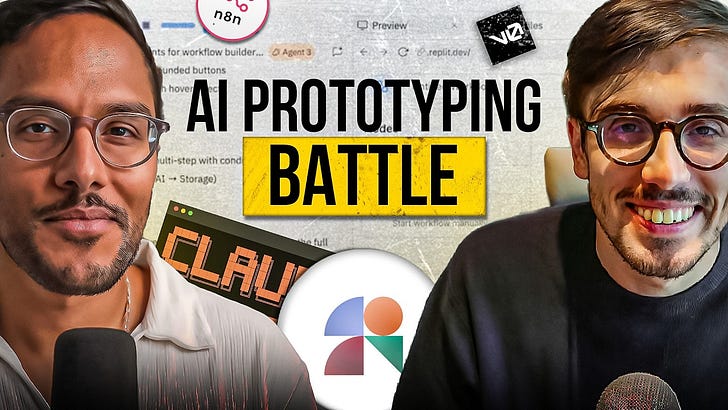
Instead of prompting a specialized AI tool directly, experts employ a meta-workflow. They first use a general LLM like ChatGPT or Claude to generate a detailed, context-rich 'master prompt' based on a PRD or user story, which they then paste into the specialized tool for superior results.
In an age of rapid AI prototyping, it's easy to jump to solutions without deeply understanding the problem. The act of writing a spec forces product managers to clarify their thinking and structure context. Writing is how PMs "refactor their thoughts" and avoid overfitting to a partially-baked solution.

In AI, low prototyping costs and customer uncertainty make the traditional research-first PM model obsolete. The new approach is to build a prototype quickly, show it to customers to discover possibilities, and then iterate based on their reactions, effectively building the solution before the problem is fully defined.

Product Requirement Documents (PRDs) are often written and then ignored. AI-generated prototypes change this dynamic by serving as powerful internal communication tools. Putting an interactive model in front of engineering and design teams sparks better, more tangible conversations and ideas than a flat document ever could.
Instead of just asking an AI to write a PRD, first provide it with a "Socratic questioning" template. The LLM will then act as a thinking partner, asking challenging, open-ended questions about the problem and solution. This upfront thinking process results in a significantly more robust final document.
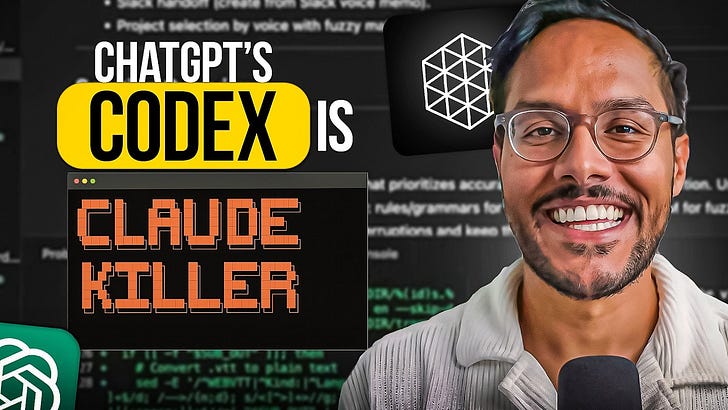
A powerful but unintuitive AI development pattern is to give a model a vague goal and let it attempt a full implementation. This "throwaway" draft, with its mistakes and unexpected choices, provides crucial insights for writing a much more accurate plan for the final version.

Instead of writing detailed Product Requirement Documents (PRDs), use a brief prompt with an AI tool like Vercel's v0. The generated prototype immediately reveals gaps and unstated assumptions in your thinking, allowing you to refine requirements based on the AI's 'misinterpretations' before creating a clearer final spec.

Instead of writing a traditional spec, the product team at Yelp starts by writing an ideal sample conversation between a user and the AI assistant. This "golden conversation" serves as the primary artifact to work backward from, defining the desired user experience before any technical requirements.