Get your free personalized podcast brief
We scan new podcasts and send you the top 5 insights daily.
President Trump's direct and admitted intervention to overturn a red card for a US player during the World Cup marks a new level of political meddling in sports. While rumors of such influence have existed, this brazen act sets a dangerous precedent, undermining the integrity of global sporting events.
Related Insights
A large-scale, popular event like the UFC fight at the White House can act as a "bread and circuses" moment, generating positive sentiment and iconic imagery that can potentially increase an administration's approval ratings among the public.

While states buy teams for PR, this strategy creates vulnerabilities. When a government-linked owner like Chelsea's Roman Abramovich is sanctioned, the club itself faces immediate financial and operational consequences, turning a PR asset into a significant and embarrassing business risk.

Trump's personal call to the FIFA president to overturn a player's suspension is seen not as a move for justice but as a calculated effort to inject himself into a global spectacle. This tactic prioritizes his personal brand over the integrity of the event or national perception.

The FIFA World Cup, co-hosted by the US, Canada, and Mexico under the slogan "United as One," is set against a backdrop of severe political discord. Tensions include US presidential threats against Mexico, suggestions of annexing Canada, and Mexico offering to host the Iranian team against US wishes.

Mexican officials are less concerned about cartels disrupting the World Cup—as gangs see it as a business opportunity—and more worried that minor incidents will be amplified by Donald Trump to damage Mexico's international standing.
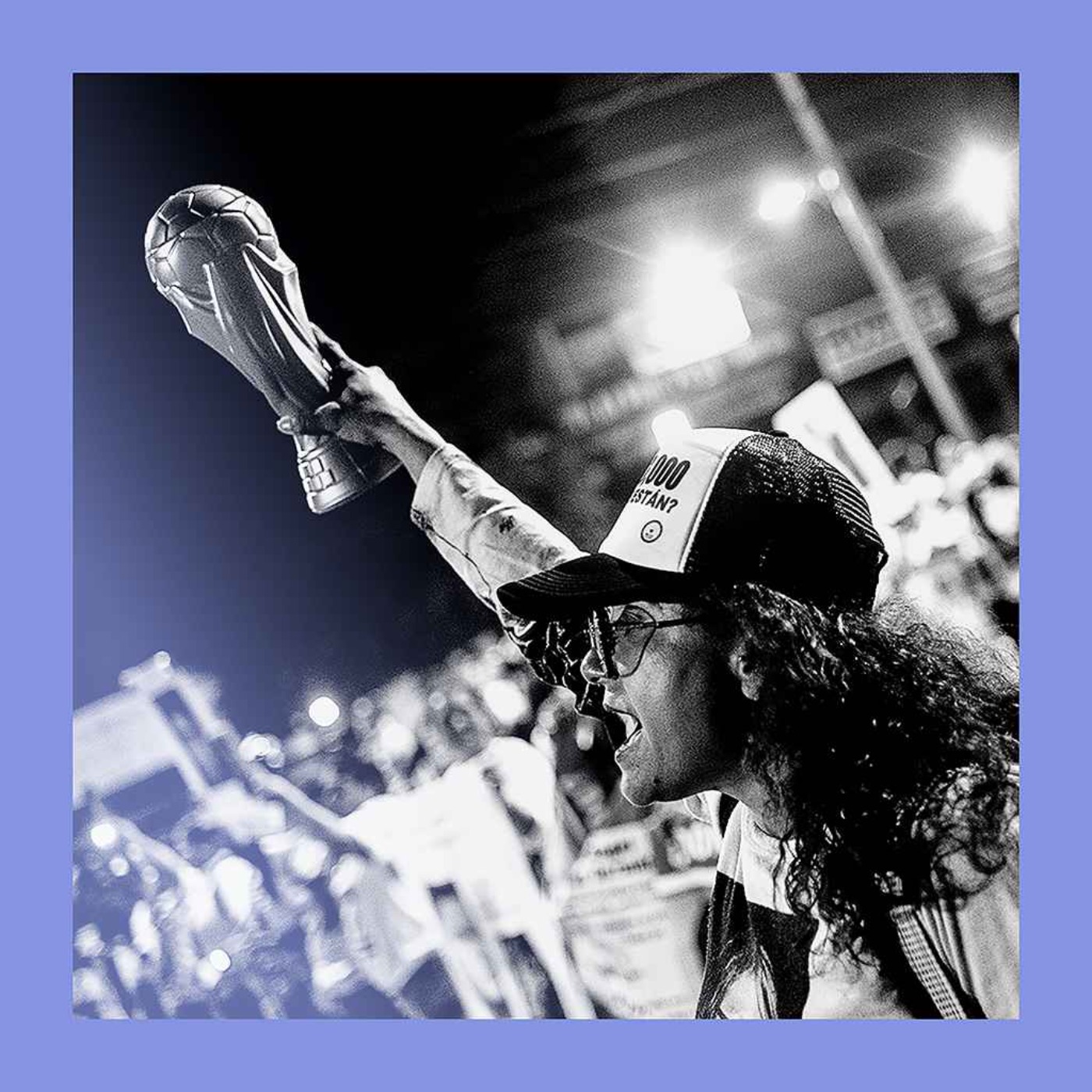
FIFA's strict on-field rules against political statements do not extend to press conferences. Just as U.S. players were questioned about Qatar's human rights, international players will be given a global platform to criticize American policies on immigration and foreign relations, turning the event into a forum for geopolitical commentary.

FIFA shifted from local organizing committees to running the World Cup directly via a subsidiary. This insulates them from host-country political dynamics (e.g., U.S.-Mexico trade issues) and gives them direct control over all revenue streams, from ticketing and naming rights to resale commissions.
The World Cup's positive, unified atmosphere serves as a powerful counter-narrative to political polarization. It demonstrates that people globally share a fundamental sense of camaraderie, which is often obscured or actively undermined by divisive national leaders who are notably absent.
Spain's 2010 World Cup victory was not just a sporting achievement but a deliberate political project. The coach, Vicente del Bosque, used a 'superstar-proof' team-first system to unite players from rival clubs and politically divided regions, aiming to make separatist-leaning Catalans and Basques feel proud to support the national team.
Despite being one of global sport's most despised organizations due to corruption scandals, FIFA's World Cup remains the most-watched event on the planet. This demonstrates that a monopolistic, beloved product can make an organization's reputation largely irrelevant to its commercial success and audience engagement.