Get your free personalized podcast brief
We scan new podcasts and send you the top 5 insights daily.
Michael notes that Astra reliably discovers subtle vulnerabilities and performance gains without being throttled by safety filters on security topics. However, Fable remains superior at writing clean, production-grade code that passes human review without unnecessary refactoring.

Related Insights
The narrative that AI coding decreases quality is outdated. Advanced models like GPT-5.5 excel at complex, systemic tasks that humans often avoid, such as resolving security vulnerabilities or refactoring legacy code, allowing teams to proactively raise their quality bar.

While crypto firms seek access to next-gen AI for security testing, the real insight is that current-generation models are already proving superior to human auditors. For example, crypto custodian Fireblocks found that an existing Anthropic model detected critical vulnerabilities that multiple professional security audit firms had missed.

Expert users report that while Astra's pure coding ability shows diminishing returns, its skill in 'computer use'—automating and navigating complex applications—is a massive leap. This indicates the frontier of AI is shifting from code generation to higher-level software orchestration and agentic task completion.

Astra's coding style is context-dependent. When it perceives an environment where code must be maintained or checked by humans, it produces readable, structured code. For performance-critical, low-oversight tasks like GPU kernels, it generates a highly-optimized but unreadable 'gnarly mess' akin to machine code.

To overcome the challenge of reviewing AI-generated code, have different LLMs like Claude and Codex review the code. Then, use a "peer review" prompt that forces the primary LLM to defend its choices or fix the issues raised by its "peers." This adversarial process catches more bugs and improves overall code quality.

The primary danger of AI-generated code is not obvious errors, but subtle flaws hidden within code that looks and feels complete. It runs and demos well, but may fail on critical edge cases involving security or concurrency that a simple 'vibe check' will not catch.

An external AI reviewer provides more than just high-level feedback; it can identify specific, critical technical flaws. In one case, a reviewer AI caught a TOCTOU race condition vulnerability, suboptimal message ordering for LLM processing, and incorrect file type classifications—all of which were integrated and fixed by the primary AI.
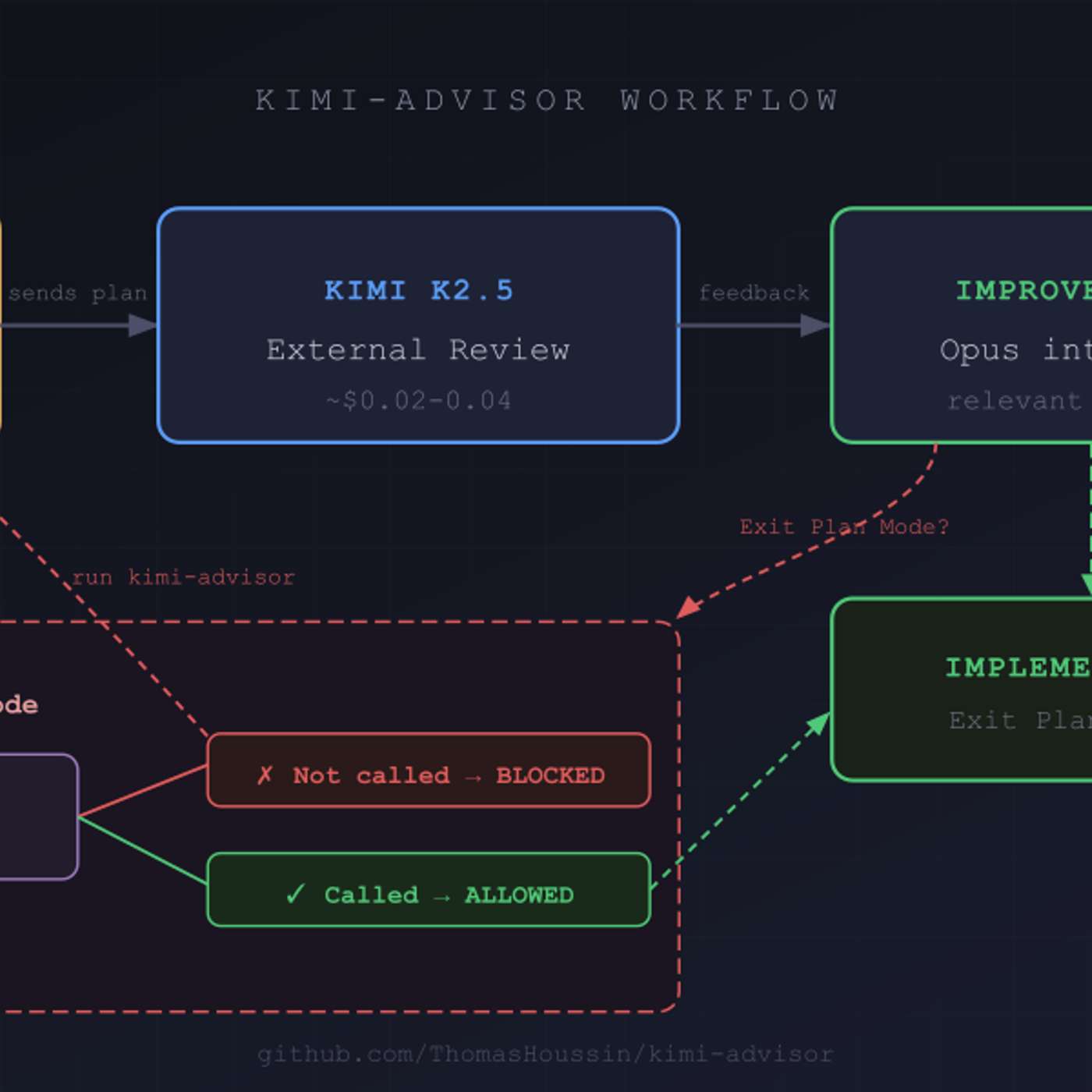
To avoid shipping "slop" from AI coding assistants, the solution is building robust infrastructure. Automated checks and security guardrails prevent bad code from reaching production, acting as a programmatic senior engineer for the non-technical builder.

According to Cloudflare, the leap with Anthropic's Mythos model is its ability to reason like a senior researcher. It doesn't just find individual bugs; it synthesizes multiple vulnerabilities into a functional exploit chain and generates proofs, making it a fundamentally different and more powerful security tool.
Felix Lee, who has extensively used various AI coding agents, states that Claude Code produces significantly higher quality code and markdown outputs compared to competitors. He finds it "wins it all" from a "haste" perspective, delivering better results faster than other tools he has tried.