Get your free personalized podcast brief
We scan new podcasts and send you the top 5 insights daily.
Trump's political invulnerability stems not from genius, but from an electorate that no longer cares about truth or consistency. Unlike a traditional con man who must be believable, Trump thrives because his base signals loyalty by accepting blatant contradictions.

Related Insights
The appeal of a populist leader lies in their rejection of traditional political norms. When the electorate feels betrayed by the established "political class," they gravitate toward figures whose rhetoric is a deliberate and stark contrast, signaling they are an outsider.

People are more infuriated by hypocrisy than by open corruption. Because a figure like Trump doesn't pretend to adhere to any ethical norms, he can't be accused of being a hypocrite. This blatant shamelessness acts as a shield, making traditional attacks based on norm violations ineffective.

Supporting Trump after he tried to overturn an election required a new level of justification. Backers embraced extreme narratives, like left-wing elites being child predators, because only a threat perceived as equally or more severe than Trump's actions could make their continued support feel morally coherent.
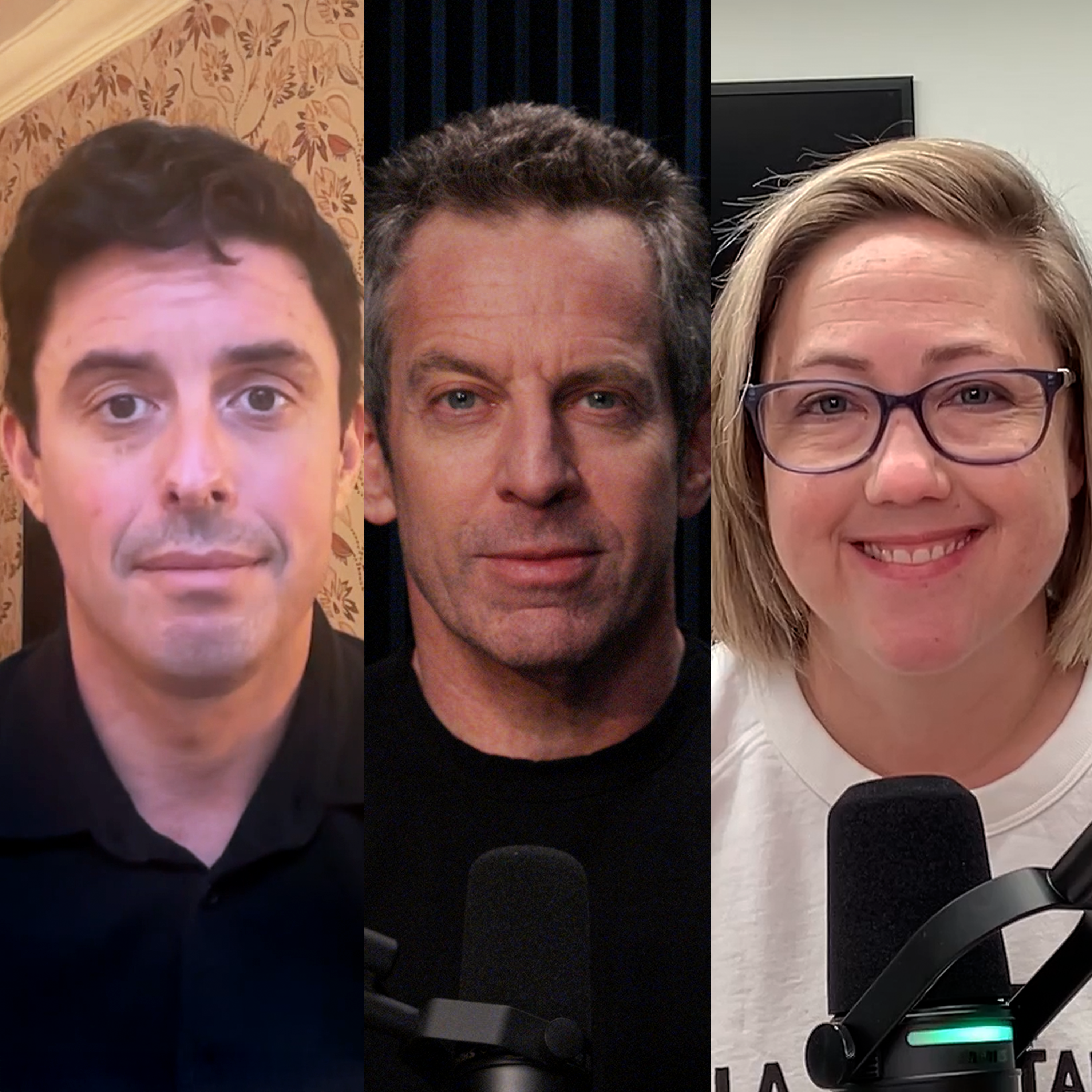
Sam Harris argues the most alarming form of political lying isn't meant to deceive but to overwhelm the public with falsehoods so audacious they defy evidence. This strategy aims to create a "mass hallucination" by bludgeoning audiences with lies rather than making a believable argument.
When politics becomes a tribal conflict where the opposing side is seen as an existential threat, supporters are conditioned to disbelieve any negative information about their own leaders. This tribal loyalty effectively exonerates leaders from accountability for unethical actions.

Many educated Trump supporters aren't driven by conviction but by powerful rationalizations. They compartmentalize his flaws by focusing on a few agreeable points, allowing them to stay within their social and professional circles without admitting the embarrassing truth of their compromise.
When a political and economic system repeatedly fails citizens, they become receptive to candidates who promise to destroy it, even if they don't like the candidate personally. This represents a failure of incumbent parties to offer a compelling alternative.

The overwhelming volume of fake online content creates a 'liar's dividend' where casting doubt on real events is easy. This has expanded beyond politics to become a core cultural mechanism, allowing people to reject any reality that conflicts with their worldview by simply labeling it as fake.

Heather Cox Richardson argues that Trump's hallmark isn't just being a con man, but finding workarounds to rules. This resonates with followers who view it not as corruption, but as 'smart business,' which fundamentally denigrates the rule of law.
Sam Harris argues Trump's appeal stems from his utter lack of pretense about his amorality. Unlike other politicians who are vulnerable to charges of hypocrisy, Trump's shamelessness creates a perverse authenticity that resonates with voters tired of political pretense.
