Get your free personalized podcast brief
We scan new podcasts and send you the top 5 insights daily.
VCs can be wrong 90% of the time and still succeed if their few wins are massive. This "Super Upside Factor" can be applied to careers: you can win dramatically even if you're wrong most of the time, provided you aim for high-upside opportunities.

Related Insights
Contrary to conventional wisdom, pursuing massive, hard-to-solve ideas makes it easier to attract capital and top talent. Investors prefer the binary risk-reward of huge outcomes, and the best employees want to work on world-changing problems, not incremental improvements like a new calendar app.

Quoting Jeff Bezos, the speaker highlights that business outcomes have a 'long-tailed distribution.' While you will strike out often, a single successful venture can generate asymmetric returns that are orders of magnitude larger than the failures, making boldness a rational strategy.

The most potent advice for career growth is to take more risks. This includes moving across the country for an opportunity or even taking a job that appears to be a step down in title or pay if it aligns better with your long-term goals. The potential upside of such calculated risks often outweighs the downside.

True innovation requires leaders to adopt a venture capital mindset, accepting that roughly nine out of ten initiatives will fail. This high tolerance for failure, mirroring professional investment odds, is a prerequisite for the psychological safety needed for breakthrough results.

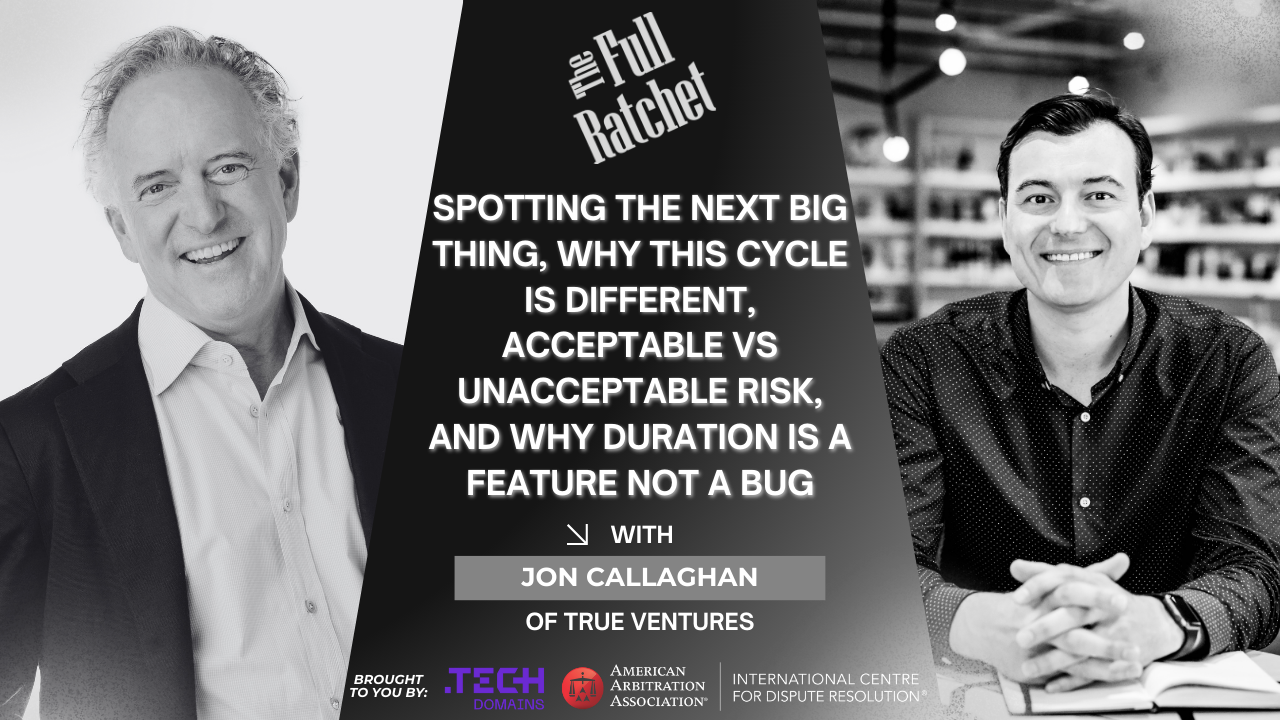
In VC, where being wrong is the norm (80%+ of the time), the most critical trait is not righteousness but deep curiosity. This learning-first mindset is what uncovers non-obvious opportunities and allows investors to see future market shifts before they become mainstream, according to True Ventures' Jon Callaghan.
While it's easy to regret known bad decisions, like passing on an investment, the far greater mistakes are the unseen ones. The meeting you canceled or the connection you didn't pursue could have been the pivotal moment of your career. This mindset liberates you from the fear of making visible errors and encourages action.

Creating a long-term career master plan is often counterproductive, leading people onto generic conveyor belts like consulting or banking. A better strategy is to consistently choose the best opportunity available at the moment. Optimizing for the right things in the short term allows for more powerful, organic compounding over time.

Success isn't about always winning, but about staying in the game long enough for odds to favor you. Ferriss argues any career or business system must be robust enough to withstand a period of severe misfortune. By not over-betting on any single project, you allow the law of large numbers to work in your favor over time.

The key to success is high-volume decision-making with a slight edge, not perfection. Like a casino, being right just over half the time on decisions with measurable outcomes guarantees long-term success. This mindset encourages action over analysis paralysis and accepts failure as part of the process.
![Nick Kokonas - Know What You Are Selling - [Invest Like The Best, REPLAY] thumbnail](https://megaphone.imgix.net/podcasts/c7f11b7e-e516-11f0-8700-239aa8e47bb9/image/552faf7d658b75e441e80eef4cf6b0b3.jpg?ixlib=rails-4.3.1&max-w=3000&max-h=3000&fit=crop&auto=format,compress)
Traditional career paths are like climbing stairs—steady but limited. A more impactful path involves 'J-curves': taking on roles you feel unqualified for. This leads to an initial dip in performance and confidence ('the fall'), but ultimately catapults you far beyond where the stairs could have taken you.