Get your free personalized podcast brief
We scan new podcasts and send you the top 5 insights daily.
Marco Rubio, once a staunch defender of NATO who sponsored a law to prevent presidential withdrawal, has reversed his position as Secretary of State. His new anti-NATO rhetoric, echoing Donald Trump, indicates that a key internal check on the president's anti-alliance sentiment has been removed.
Related Insights
Even though a US law requires Senate approval for a formal NATO withdrawal, a president can effectively neutralize the alliance's operational capacity by unilaterally denying funds, withdrawing American troops, and removing the US commander, thus rendering it powerless without officially leaving.
Counterintuitively, a politically weakened Donald Trump, constrained by potential midterm losses and a waning ability to control events, could become more dangerous. He may lash out by prosecuting political enemies, disrupting alliances like NATO, or taking other destabilizing actions on the world stage to project strength and punish adversaries.

By threatening to withdraw from NATO, Trump can force allies like Denmark into deals such as the one for Greenland. While this leverage is effective for immediate goals, his unpredictable tactics cause long-term damage to America's international reputation and perceived stability.

While Americans may become desensitized to a president's unconventional statements, allies like Australia do not see it as a joke. They interpret threats to treaty obligations as genuine disrespect and aggression, compelling them to develop independent defense strategies and fundamentally altering geopolitical relationships built over decades.

The hosts highlight a profound ideological shift within the Republican party, which has moved from being staunchly anti-Russia to becoming its strongest ally abroad. This transformation, exemplified by Marco Rubio's handling of a Russia-favored peace plan, represents a complete reversal of the party's historical foreign policy stance.

An analysis of Marco Rubio's speech suggests a "designated driver" approach to Trump-era foreign policy. While the tone is civil and avoids overt antagonism, the underlying substance—devaluing transatlantic alliances—remains the same, offering little substantive reassurance to European allies.
Marco Rubio articulated Trump's foreign policy as a 'spheres of influence' model, a modern Monroe Doctrine. This framework cedes global leadership, envisioning a world where the U.S. controls the West, Russia controls its territory and Europe, and China controls Asia. This marks a fundamental shift from America's post-WWII role as a global superpower to a regional one.

If a leader concludes that historic allies are acting against their nation's interests (e.g., prolonging a war), they may see those alliances as effectively void. This perception of betrayal becomes the internal justification for dramatic, unilateral actions like dismantling NATO or seizing strategic assets.

The backbone of NATO is not just US military might, but European trust in it. A dispute initiated by the US against allies is more existentially dangerous than past internal conflicts or external threats because it directly undermines the core assumption of mutual defense.
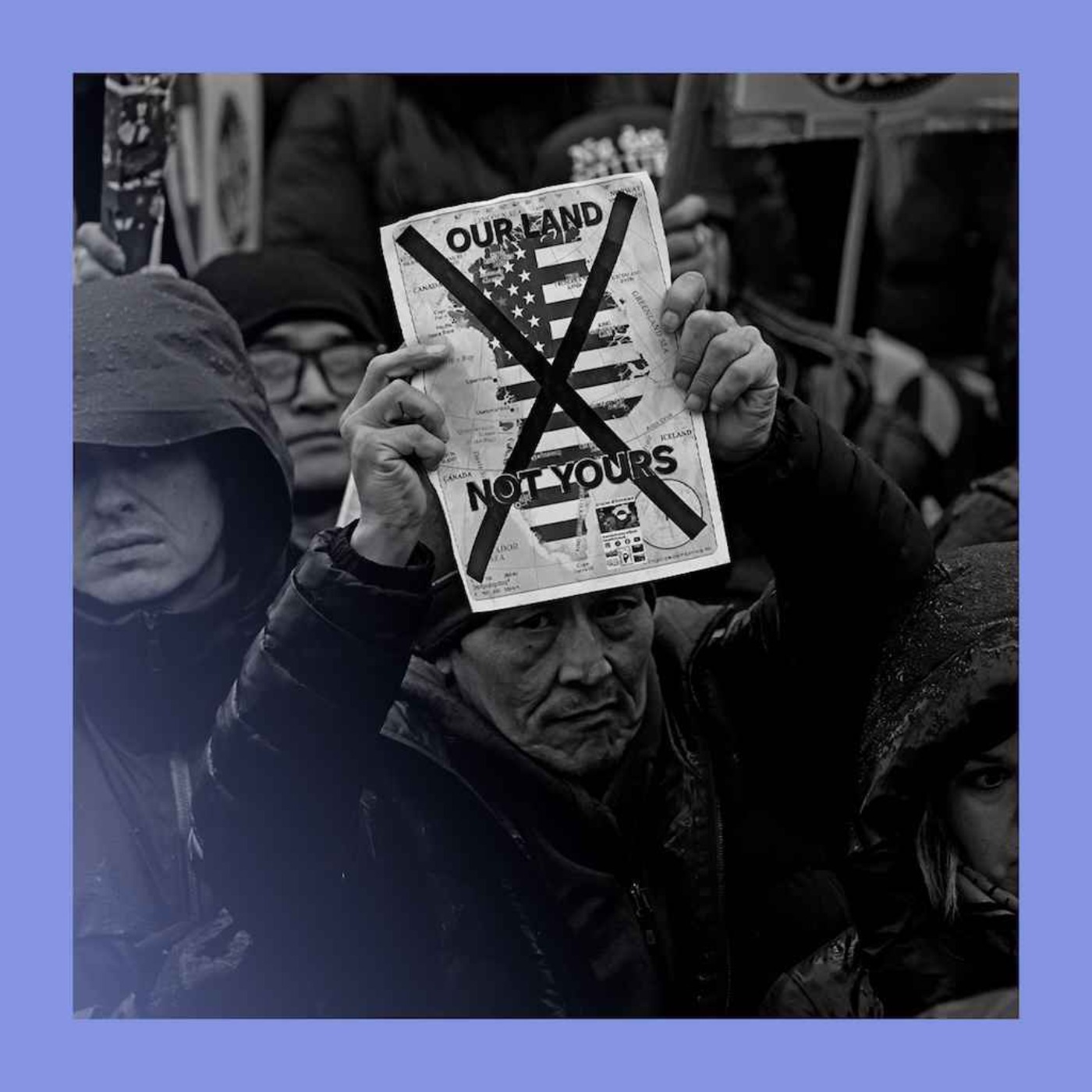
Even though President Trump backed down on tariffs over Greenland, the episode permanently eroded European trust in the U.S. as a reliable NATO partner. The erratic nature of the dispute raised serious questions about American dependability on more critical issues like Ukraine, suggesting long-term damage to the alliance.