Get your free personalized podcast brief
We scan new podcasts and send you the top 5 insights daily.
Jake Paul credits his fast rise in boxing not to raw power but to superior pattern recognition. He sees fighting as a mental exercise of identifying an opponent's repetitive habits and then calculating the precise moment to exploit that pattern.

Related Insights
Truly talented people are uneven. Their greatest contributions come from 'superpowers,' which feel effortless and almost thoughtless. They often misattribute their strength to skills that require effort. The key is to identify the effortless talent and avoid their 'kryptonite' weaknesses, not try to fix them.
![Shyam Sankar - Celebrating Heretics - [Invest Like the Best, EP.462] thumbnail](https://megaphone.imgix.net/podcasts/9dee904c-1bbf-11f1-a1a6-0b200fdaa525/image/57910f03f82ede99259c53f5e5404f6a.jpg?ixlib=rails-4.3.1&max-w=3000&max-h=3000&fit=crop&auto=format,compress)
Contrary to the perception of spontaneous videos, elite creators like Jake Paul treat every fraction of a second as a calculated decision. This engineering mindset, honed on platforms like Vine where every millisecond counted, is a key driver of virality and audience retention.
In hyper-competitive fields, the emergence of dominant strategies that seem "insane"—like the Fosbury Flop or AI's aggressive poker bets—signals evolution to the highest level. For investors, this means strategies that appear bizarre may represent the new, optimal approach in a market saturated by traditional thinking, rather than being mere anomalies.

Intelligence is a rate, not a static quality. You can outperform someone who learns in fewer repetitions by simply executing your own (potentially more numerous) repetitions on a faster timeline. Compressing the time between attempts is a controllable way to become 'smarter' on a practical basis.

Physical talent gets you to the elite level, but mental discipline creates champions. The performance gap between the very top players is massive—larger between #3 and #4 than between #4 and #200—and is almost entirely attributed to their inner game, not physical skill.

The key differentiator for top talent isn't flawless judgment, but a shorter lag time between receiving a signal and responding. Looping thoughts like doubt and hesitation cripple this "decision velocity," stalling conversations and deals. The goal is to make fast, committed decisions and adjust in real-time.

For elite performers like Roger Federer and Novak Djokovic, stagnation is regression. They understood that in a competitive environment, you are falling behind if you are not actively and constantly improving and evolving every aspect of your game.
Training methods leverage the brain's predictive nature. Repetitive practice makes the brain efficient at predicting movements, leading to mastery and lower energy use ('muscle memory'). In contrast, unpredictable training creates constant prediction errors, forcing adaptation and burning more calories, which drives growth and resilience.

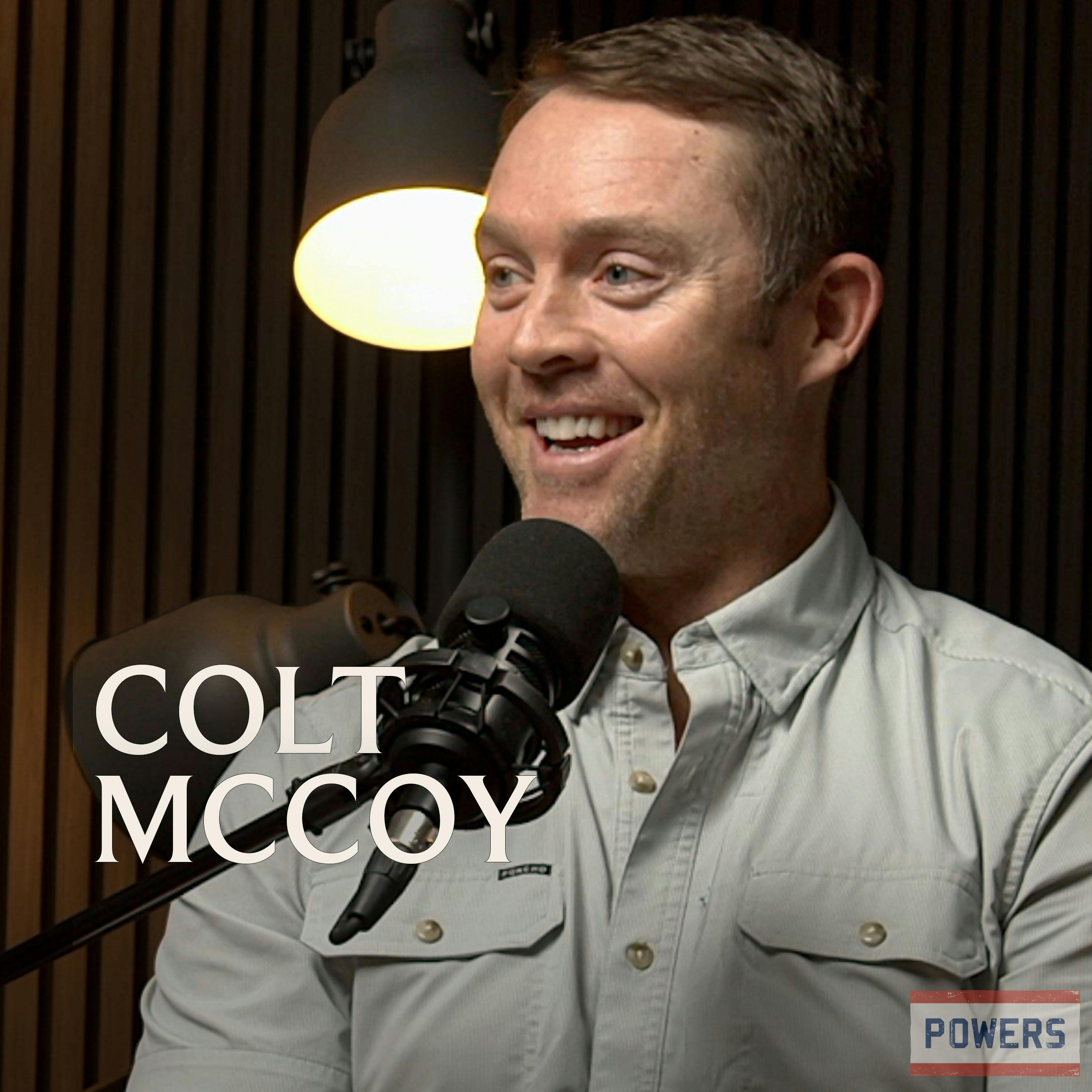
Succeeding NFL phenom Vince Young at Texas, Colt McCoy knew he couldn't match Young's physical gifts. He instead focused his energy on mastering the mental game—deeply understanding schemes, coverages, and play calls—to create his own unique and sustainable competitive advantage.
At the highest levels of competition, success comes from pushing the game into chaotic territory where standard playbooks fail. The goal is to master fear while navigating the "space after everyone's prepared." This psychological edge exploits opponents' discomfort in unpredictable situations, creating a significant advantage.