Get your free personalized podcast brief
We scan new podcasts and send you the top 5 insights daily.
Agent state and long-term context accumulate as an agent interacts with its environment. Tying context and memory schemas directly to a single model provider makes migration impossible, whereas neutral harnesses keep intelligence portable both defensively against price hikes and offensively for upgrades.

Related Insights
To combat reliance on a single AI provider, users can build a personal context layer—a collection of documents, data connections, and skill playbooks. This system acts as personal "alpha," allowing any capable AI model to quickly understand a user's context and perform tasks effectively, ensuring portability and reducing vendor lock-in.

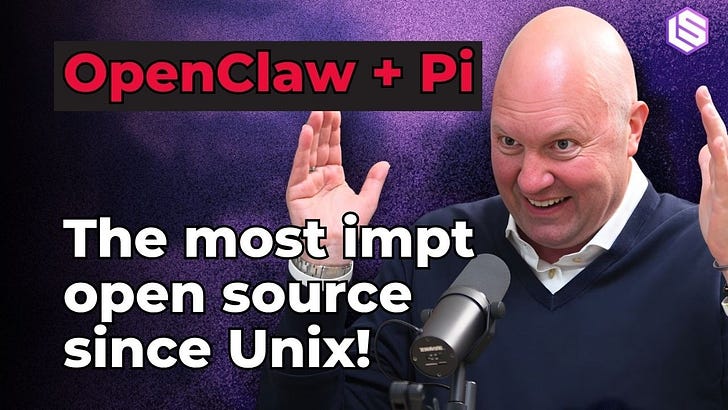
In architectures like OpenClaw, an agent's state and memory are stored in a file system, not the model itself. This means your agent is its files. You can swap the underlying LLM and the agent retains its identity and capabilities, much like recompiling code for a new chip.
The friction of switching AI chatbots comes from losing the model's accumulated knowledge about you. This "context lock-in" makes users hesitant to start over with a new system. A portable, personal context portfolio is the key to breaking this dependency and maintaining user sovereignty over their AI relationships.

A major friction point in AI is losing context when switching between models like ChatGPT and Claude. The solution is a user-owned, portable "second brain" or memory layer that can be plugged into any underlying AI model, ensuring consistent performance and preventing vendor lock-in.

A simple, universal harness tests a model's core abilities agnostically but may not elicit its peak performance. Conversely, a complex, model-specific harness can maximize performance but introduces bias and significant optimization overhead for each new model. Andon Labs opts for simplicity to maintain neutrality.

The Anthropic shutdown shows the danger of relying on one AI model. A robust strategy is to build a proprietary front-end "harness" that controls memory, skills, and data, while being able to dynamically route requests to various backend models.

External compaction harnesses that summarize context windows often create buggy, unreliable long-term memory in consumer agents. Incorporating active memory directly into the model enables it to evaluate sources, manage its own compaction, and retain critical details over weeks. Native memory allows agents to recall instructions across long horizons without breaking context.

Anthropic's "Managed Agents" is built on the premise that any specific "harness" is temporary, as its assumptions become outdated with model improvements. They are creating a "meta-harness"—an underlying infrastructure designed to outlast any single implementation, making individual harnesses easily swappable and disposable.
Top-tier language models are becoming commoditized in their excellence. The real differentiator in agent performance is now the 'harness'—the specific context, tools, and skills you provide. A minimalist, well-crafted harness on a good model will outperform a bloated setup on a great one.

A key industry tension exists between model providers creating closed, high-performance agent ecosystems (model + harness) and open-source harnesses like LangGraph. The latter camp argues for model-agnosticism to avoid vendor lock-in and ensure business continuity if a specific model is banned or deprecated.