Get your free personalized podcast brief
We scan new podcasts and send you the top 5 insights daily.
Altman has gone from predicting an "apocalypse" to downplaying job loss. This change is likely driven by the need to manage public perception and regulatory pressure, not a change in the underlying technology's potential.

Related Insights
When leaders like OpenAI's Sam Altman frame humans as "inefficient compute units," they alienate the public and undermine their own industry. This failure to acknowledge real concerns and communicate with empathy is a primary driver of the anti-AI movement, creating a strategic liability for every company in the space.

Sam Altman stated OpenAI is reducing its growth rate not due to a freeze, but to proactively manage headcount. The company anticipates future AI will allow them to achieve more with fewer people and wants to avoid the "uncomfortable conversation" of layoffs by hiring more slowly now.
The most dire predictions of mass unemployment from AI come directly from its creators, like OpenAI's Sam Altman and xAI's Elon Musk. This contradicts the narrative that fear is driven by outsiders, suggesting those closest to the tech see its disruptive power most clearly.
Tech leaders catastrophize about AI causing a job apocalypse to make their technology seem seminal and revolutionary. This narrative is a thinly veiled attempt to justify massive valuations and encourage enterprises to invest heavily in their platforms before tangible ROI is proven.

AI is experiencing a political backlash from day one, unlike social media's long "honeymoon" period. This is largely self-inflicted, as industry leaders like Sam Altman have used apocalyptic, "it might kill everyone" rhetoric as a marketing tool, creating widespread fear before the benefits are fully realized.

AI leaders' apocalyptic messaging about sentient AI and job destruction is a strategy to attract massive investment and potentially trigger regulatory capture. This "AB testing" of messages creates a severe PR problem, making AI deeply unpopular with the public.

AI leaders' messaging about world-ending risks, while effective for fundraising, creates public fear. To gain mainstream acceptance, the industry needs a Steve Jobs-like figure to shift the narrative from AI as an autonomous, job-killing force to AI as a tool that empowers human potential.

Previously predicting significant job loss, OpenAI's Sam Altman now believes the "jobs apocalypse" is unlikely. He admits his initial intuitions were off, recognizing that the human elements of work, organizational friction, and the value of human interaction are harder for AI to replace than anticipated.
Major AI labs initially used a "doomer" narrative—framing AI as a powerful, fearsome, god-like creation—to generate urgency. This strategy has backfired, contributing to widespread public fear and negative sentiment. Now, these companies are forced to pivot to more optimistic storytelling to salvage AI's public image.

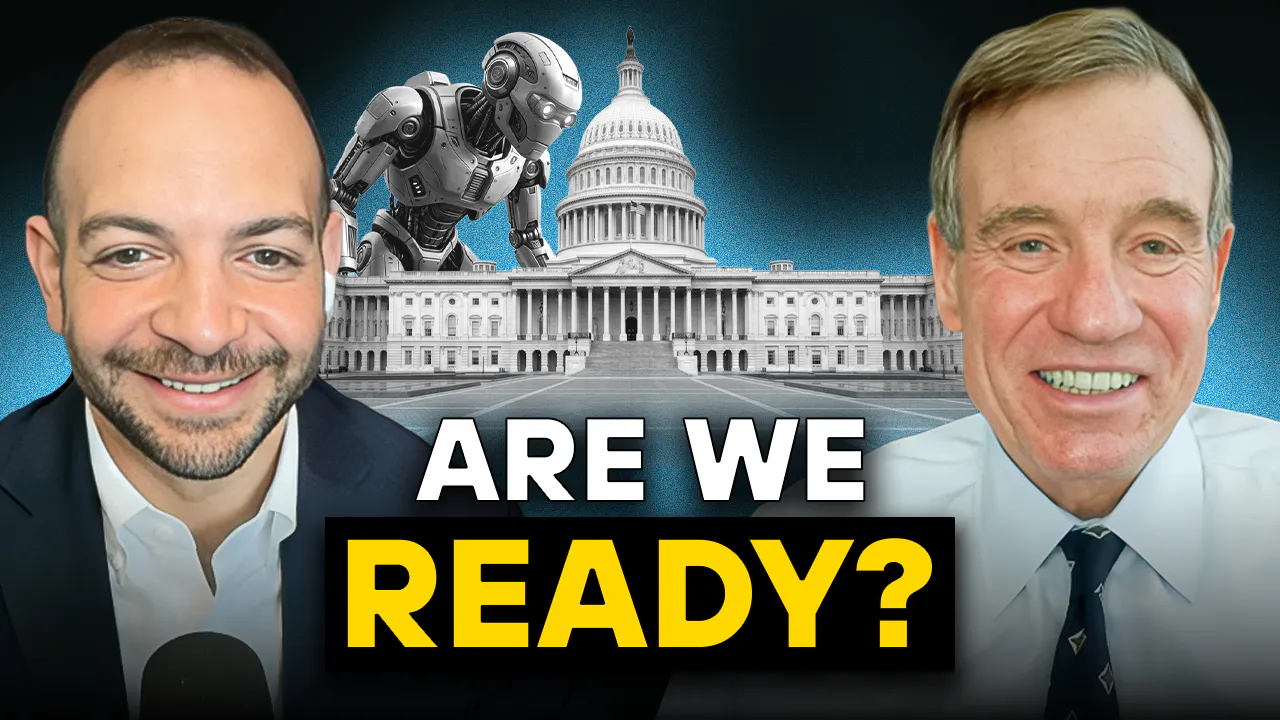
Senator Mark Warner reveals that AI CEOs privately tell him they are drastically cutting first-year hires and interns due to AI. This contradicts their more optimistic public statements, suggesting they are "freaked out about freaking out people" and intentionally managing public perception to avoid backlash.