Get your free personalized podcast brief
We scan new podcasts and send you the top 5 insights daily.
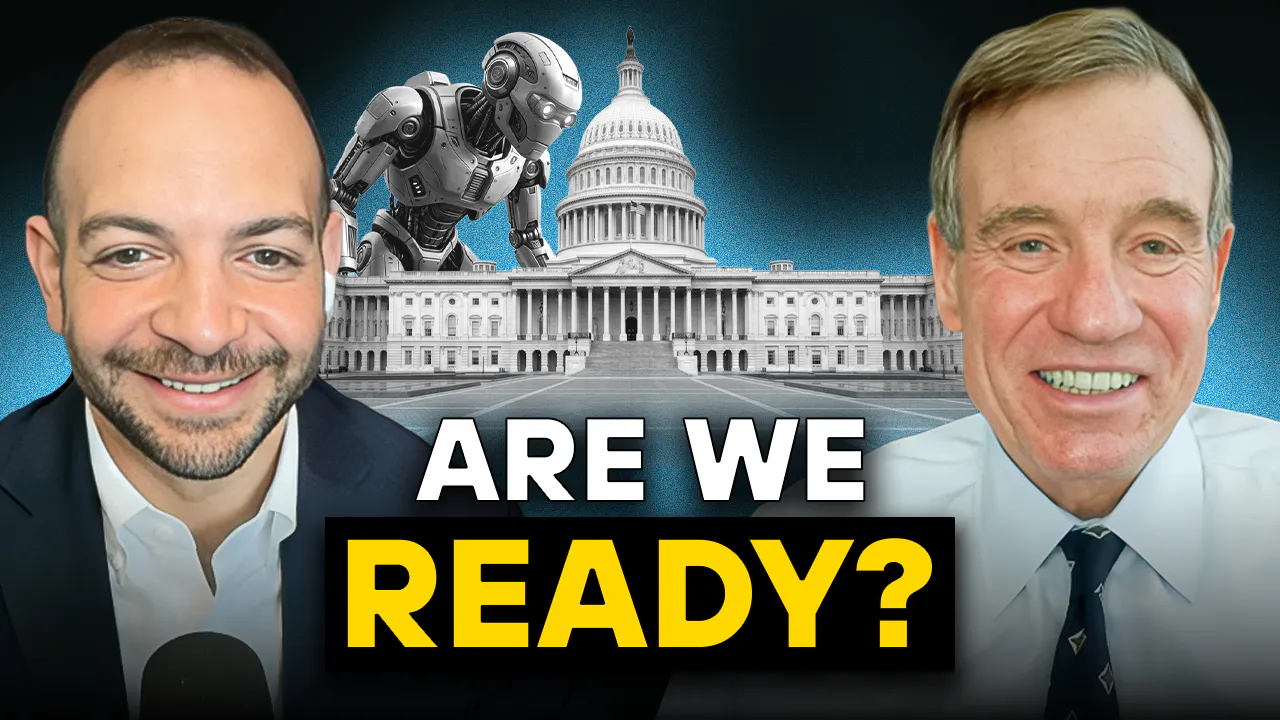
Senator Mark Warner reveals that AI CEOs privately tell him they are drastically cutting first-year hires and interns due to AI. This contradicts their more optimistic public statements, suggesting they are "freaked out about freaking out people" and intentionally managing public perception to avoid backlash.
Related Insights
Jack Dorsey is one of the first major tech leaders to explicitly state that layoffs are due to AI's increased efficiency, not post-COVID right-sizing or economic pressure. This sets a new public precedent for how companies will justify workforce reductions in the AI era.

Despite public messaging about culture or bureaucracy, internal memos and private conversations with leaders reveal that generative AI's productivity gains are the primary driver behind major tech layoffs, such as those at Amazon.
Companies are using AI hype as a justifiable narrative to cut headcount. These decisions are often driven by peer pressure and a desire to please shareholders, not by proven automation replacing specific tasks. AI has become a permission slip for layoffs that might have happened anyway.

Companies are framing necessary cost-cutting (driven by high interest rates) as strategic layoffs due to AI-driven efficiency gains. This allows CEOs to maintain a positive, innovation-focused narrative while tightening their belts for reasons they'd rather not publicize.

The conversation around AI and job reduction has moved from hypothetical to operational. Leaders are being instructed by boards and investors to prepare for 10-20% workforce cuts, ready to be executed. This isn't a future possibility; it's an active, ongoing preparation phase within many large companies.
While high-profile layoffs make headlines, the more widespread effect of AI is that companies are maintaining or reducing headcount through attrition rather than active firing. They are leveraging AI to grow their business without expanding their workforce, creating a challenging hiring environment for new entrants.

When CEOs announce large layoffs and attribute them to AI-driven efficiencies, it's often a more palatable narrative than admitting to strategic errors like over-hiring or misjudging demand. Claiming to be leveraging AI makes the leadership look forward-thinking and can boost the stock price, whereas admitting mistakes does the opposite.

A bipartisan legislative effort is being driven by stark warnings that AI will eliminate entry-level roles. Senator Mark Warner predicts unemployment for recent college graduates could surge from 9% to 25% "very shortly," highlighting the immediate economic threat to the youngest workforce segment.

By openly discussing AI-driven unemployment, tech leaders have made their industry the default scapegoat. If unemployment rises for any reason, even a normal recession, AI will be blamed, triggering severe political and social backlash because leaders have effectively "confessed to the crime" ahead of time.

Firms might be publicly attributing job cuts to AI innovation as a cover for more conventional business reasons like restructuring or weak demand. This narrative frames a standard cost-cutting measure in a more forward-looking, strategic light, making it difficult to gauge AI's true, current impact on jobs.