Get your free personalized podcast brief
We scan new podcasts and send you the top 5 insights daily.
Previously predicting significant job loss, OpenAI's Sam Altman now believes the "jobs apocalypse" is unlikely. He admits his initial intuitions were off, recognizing that the human elements of work, organizational friction, and the value of human interaction are harder for AI to replace than anticipated.

Related Insights
The fear of AI-driven job replacement is misplaced. Historically, technological shifts don't eliminate work entirely; they change it. The individuals who will thrive are not those who resist change, but those who learn to leverage new tools like AI to become more effective.
Sam Altman stated OpenAI is reducing its growth rate not due to a freeze, but to proactively manage headcount. The company anticipates future AI will allow them to achieve more with fewer people and wants to avoid the "uncomfortable conversation" of layoffs by hiring more slowly now.
Contrary to fears of mass job replacement, AI's primary impact is role transformation. Analysis shows that while 11% of jobs may be eliminated, this is largely offset by the creation of 18% new roles, resulting in a much smaller net job loss and a significant reshaping of how work is done.

The fear of mass job replacement by AI is based on a flawed premise. Jobs are not single entities but collections of diverse tasks. AI can automate some tasks but can fully automate very few entire occupations (under 4% in one study), leading to a reshaping of work, not widespread elimination.
Worrying about AI replacing jobs is wasted energy. Like past technological shifts (internet, tractors), new roles will emerge. The onus is on the individual to hold themselves accountable and adapt rather than blame the inevitable progress of technology.

AI's primary impact is not wholesale human replacement but rather collapsing the middle of the value pyramid by automating routine knowledge work. The value of human workers will shift to higher-level judgment and strategic oversight, where AI can structure options and simulate outcomes, but humans retain final say due to liability concerns.

The dominant fear of an AI-driven job apocalypse is being challenged in mainstream discourse. Influential figures like Ezra Klein are now exploring theories that predict a labor shift towards a 'relational sector,' where human connection is key, rather than forecasting mass unemployment.
Tech leaders' apocalyptic predictions about AI's impact on jobs might not be solely for hype. This perspective suggests their views are shaped by a lack of historical knowledge about technological adoption and a flawed assumption that average people will engage with technology as deeply as they do, leading to overestimations of disruption speed and scale.
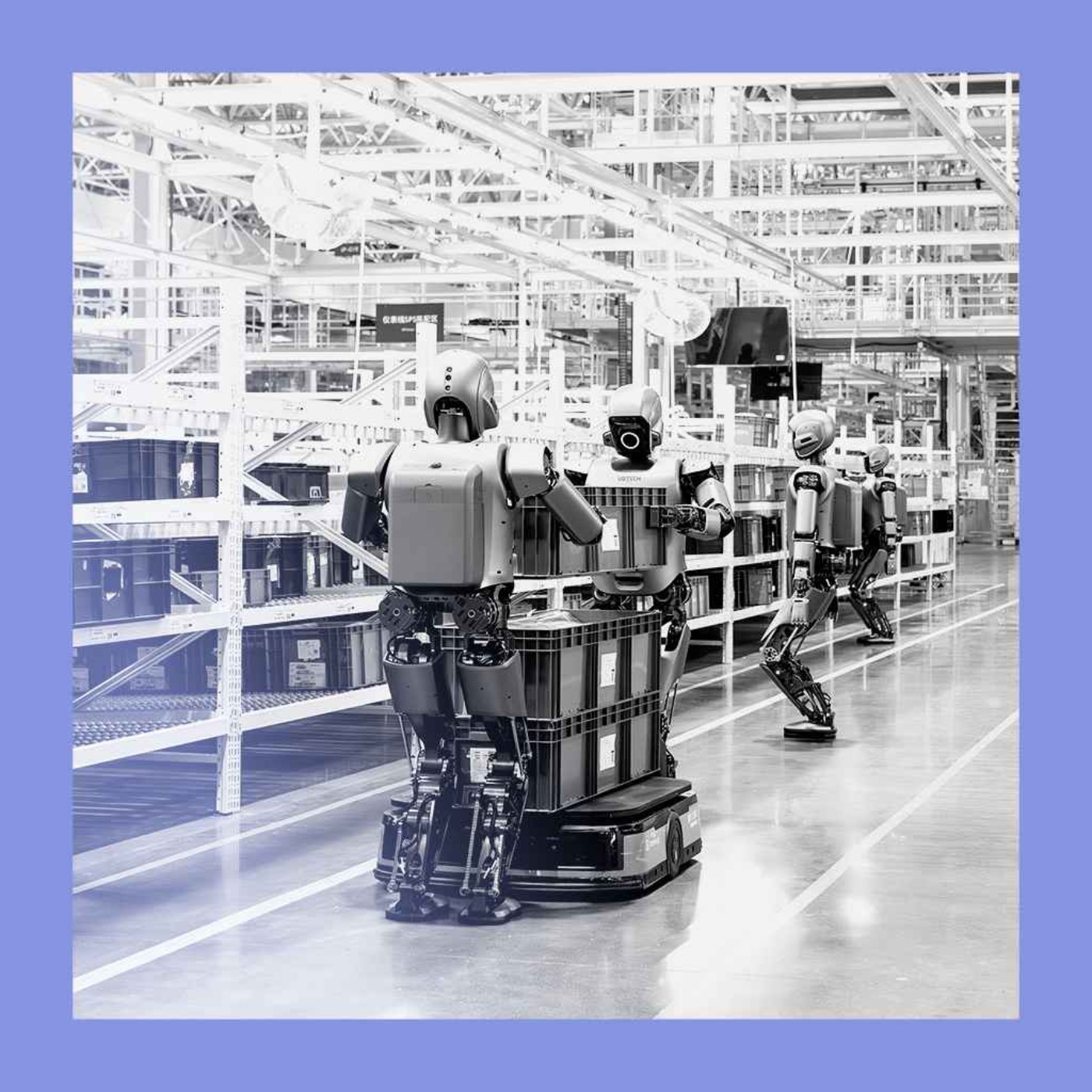
The immense challenge of deploying AI within large enterprises, acknowledged by labs like OpenAI and Anthropic, is slowing widespread impact. This extended timeline provides a crucial adaptation period for businesses and workers to reskill and redesign roles, tempering fears of a sudden job apocalypse.
OpenAI's CEO believes a significant gap exists between what current AI models can do and how people actually use them. He calls this "overhang," suggesting most users still query powerful models with simple tasks, leaving immense economic value untapped because human workflows adapt slowly.
