Get your free personalized podcast brief
We scan new podcasts and send you the top 5 insights daily.
By raising the requirements for its Partner Program, YouTube aims to be reclassified from a 'digital' to a 'TV' budget category in marketers' minds. This shift toward more premium, established creators is a strategic play to compete with Netflix and traditional TV for much larger advertising allocations.

Related Insights
Elite YouTube creators aren't just passive recipients of ad revenue. They actively buy their own ad inventory from YouTube and then resell it directly to brands, packaging it like traditional TV with guaranteed "adjacency" to specific content. This strategy dramatically increases monetization and business valuation.
![Media M&A - [Business Breakdowns, EP.230] thumbnail](https://megaphone.imgix.net/podcasts/8404be2a-a3c6-11f0-9d01-7b00b28a9d50/image/9a48597af1149c3b024e8d2f7327aa89.jpg?ixlib=rails-4.3.1&max-w=3000&max-h=3000&fit=crop&auto=format,compress)
The extremely high monetization threshold for YouTube Shorts reveals its true strategy: it serves as a defensive hedge against TikTok and a marketing tool to drive viewers to more profitable long-form videos. YouTube does not want creators to treat Shorts as their primary business model.
Platforms like YouTube intentionally design their algorithms to foster a wide base of mid-tier creators rather than a few dominant mega-stars. This is a strategic defense mechanism to reduce the leverage of any single creator. By preventing individuals from overshadowing the platform, YouTube mitigates the risk of widespread advertiser boycotts stemming from a controversy with one top personality, as seen in past 'Adpocalypses'.

YouTube now generates more advertising revenue than Disney, Paramount, and Warner Bros combined. This marks its ascendance as the world's largest media company, proving the economic dominance of a platform with infinite, user-generated niche channels over traditional, top-down content studios.

The price disparity isn't about viewership. Legacy TV ad buys are often part of complex, negotiated packages that include talent access and integrations. This "engagement model" is different from YouTube's biddable, auction-based system, keeping TV prices high despite weaker analytics.

YouTube is reintroducing guaranteed payments for top creators, a tactic it used 15 years ago with networks like Maker Studios. This is not a new innovation but a cyclical, defensive strategy to prevent its biggest stars from being poached by competitors like Netflix and Disney.
YouTube's decision to share 55% of ad revenue with creators on a video-by-video basis was a novel concept that has since distributed over $100 billion. This business model was the fundamental economic engine that built an entirely new class of entrepreneurs and established the creator economy.

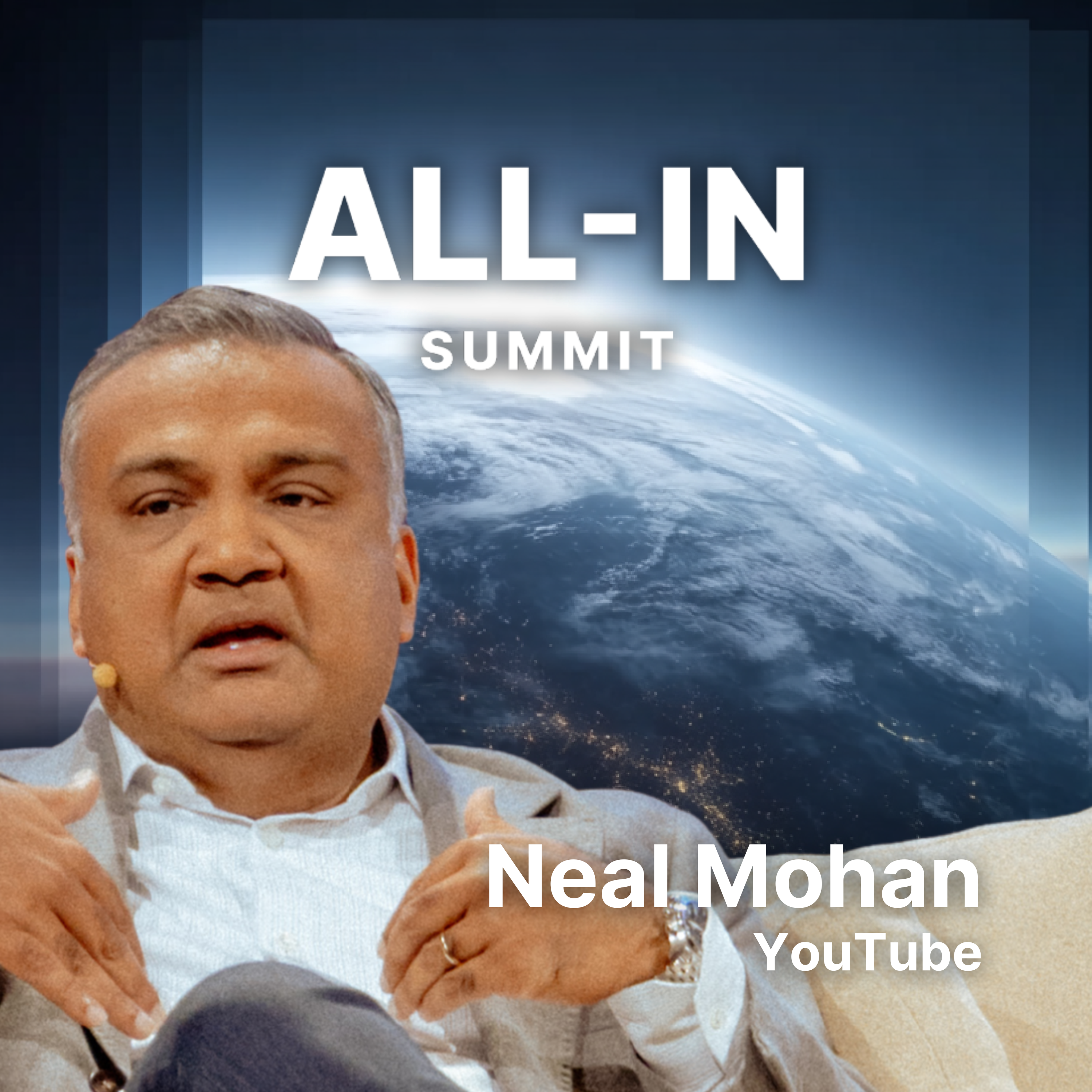
Neal Mohan defends YouTube's revenue split by positioning it as a model where creators bet on their own growth, contrasting with traditional media's upfront payments. For top creators who self-monetize, he frames this as a flexible choice, not a platform weakness, allowing them to select the model that best suits their business.
YouTube's AI-powered "Super Resolution" feature, which upscales low-res videos, is more than a technical fix. It's a strategic move to enhance the viewing experience on large TV screens. This positions YouTube to compete more directly with streaming services like Netflix for the premium, "lean-back" living room audience.
MrBeast spending millions per video, comparable to TV shows, reflects a core conviction that YouTube is becoming the primary destination for entertainment. This fundamentally redefines the platform's potential and elevates production standards for all creators, blurring the line between digital-native content and traditional television.