Get your free personalized podcast brief
We scan new podcasts and send you the top 5 insights daily.
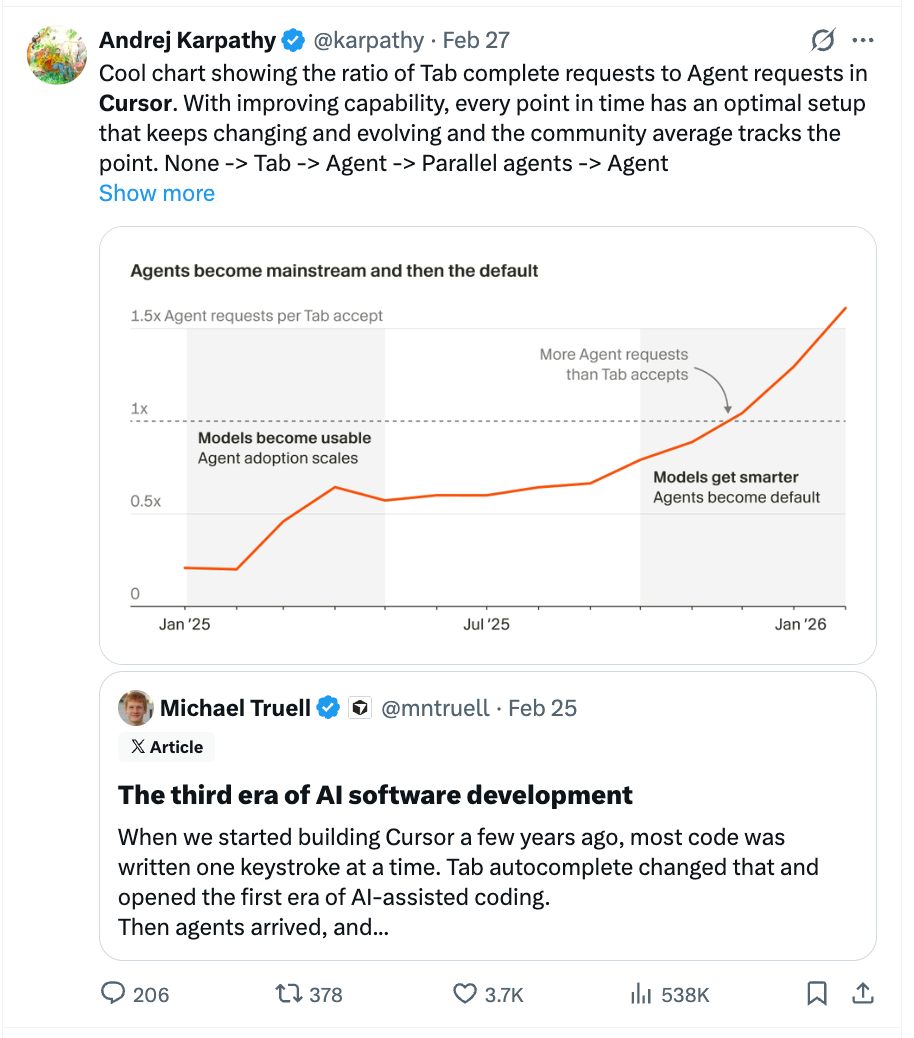
Instead of relying on a single, fragile AI agent, run a fleet of them (e.g., multiple Hermes and OpenClaw instances). When one agent fails after an update, another active agent can be tasked with diagnosing and fixing the downed one, creating a self-healing system.

Related Insights
When deploying autonomous AI employees, reliability is more critical than hype. The guest found Hermes to be a more stable and reliable agent harness than the more well-known OpenClaw. Since agent failures erode trust, choosing a dependable framework is a key decision.

Cursor's "cloud agent diagnosis" command allows a primary agent to spin up specialized sub-agents that use integrations like Datadog to explore logs and diagnose another agent's failure. This creates a multi-agent system where agents act as external debuggers for each other.
A powerful capability of autonomous agents is self-replication. A user can instruct an agent to set up a new virtual private server (VPS), transfer its own code, and teach the new instance all of its learned skills and context, effectively cloning itself to scale its operations.

For long-running tasks, OpenClaw can spawn a "sub-agent" to work in the background. This architecture prevents the main agent from being tied up, allowing the user to continue interacting with it without delay. It's a key pattern for building a better user experience with agentic AI.

Eliminate manual setup by using an agent like OpenClaw on a primary machine. Combined with Tailscale for private networking, this 'IT guy' agent can access other machines, assess their hardware, and automatically install and run the most appropriate AI models.
Task your AI agent with its own maintenance by creating a recurring job for it to analyze its own files, skills, and schedules. This allows the AI to proactively identify inefficiencies, suggest optimizations, and find bugs, such as a faulty cron scheduler.
To ensure reliability, especially for agents on remote machines, create a secondary "manager" agent (e.g., Codex in VS Code). This manager can SSH into the primary agent's environment to diagnose, debug, and fix issues, preventing downtime when you can't access the machine physically.

When a specialized custom agent breaks, don't debug it manually. Instead, use a more powerful, general agent like Codex to analyze the failure. By providing a screenshot or context, the primary agent can diagnose the issue and rewrite the broken agent's underlying architecture.

Composio uses an internal agent pipeline to build and test its tool integrations. When a tool fails in production for any reason, this pipeline is invoked in real-time to create and swap in a newer, improved version, creating a self-healing system.

To automate bug fixing, connect an AI agent to your error reporting (Sentry), database (Supabase), and log drains (Acxiom). When a bug is reported, the agent can autonomously replay events from logs, diagnose the root cause of the failure, and eventually fix it, creating a powerful self-healing loop for your application.