Get your free personalized podcast brief
We scan new podcasts and send you the top 5 insights daily.
Critics argue that the EU's watermarking rules could unfairly credit AI for work that is merely edited by a model. This could discourage creators from using valuable AI tools, as their entire work might be labeled "AI-generated," diminishing their own contribution and creative ownership.

Related Insights
The US Copyright Office has ruled that art generated entirely by AI is not copyrightable because it lacks a human author. To gain legal protection, a creator must demonstrate significant human authorship and modification after the initial AI output, shifting the legal focus from the prompt to post-generation creative work.
The creators of "Gods Don't Give Gifts" navigate AI copyright by ensuring no raw AI output is used directly. They argue that by extensively manipulating and combining AI-generated assets, they establish clear human authorship—what they call "sufficient modification"—making the final work copyrightable.

The distinction between AI-assisted and purely human-created content is becoming impossible to draw. Rather than verifying origin, the focus will shift to holding the publisher accountable for the final product's quality and accuracy, regardless of the tools used in its creation.

The legal question of AI authorship has a historical parallel. Just as early photos were deemed copyrightable because of the photographer's judgment in composition and lighting, AI works can be copyrighted if a human provides detailed prompts, makes revisions, and exercises significant creative judgment. The AI is the tool, not the author.

Solving the AI compensation dilemma isn't just a legal problem. Proposed solutions involve a multi-pronged approach: tech-driven micropayments to original artists whose work is used in training, policies requiring creators to be transparent about AI usage, and evolving copyright laws that reflect the reality of AI-assisted creation.
Anthropic's move to embed invisible watermarks directly into all AI-generated text to comply with EU regulations has ignited controversy. Developers and users fear this will constrain the model's creativity, degrade output quality for tasks like coding, and set a worrying precedent for content integrity.

Anthropic is implementing AI watermarking globally, not just in Europe, to comply with EU regulations. Because the feature is baked deep into the model architecture, it's easier to apply it universally, demonstrating the EU's outsized influence on global technology policy and standards.
While AI lowers the barrier to content creation for everyone, it simultaneously increases the value of uniquely human contributions. As AI-generated content becomes commoditized, attributes like lived experience, distinct perspective, and true originality will become the key differentiators for creators.

The "AI-generated" label carries a negative connotation of being cheap, efficient, and lacking human creativity. This perception devalues the final product in the eyes of consumers and creators, disincentivizing platforms from implementing labels that would anger their user base and advertisers.
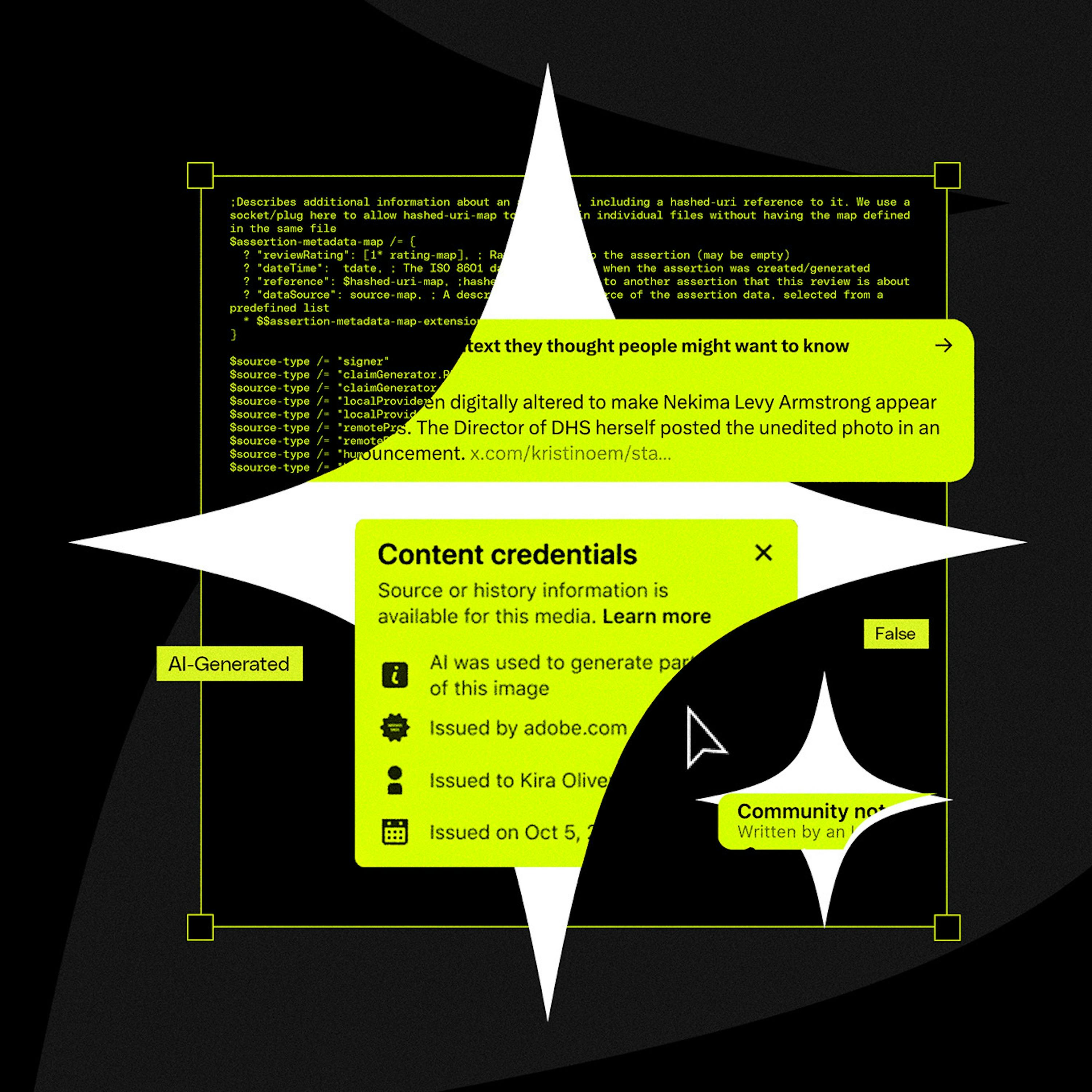
Attempts to label "AI content" fail because AI is integrated into countless basic editing tools, not just generative ones. It's impossible to draw a clear line for what constitutes an "AI edit," leading to creator frustration and rendering binary labels meaningless and confusing for users.