Get your free personalized podcast brief
We scan new podcasts and send you the top 5 insights daily.
The distinction between AI-assisted and purely human-created content is becoming impossible to draw. Rather than verifying origin, the focus will shift to holding the publisher accountable for the final product's quality and accuracy, regardless of the tools used in its creation.

Related Insights
Regardless of an AI's capabilities, the human in the loop is always the final owner of the output. Your responsible AI principles must clearly state that using AI does not remove human agency or accountability for the work's accuracy and quality. This is critical for mitigating legal and reputational risks.

Creating reliable AI detectors is an endless arms race against ever-improving generative models, which often have detectors built into their training process (like GANs). A better approach is using algorithmic feeds to filter out low-quality "slop" content, regardless of its origin, based on user behavior.

In the age of AI, the new standard for value is the "GPT Test." If a person's public statements, writing, or ideas could have been generated by a large language model, they will fail to stand out. This places an immense premium on true originality, deep insight, and an authentic voice—the very things AI struggles to replicate.

Beyond data privacy, a key ethical responsibility for marketers using AI is ensuring content integrity. This means using platforms that provide a verifiable trail for every asset, check for originality, and offer AI-assisted verification for factual accuracy. This protects the brand, ensures content is original, and builds customer trust.
Sam Altman argues the AI vs. human content debate is a false dichotomy. The dominant creative form will be a hybrid where humans use AI as a tool. Consumers will ultimately judge content on its quality and originality ('is it slop?'), not on its method of creation.
The risk of unverified information from generative AI is compelling news organizations to establish formal ethics policies. These new rules often forbid publishing AI-created content unless the story is about AI itself, mandate disclosure of its use, and reinforce rigorous human oversight and fact-checking.

In the age of AI, 'slop' is not defined by typos or poor formatting, but by well-structured content that lacks a person's unique insight, critical thinking, and accountability. It's the absence of a real, defensible human author behind the words, a problem reviewers can now easily spot.

While using a second LLM for verification is a preliminary step, it does not replace human responsibility. Leaders must enforce a culture of slowing down for manual verification and critical thinking to avoid publishing low-quality, AI-generated "slop".

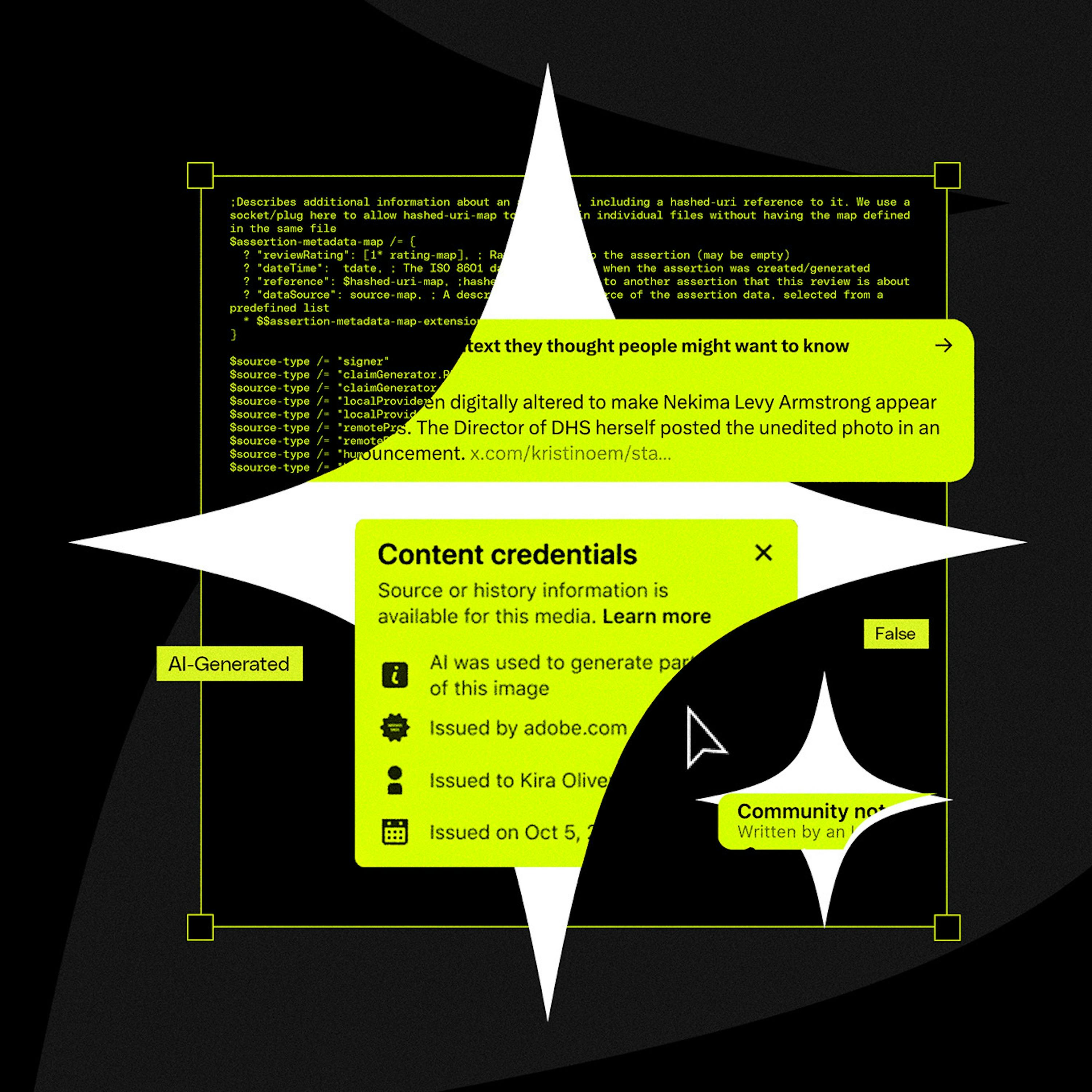
Attempts to label "AI content" fail because AI is integrated into countless basic editing tools, not just generative ones. It's impossible to draw a clear line for what constitutes an "AI edit," leading to creator frustration and rendering binary labels meaningless and confusing for users.
Despite the rise of AI tools, accountability remains squarely with the human operator. Just as a developer is responsible for code written with a pair programmer, a user is responsible for AI-generated output. Citing the AI as the source of an error is an abdication of professional responsibility.
