Get your free personalized podcast brief
We scan new podcasts and send you the top 5 insights daily.
The founders, not being PhD AI researchers, knew they couldn't rely on being acqui-hired by a tech giant. This perceived weakness became a strength, forcing them to relentlessly focus on finding customers and building a sustainable business from day one, unlike many research-led AI startups of that era.

Related Insights
Instead of fearing competitors who copy their product, Synthesia's founder sees them as a net positive. The increased competition generates more market iterations and signals, helping them discover the most valuable use cases for the new technology faster than they could alone, while also sharpening their focus.
The ideal founder archetype starts with deep technical expertise and product sense. They then develop exceptional business and commercial acumen over time, a rarer and more powerful combination than a non-technical founder learning the product.
![David George - Building a16z Growth, Investing Across the AI Stack, and Why Markets Misprice Growth - [Invest Like the Best, EP.450] thumbnail](https://megaphone.imgix.net/podcasts/8da7dbd8-ceeb-11f0-941c-ef83bcdd4c9f/image/d44107bc94719f78fbe91befb141073e.jpg?ixlib=rails-4.3.1&max-w=3000&max-h=3000&fit=crop&auto=format,compress)
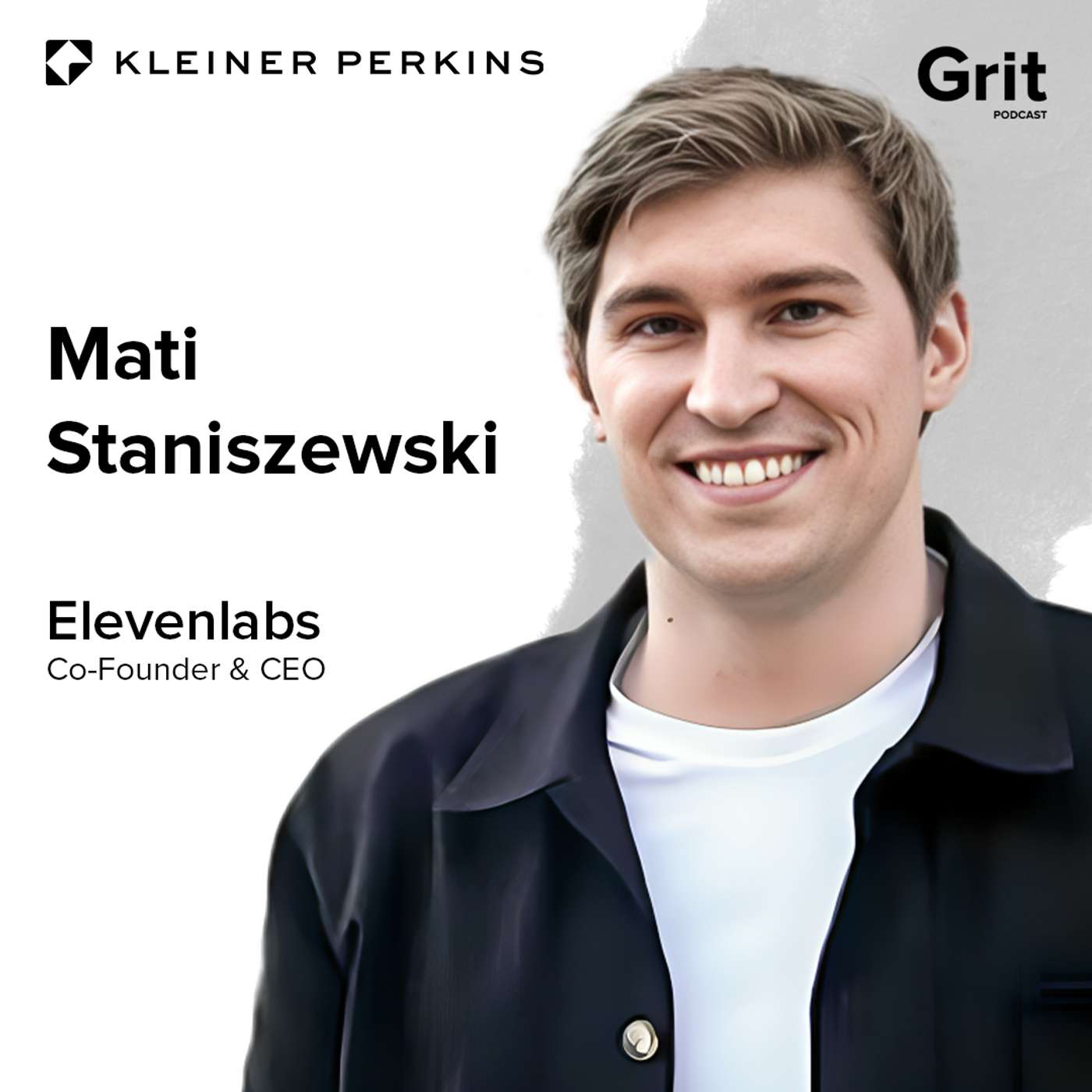
Contrary to the belief that deep-tech startups should be purely technical, ElevenLabs prioritized distribution early. Their first 10 hires included 3 people focused on go-to-market and growth, enabling both self-serve and sales-led motions from the start alongside foundational research.
Synthesia initially targeted Hollywood with AI dubbing—a "vitamin" for experts. They found a much larger, "house-on-fire" problem by building a platform for the billions of people who couldn't create video at all, democratizing the medium instead of just improving it for existing professionals.
After 100 investor rejections, Synthesia cold-emailed Mark Cuban, who committed within 10 hours. The key difference was that Cuban had already prototyped similar technology and deeply understood the vision, allowing him to evaluate the team's execution rather than needing to be educated on the concept's validity.
For companies with jaw-dropping technology, it's easy to chase 'wow moments' and PR instead of solving real problems. Synthesia instills a core value of 'utility over novelty,' obsessing over delivering value for enterprise customers rather than getting lost in the novelty of their own tech.
To maintain product focus and avoid the 'raising money game,' the founders of Cues established a separate trading company. They used the profits from this successful venture to self-fund their AI startup, enabling them to build patiently without being beholden to VC timelines or expectations.

ElevenLabs' CEO sees their cutting-edge research as a temporary advantage—a 6-12 month head start. The real, long-term defensibility comes from using that time to build a superior product layer and a robust ecosystem of integrations, workflows, and brand. This strategy accepts model commoditization and focuses on building durable value on top of the technology.

Perplexity's CEO argues that building foundational models is not necessary for success. By focusing on the end-to-end consumer experience and leveraging increasingly commoditized models, startups can build a highly valuable business without needing billions in funding for model training.

Surge AI intentionally avoided VC funding and the "Silicon Valley game" of hype and fundraising. This forced them to build a 10x better product that grew via word-of-mouth, attracting customers who genuinely valued data quality instead of hype.