Get your free personalized podcast brief
We scan new podcasts and send you the top 5 insights daily.
LLMs function by predicting the most probable next word, effectively averaging out language. Over-relying on them for content creation will systematically strip away the unique aspects of your brand's voice, leading to homogenization and risking a 'dead internet' effect.

Related Insights
Despite running an AI company, Clay's co-founder warns against using LLMs for marketing. He argues that AI models are designed to synthesize information and find the average, which is the opposite of marketing's goal: to stand out and be original. His team is discouraged from using it for marketing copy.

With 85% of marketers using ChatGPT, brand voices are converging into a generic, AI-generated tone. This erodes a brand's unique identity, making marketing campaigns completely ineffective because they fail to differentiate in a crowded market and are easily ignored by consumers.
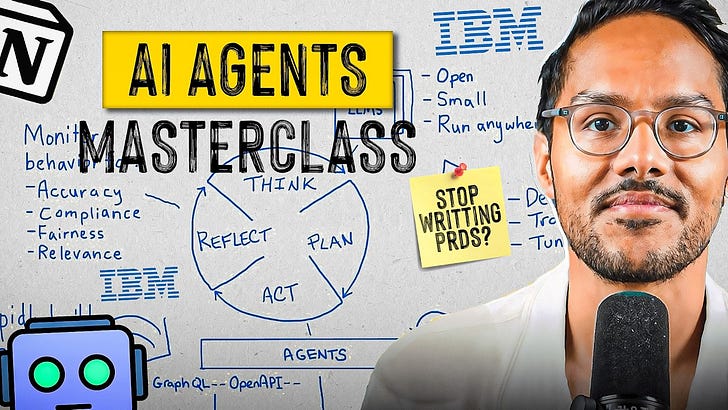
While AI tools once gave creators an edge, they now risk producing democratized, undifferentiated output. IBM's AI VP, who grew to 200k followers, now uses AI less. The new edge is spending more time on unique human thinking and using AI only for initial ideation, not final writing.
The most common marketing phrases generated by ChatGPT are now so overused they cause a 15% drop in audience engagement. Marketers must use a follow-up prompt to 'un-AI' the content, specifically telling the tool to remove generic phrases, corporate tone, and predictable language to regain authenticity.

A major pitfall for brands is using generative AI to autonomously create large volumes of product descriptions. This low-quality "AI slop" lacks value, erodes brand image, and harms sales performance. AI's better use is in targeted data enrichment and discovery.
When brands use AI tools like LLMs as their primary creative director instead of as an assistant, they produce generic outputs based on existing data. This leads to a "sea of sameness" and a loss of brand distinctiveness.

When AI can produce limitless content for free, volume ceases to be a competitive advantage. The new differentiator becomes the quality and consistency of a company's unique brand voice and values, making brand governance paramount to content strategy.
As generative AI floods the internet with generic content, the core challenge for brands will shift. It will no longer be about content creation, but about cutting through the noise—the "AI slop" from bots talking to bots. The greatest competitive advantage will be sounding verifiably and authentically human.
GM's CMO warns that AI in creative often produces average results because it finds the "most likely next answer," reflecting the category norm, not a distinctive brand voice. Simple edits can also trigger a full re-render, introducing new errors and creating more work.

Apple's highly formulaic communication style has created a perfect training corpus for LLMs. Consequently, AI can replicate its brand voice so flawlessly that human-written and AI-generated content become indistinguishable, presenting a unique challenge for brand authenticity.