Get your free personalized podcast brief
We scan new podcasts and send you the top 5 insights daily.
To hire OpenClaw's founder Peter Steinberger, OpenAI established a separate foundation to house his open-source project. This novel acqui-hire tactic secures top talent whose primary motivation is preserving their project's open-source integrity, demonstrating flexibility in the competitive AI talent war.

Related Insights
To counteract OpenAI's potential control over the OpenClaw project, venture firm Launch announced a dedicated investment thesis to fund startups building core infrastructure around it. The strategy is to foster a decentralized ecosystem focused on security, ease of use, hosting, and skills to ensure the project remains open.
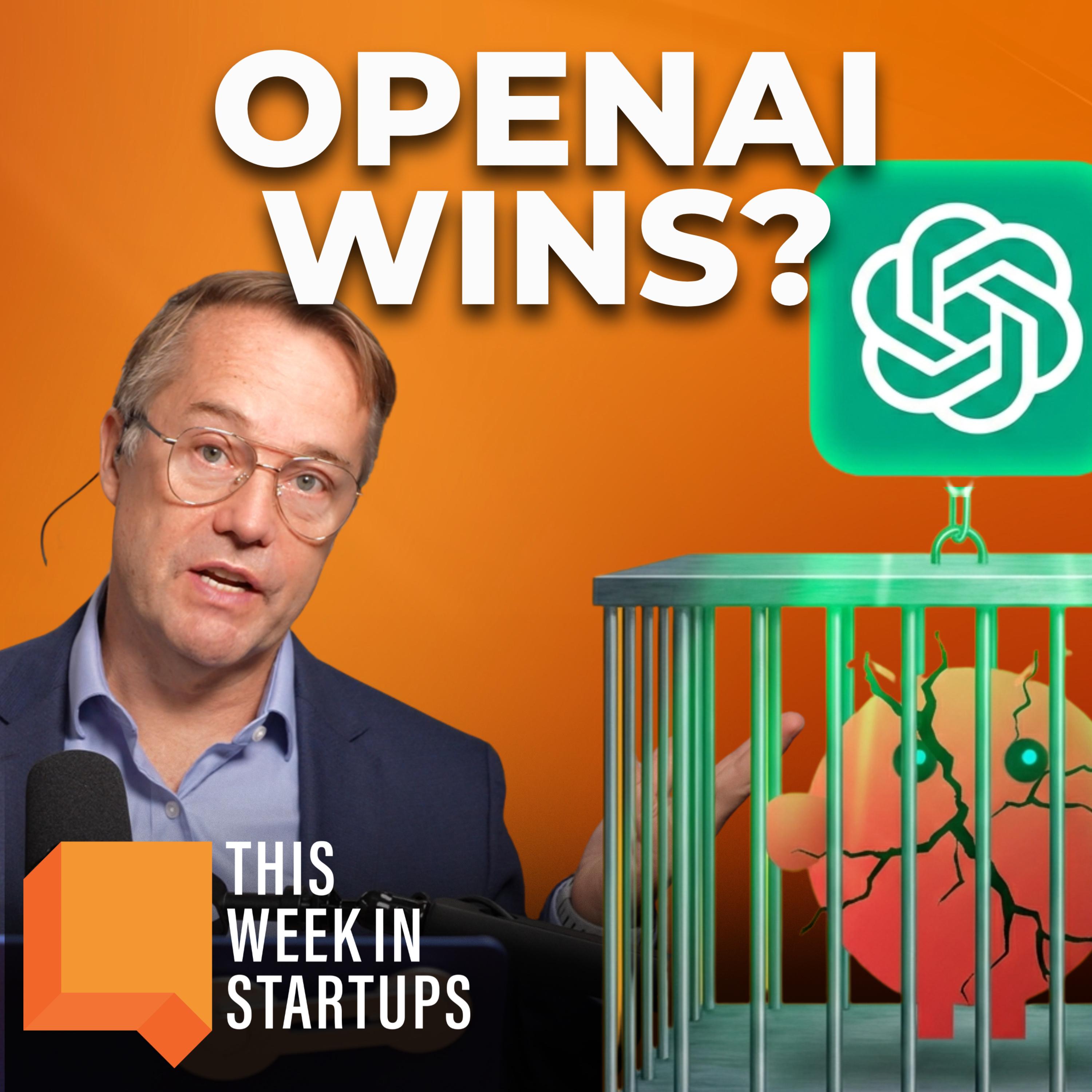
Following the loss of prominent figures like Karpathy and Sutskever, OpenAI's move for OpenClaw's founder is more than a technology acquisition. It's a strategic 'acqui-hire' of a new developer hero who commands immense community respect. This move reinvigorates OpenAI's brand as the top destination for builders and inspires internal teams.

Elon Musk founded OpenAI as a nonprofit to be the philosophical opposite of Google, which he believed had a monopoly on AI and a CEO who wasn't taking AI safety seriously. The goal was to create an open-source counterweight, not a for-profit entity.
Anthropic's defensive legal action against the viral 'Clawdbot' project, which used its technology, contrasted with OpenAI's collaborative approach. This decision alienated the project's creator and community, directly leading to their biggest competitor acquiring the most significant grassroots AI movement in years.
The optimistic take is that OpenAI paid a premium to bring founder Peter in-house for his talent and to gain strategic insights from the open-source project's development. Placing OpenClaw in a foundation led by the ethical Dave Morin is a move to reassure the community.
The cynical view of OpenAI's acquisition of OpenClaw is that it's a defensive move to control the dominant user interface. By owning the 'front door' to AI, they can prevent competing models from gaining traction and ultimately absorb all innovation into their closed ecosystem.
The technical capabilities of OpenClaw are replicable; its real moat is the massive, self-reinforcing community of builders and resources that spontaneously converged around it. OpenAI acquired not just a tool, but the entire ecosystem's focal point for agentic AI development—a far more durable competitive advantage than code alone.
The creator of OpenClaw explicitly rejected the traditional VC-funded CEO path, stating he wanted to 'change the world, not build a large company.' This builder-first mindset enabled him to achieve a massive outcome by partnering with OpenAI, demonstrating a new model for individual creators to maximize impact without the burdens of company-building.
Despite significant VC interest, OpenClaw founder Peter Steinberger joined OpenAI to avoid the operational burdens of starting another company. This highlights a key motivation for elite technical talent: the desire to focus purely on building technology without the distractions of fundraising and management.
Anthropic's aggressive legal stance against the popular open-source project 'Claude Bot' backfired. It not only alienated developers but also created a perfect opportunity for rival OpenAI to acquire the project (renamed 'OpenClaw'), turning a competitor's PR fumble into a major strategic win and ecosystem capture.