Get your free personalized podcast brief
We scan new podcasts and send you the top 5 insights daily.
AI will automate the creation of first drafts, which are often based on existing ideas. This shifts the value from initial creation to refinement. The editor, who curates and improves the AI's output, will become more critical and valued than the writer who once created from scratch.

Related Insights
While AI tools once gave creators an edge, they now risk producing democratized, undifferentiated output. IBM's AI VP, who grew to 200k followers, now uses AI less. The new edge is spending more time on unique human thinking and using AI only for initial ideation, not final writing.
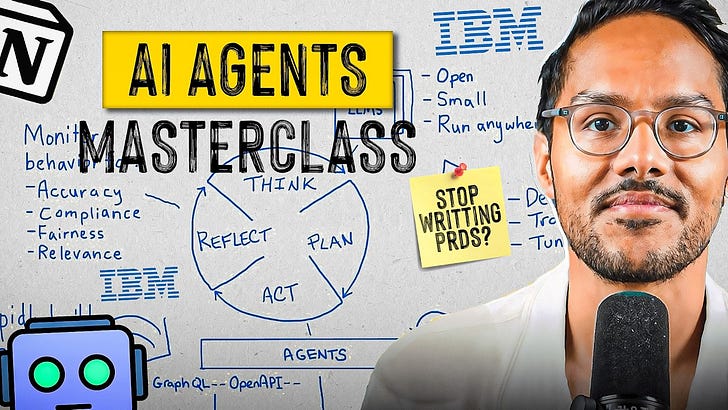
When everyone can generate content with AI, the basic version becomes table stakes. The new competitive edge comes from creating advanced agent workflows, such as a "critic agent" that constantly evaluates and improves output against specific quality metrics.

Upcoming tools like Sora automate the script-to-video workflow, commoditizing the technical production process. This forces creative agencies to evolve. Their value will no longer be in execution but in their ability to generate a high volume of brilliant, brand-aligned ideas and manage creative strategy.
As AI democratizes the technical aspects of content creation, the ability to guide it with unique perspective, craft, and taste becomes the key differentiator. AI is a powerful tool for experts to scale their vision, but it cannot replace the vision itself.

While AI tools excel at generating initial drafts of code or designs, their editing capabilities are poor. The difficulty of making specific changes often forces creators to discard the AI output and start over, as editing is where the "magic" breaks down.
The traditional content model of writers producing a small volume of high-quality pieces is being inverted by AI. Now, smaller teams can generate massive volumes of lower-quality drafts instantly. The team's primary role shifts to curating, refining, and perfecting this output, rather than originating every word.
AI will commoditize the *act* of creating content (the 'doing'). The value will shift entirely to the *idea* behind the content (the 'thinking'), making strategic creativity the most valuable skill.

The most effective way to use AI in creative fields is not as an automaton to generate final products, but as a tireless, hyper-knowledgeable writing partner. The human provides taste and direction, guiding the AI through back-and-forth exchanges to refine ideas and overcome creative blocks.

Since AI can generate output rapidly, the differentiator is no longer speed but the quality of your judgment and clarity. AI acts as an amplifier; if your input lacks taste or direction, you'll simply produce "garbage faster." The most valuable skills become decision-making and refinement.

When AI automates a core task like content writing, don't eliminate the role. Instead, reframe it to leverage human judgment. A "content writer" can be transformed into a "content curator" who guides, edits, and validates AI-generated output. This shifts the focus from replacement to augmentation.
