Get your free personalized podcast brief
We scan new podcasts and send you the top 5 insights daily.
When everyone can generate content with AI, the basic version becomes table stakes. The new competitive edge comes from creating advanced agent workflows, such as a "critic agent" that constantly evaluates and improves output against specific quality metrics.

Related Insights
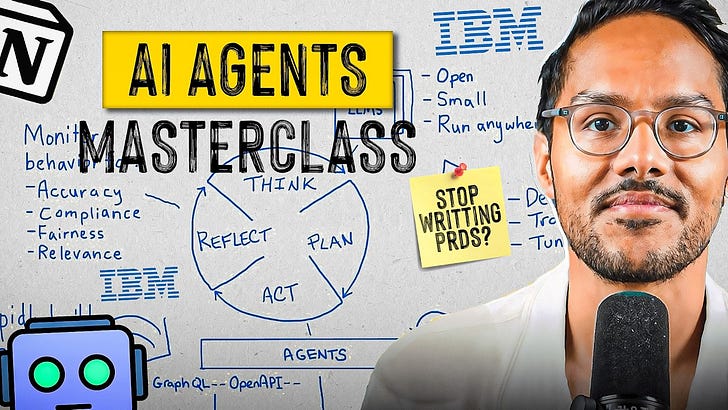
While AI tools once gave creators an edge, they now risk producing democratized, undifferentiated output. IBM's AI VP, who grew to 200k followers, now uses AI less. The new edge is spending more time on unique human thinking and using AI only for initial ideation, not final writing.
With AI workflows generating thousands of creative variations in minutes, the primary job is no longer the manual act of creation. The critical skill becomes curation: building the right automated systems upfront and then strategically selecting winning assets from a massive pool of options.

As AI democratizes the technical aspects of content creation, the ability to guide it with unique perspective, craft, and taste becomes the key differentiator. AI is a powerful tool for experts to scale their vision, but it cannot replace the vision itself.
The flood of AI-generated assets isn't a new problem but an amplification of an old one. It simply highlights that much of human-created content was already mediocre. AI removes resource barriers to production, making "taste" and "quality judgment" the true differentiators—skills that are now more valuable than ever.

Most AI tools focus on automation, which often produces more average, noisy content. The superior approach is augmentation—designing AI to enhance a marketer's abilities and produce exceptional, not average, work. This shifts the goal from creating "more" to creating "better."
Generative AI allows any marketer to quickly produce mediocre content. This saturation makes buyers more discerning and creates a significant opportunity for brands that invest in genuinely excellent, insightful content to stand out and build trust. Quality, not quantity, becomes the key differentiator.

Exceptional AI content comes not from mastering one tool, but from orchestrating a workflow of specialized models for research, image generation, voice synthesis, and video creation. AI agent platforms automate this complex process, yielding results far beyond what a single tool can achieve.
The traditional content model of writers producing a small volume of high-quality pieces is being inverted by AI. Now, smaller teams can generate massive volumes of lower-quality drafts instantly. The team's primary role shifts to curating, refining, and perfecting this output, rather than originating every word.
AI will commoditize the *act* of creating content (the 'doing'). The value will shift entirely to the *idea* behind the content (the 'thinking'), making strategic creativity the most valuable skill.

The desire for perfection and control is a bottleneck in the AI era. Marketers who insist on reviewing every word of AI-generated copy will fall behind. The new critical skill is not writing perfect copy, but engineering and continuously improving the prompts that generate it at scale. It's a mindset shift from creator to system designer.